President Trump urged Vivek Ramaswamy to keep airing an attack ad built on an estranged mother’s accusations, even as records cited by independent reporters support key parts of Amy Acton’s account of childhood abuse.
Story Snapshot
- Trump called the ad “very powerful” and said to keep it up, drawing national focus.
- The ad relies on Acton’s estranged mother accusing her of lying about childhood trauma.
- Court records confirm a 1978 indictment of Acton’s stepfather in a child sex case, not a verdict.
- Independent reporting says documents and prior accounts back key parts of Acton’s story.
What Trump Backed And Why It Matters
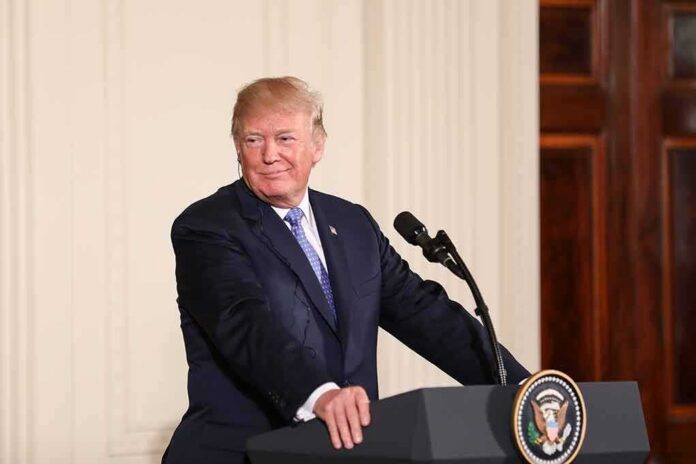
President Trump praised Vivek Ramaswamy’s advertisement featuring Amy Acton’s estranged mother and urged the campaign to keep it on air. Trump called the spot “very powerful” and framed it as fair political messaging. He also said he did not know the underlying family facts beyond what the mother claimed. His backing magnified the ad’s reach and controversy and shifted attention from policy to personal history in Ohio’s governor race.
The advertisement centers on Donna Arthur, Acton’s mother, who says her daughter lied about childhood abuse and mental health. Reporters identified Arthur on camera and confirmed the campaign produced the video. The message uses a relative as a first-hand critic, a tactic designed to stick with voters. The campaign’s materials, however, do not include unedited interviews or records that verify the mother’s specific claims beyond her statements.
What The Records Actually Show
Court documents show a 1978 grand jury indicted Acton’s stepfather, Cledith Arthur, for sexual conduct involving a child under age 13. He pleaded not guilty, left the area, and the case never went to trial, leaving no verdict. These records confirm an indictment happened but do not prove or disprove the personal claims in the ad about Acton’s honesty or mental health. Legal files establish process, not the larger accusation made in campaign messaging.
Independent coverage by a nonpartisan fact-checker reports that court records, earlier news reports, and statements by Acton’s brother support key parts of Acton’s description of abuse and neglect before she was removed from her mother’s care at age twelve. That reporting undercuts the ad’s core charge that Acton fabricated her past, while not resolving every disputed personal detail. The evidence cited by those outlets points toward corroboration of the difficult childhood she has described.
Bipartisan Blowback And The Risks Of Personal Ads
Senior Republicans, including Ohio’s governor, called for the ad to be taken down, even as Trump praised it. That split shows the political risk of turning a family trauma into a campaign weapon. The controversy invites voters to judge character through unverified personal attacks rather than public records or policy. It also raises the cost of error: if the ad overreaches, it can backfire and harden distrust in both parties and the media covering them.
🚨 TRUMP BACKS RAMASWAMY'S CONTROVERSIAL ATTACK AD!
After JD Vance defended the Ohio campaign ad featuring Amy Acton's estranged mother, Trump told Vivek Ramaswamy to keep running it.
The ad has drawn criticism from Republicans and Democrats. pic.twitter.com/r2YyuxeNQB
— Uncolonized minds (@uncolonizedm) October 23, 2026
Campaigns use relatives and shocking claims because they capture attention and are hard to rebut in short formats. But this fight highlights a deeper problem many Americans see: political messaging often prizes winning the news cycle over proving facts. When leaders defend ads while admitting they “know nothing” beyond the source’s words, it feeds a belief that the system values spin more than truth, and that regular people pay the price in a coarser, less honest politics.
Sources:
cbsnews.com, nbc4i.com, abcnews.com, pbs.org