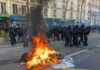

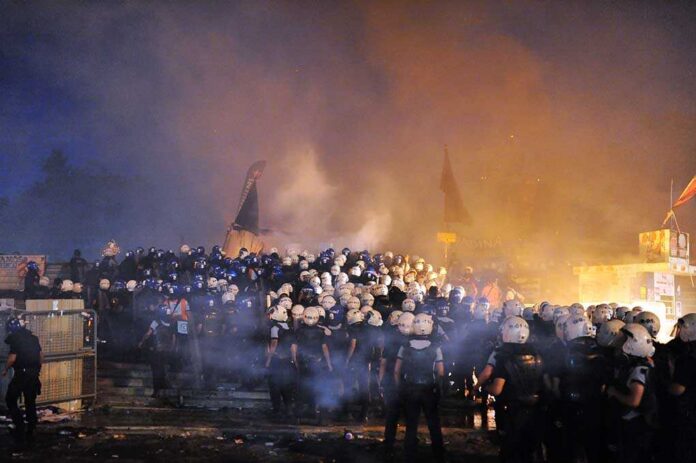
French police used water cannons and tear gas to break up a banned rally at Paris’s Place de la République, underscoring Europe’s hard turn toward tighter protest controls.
Story Snapshot
- Police dispersed a prohibited pro-Palestinian protest in central Paris using water cannons and tear gas.
- Officials said the ban aimed to prevent public disorder; about 3,000 gathered anyway, and 10 arrests followed.
- The Interior Minister ordered nationwide bans on such rallies, citing security risks.
- The clash fits a wider pattern in France where courts and police weigh protest rights against safety.
What Happened at Place de la République
On October 12, 2023, police moved to disperse a pro-Palestinian gathering at Paris’s Place de la République after authorities banned the event. Reporters on scene documented tear gas and water-cannon use as officers pushed people from the square. The British Broadcasting Corporation said about 3,000 people joined the rally and that police made 10 arrests. Reuters reported that officers used both tear gas and water cannons to enforce the ban and clear the area.
Interior Minister Gérald Darmanin had ordered prefects across France to prohibit pro-Palestinian demonstrations, saying the gatherings could disrupt public order. Police treated the Paris assembly as unlawful because it defied that ban. Officers issued orders to disperse and then used crowd-control tools when people stayed. Water cannons and tear gas are standard French riot-control tactics. Their use signaled that police viewed the risk as high enough to require force.
Why Authorities Said the Ban Was Needed
Government officials said the ban aimed to prevent violence, vandalism, and wider unrest during a tense moment tied to the Israel-Hamas war. The Interior Ministry cited the risk of clashes and disorder as the legal basis for bans and dispersal. At the same time, President Emmanuel Macron urged people not to import the Middle East conflict into France, warning that passions were running high on all sides. This framing placed public safety ahead of assembly rights during a sensitive period.
The British Broadcasting Corporation reported that the Paris bans followed days of heated debate about risk and rights. France has a long record of heavy protest policing, from labor marches to “yellow vest” actions. Tactics like water cannons and tear gas often trigger backlash from civil liberties groups. Yet officials argue they are needed to stop property damage and violence. That tension shaped the Paris operation and the country’s messaging around it.
How This Fits France’s Protest-Policing Playbook
French protest management often follows a similar script. Authorities restrict or ban a march due to safety concerns. Demonstrators gather anyway. Police declare the event unlawful and order dispersal. Force follows when people refuse to leave. Courts sometimes weigh in later, testing whether bans and tactics were necessary and proportionate. A recent high court docket shows judges reviewing such measures, asking if risks were real and if limits were narrowly drawn.
🟠BREAKING: Police turned WATER CANNON on protesters in Paris today as clashes erupted at the end of a march of 110,000 people.#Paris pic.twitter.com/TL2dwAHKeD
— Tea, Biscuits & Tyranny! (@teabisreal) October 24, 2026
This Paris clash sits inside that legal and social pattern. The central question is not whether water cannons were used, but whether the ban and the force met France’s rules. The Council of State has pressed officials to balance the right to assemble with clear, present risks. That balance shifts with context, like recent unrest or threats of violence. The review process matters because it tells future prefects how far they can go when tensions rise.
Why Americans Should Care
Across Western democracies, leaders say they must keep order when tempers run hot. Protesters say the state uses that claim to shut down speech it dislikes. The Paris episode shows how fast a ban can turn into batons, gas, and water jets. That image speaks to a wider fear on both the right and the left: powerful institutions protect themselves first and hear the public second. When people feel unheard, pressure builds, and scenes like Paris become more likely, not less.
In the United States, readers see echoes in debates over campus protests, police crowd-control tactics, and emergency powers. The lesson is practical. Clear rules, narrow limits, and fast court checks matter when governments curb protests. France’s path shows that bans may stop a riot today but can also deepen mistrust tomorrow. Stable democracies need both order and voice. If either side overwhelms the other, streets, not meeting rooms, decide the next move.
What We Still Do Not Know
Public reports described the water-cannon use and arrests. They did not list the exact police units, the number of discharges, or the detailed timeline inside the square. Journalists also did not cite the specific text of the Paris ban order. Those records would clarify whether doctrine on force and dispersal was followed. Even so, the core facts are consistent across outlets: the rally was banned, thousands gathered, and police used water cannons and tear gas to clear the square.
Sources:
youtube.com, reuters.com, bbc.com