
A commercial jet carrying Senator Ashley Moody declared an emergency and diverted after a reported engine problem, spotlighting air-safety readiness and government accountability in a single tense afternoon.
Story Snapshot
- American Airlines Flight 496 from Tampa to Washington diverted to Orlando after an engine issue.
- Senator Ashley Moody’s office said the plane had an engine failure and landed safely.
- The Federal Aviation Administration said the landing occurred around 3 p.m. and opened an inquiry.
- Radio traffic reportedly captured a Mayday call and a left-engine shutdown.
What Happened During Flight 496
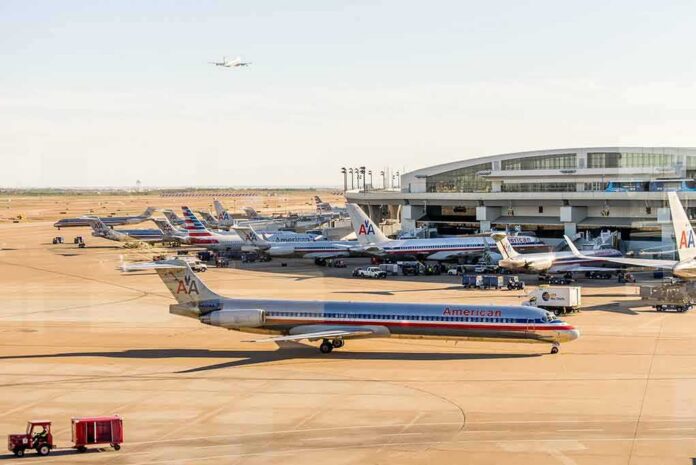
American Airlines Flight 496 took off from Tampa bound for Washington, D.C., with Senator Ashley Moody on board. Soon after departure, the crew reported an engine problem and diverted to Orlando. News outlets identified the flight and route, and reported the diversion as an emergency response to the engine issue. The senator’s office said the aircraft experienced an engine failure and had to land in Orlando. The plane landed safely, and passengers deplaned without incident reported in those accounts.
The Federal Aviation Administration said the aircraft landed at Orlando International Airport at about 3 p.m. local time and started an investigation into the event, according to reports citing agency information. Published stories also described air traffic control audio. The audio reportedly captured a Mayday call, a report of trouble with the left engine, and the shutdown of that engine before landing. Officials did not release a cause. Media accounts did not cite injuries or confirmed aircraft damage.
Who Was Aboard And Why It Drew Attention
Senator Ashley Moody’s presence on the aircraft made the incident national news within hours. Her office said she caught a later flight to Washington, but missed scheduled Senate votes because of the diversion. That consequence linked a routine safety procedure to the tempo of government work. The focus on a sitting senator also risked turning a technical event into a political story instead of a safety case. Still, the facts center on crew action and a safe landing.
Coverage from several outlets repeated core details with little variation. Reports matched on the route, the diversion to Orlando, and the reason given as an engine issue or failure. This alignment is common in fast-moving stories. It can amplify single-source facts. It also keeps attention on the most important points for travelers: the crew declared an emergency, landed at a major airport, and passengers continued their trips later. That is how the system should work.
How Pilots Train For One-Engine Flight
Airliners are designed to fly safely on one engine. When a crew suspects engine trouble, standard steps apply. Pilots secure the affected engine, declare an emergency, and divert to an airport with long runways, rescue teams, and maintenance. Aviation history shows this playbook used many times across different aircraft types. A well-known case involved a Southwest Airlines jet that suffered a left engine failure, leading to focused safety actions by investigators years later. Procedures exist to protect passengers and crews when equipment fails.
Reports suggested about 178 passengers were on Flight 496 and that Orlando offered long runways and airline maintenance capability. Those details fit typical diversion logic. Crews choose airports that reduce risk and speed help. Orlando International Airport is built to handle large jets, has strong emergency support, and offers service options for a quick inspection. That is why thousands of diversions over many years have ended with safe walk-offs instead of worst-case outcomes.
What We Know And What Comes Next
Facts in public view are clear on key points. The jet diverted, landed safely, and the Federal Aviation Administration opened an inquiry. The senator’s office called it an engine failure, while some reports used the broader term “engine issue”. That wording gap is normal before inspectors look inside a nacelle and review sensor data. Final answers often arrive later, after maintenance logs, part checks, and expert review shape a cause.
Republican Senator Ashley Moody (R-FL) was aboard an American Airlines flight on Monday that was forced to make an emergency landing in Orlando, following a reported midair engine failure.https://t.co/yT1gpFs2Nq
— Katie Liane (@TheKaterPotater) November 17, 2026
For readers who feel leaders and agencies often dodge hard problems, this episode cuts both ways. The crew and airport teams did their jobs by the book. The system worked where it mattered most. Yet the public still waits on clear technical findings, which can take time and often land with little fanfare. That delay can feed doubts about transparency. A prompt, plain-language update from regulators and the airline would help rebuild trust across the political spectrum.
Sources:
thegatewaypundit.com, snntv.com, wisn.com, fox13seattle.com, aerocorner.com, thedailybeast.com, foxnews.com