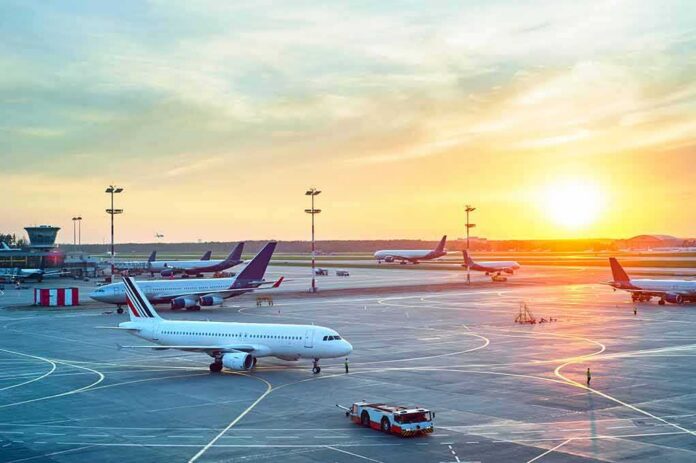
Two jetliners struck each other while taxiing at Miami International Airport, adding fresh strain to a travel system already reeling from days of delays.
Story Snapshot
- The Federal Aviation Administration said a Copa Airlines Boeing 737’s wingtip hit a UPS Boeing 767’s nose while taxiing in Miami.
- Airport officials reported two people with minor injuries treated on site; no hospital transports were needed.
- The event occurred around 9 p.m. to 9:15 p.m. on November 14 and is under investigation.
- The collision followed a separate nationwide disruption, fueling wider concerns about airport surface safety.
What Happened On The Taxiway
The Federal Aviation Administration (FAA) said the wingtip of a Copa Airlines Boeing 737 struck the nose of a UPS Boeing 767 while both airplanes were taxiing at Miami International Airport on the night of November 14. The FAA said controllers told the UPS crew to give way to the Copa flight. The Copa aircraft was taxiing to a gate, and the UPS cargo jet was bound for Bogota, Colombia. Reported times ranged from about 9 p.m. to about 9:15 p.m. local.
Miami-Dade Aviation and Miami-Dade Fire Rescue reported two people with minor injuries who were treated at the scene and did not need hospital care, according to news accounts citing airport officials. Multiple outlets described the same point of contact: the Copa wingtip and the UPS jet’s nose area. The FAA said it opened an investigation. Officials did not release a final cause or fault finding at this stage, and the public materials did not include a full air traffic control transcript.
Why This Collision Matters For Travelers
This collision occurred soon after a separate nationwide air travel disruption, which left many flyers frustrated and thousands of flights delayed, according to multiple reports. Linking the two can be tempting, but they are distinct events. The Miami contact happened during taxi, not in flight. That matters because most risk on the ground comes from surface movement conflicts, not midair failures. Damage was limited, but any contact between large jets on the ground is serious for safety and schedule reliability.
Airport surface safety depends on many parts working together. Pilots must follow clear routes. Controllers must watch movement in real time. Airport design, markings, and lighting must guide both. The FAA’s Runway Incursion Mitigation effort shows how often surface risks arise. In fiscal year 2025, the program mapped 1,268 incursions and added 100 locations with problematic taxiway geometry to its risk inventory. Most incursions do not cause damage, but the totals show the scale of the challenge.
How Investigators Will Build The Sequence
Investigators will examine controller instructions, aircraft positions, and the taxiway layout. They may review recordings, radar or surface tracking, and statements from both crews. The aim is to confirm who was where, who had right of way, and how each crew and the tower understood the plan. Reuters reported a timeline around 9:15 p.m., while the FAA placed the time near 9 p.m., underscoring that early time stamps can vary before full records are compiled.
Past cases show that surface events often trace to several factors, not one choice by one person. Federal data and safety briefs point to human factors, signage, lighting, workload, and geometry interacting during taxi. The FAA’s safety publications highlight the need to refine layouts and cues so pilots recognize conflict points sooner and avoid wrong turns or overshoots, especially at busy hubs under pressure. That lens will likely guide this review as well.
What It Means For Accountability And Trust
People on the left and right agree on this much: basic services should work. When planes bump on the ground at a major airport, it feels like yet another sign that systems are strained. Flyers want clear lines of accountability and proof that officials fix hazards fast, not after months of studies. The FAA’s record shows attention to these risks, but frequent incursions remind us that attention must become faster redesign, clearer markings, and better warning tech where needed.
FAA officials were investigating a collision between two planes at a taxiway intersection at Miami International Airport, where one aircraft’s wingtip struck the nose of another, authorities said. Two people reported minor injuries.
— Geostratfor (@ElCambur442953) November 15, 2026
For now, the facts are clear and contained. The Copa 737’s wingtip hit the UPS 767’s nose while taxiing. Two people had minor injuries. The FAA is investigating. Time details differ slightly across reports, which is common in early accounts. Travelers will judge the system by what happens next: transparent findings, prompt fixes at the hotspot if needed, and fewer close calls as holiday travel ramps up.
Sources:
townhall.com, faa.gov, wfaa.com, upi.com, edition.cnn.com, ntsb.gov