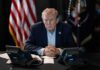


When the world’s most pivotal chip company investigates whether its chief executive was targeted by foreign intelligence, the real story is not scandal but exposure: how personal relationships, export policy, and corporate governance intersect to become a single point of national risk.
The Short Version
- Nvidia’s board opened an independent investigation into whether CEO Jensen Huang was targeted by a foreign-intelligence effort and is using outside counsel to run it.
- U.S. intelligence assessments reported by major outlets identified Alice Huang as a Chinese intelligence asset who cultivated a relationship with Huang; the alleged objective included access and potential influence over chip availability to China.
- Huang acknowledged an intimate relationship and apologized; Nvidia simultaneously said it has no reason to believe national security or company secrets were compromised.
- China’s government and the company linked to the woman deny wrongdoing; the core public evidence remains classified or unreleased.
What is known, and why the board’s move matters
Nvidia’s independent directors initiated a formal review “in light of recent reporting” that Jensen Huang had been targeted by a foreign intelligence operation; the committee retained outside counsel and stated Huang supports and will cooperate with the process. Corporate boards do not authorize intrusive, high-visibility inquiries into a sitting, indispensable CEO lightly. Doing so signals that the underlying allegations—whether ultimately validated or not—touch on risks large enough to implicate fiduciary duty, regulatory exposure, and national-security interfaces that a company like Nvidia now navigates as a matter of course.
The backbone of the allegation comes from U.S. intelligence assessments described by the New York Times: that Alice Huang, a Chinese national associated with the chip-buying sector, was acting as an asset of China’s Ministry of State Security and developed a close relationship with Huang with potential objectives tied to Nvidia’s advanced chips. Huang admitted an intimate relationship and issued an apology to family and colleagues—a personal fact pattern that removes any ambiguity about whether a relationship occurred but does not, on its own, establish espionage or compromise. Nvidia’s board, for its part, conveyed that it had “no reason to believe” national security or company secrets were compromised, even as it opened the inquiry to test exactly that.
How modern economic espionage targets the semiconductor edge
This episode sits inside a documented pattern: state-linked actors acquiring sensitive technology through commercial relationships and human access, not only via cloak-and-dagger tradecraft. The FBI has long warned that insider-enabled economic espionage—targeting unclassified but commercially decisive know-how—has grown as a share of its caseload. Past prosecutions have detailed recruitment efforts directed at employees with technical access, front companies positioned along the supply chain, and attempts to launder end-use through third-country buyers, all to bypass export controls and capture intellectual property. In chips, where a single node of capability (advanced GPUs, high-bandwidth memory integration, EDA tools) can confer systemic leverage, the “influence objective” is often as valuable as raw theft: persuading a firm to shape product roadmaps, binning strategies, or sales channels in ways that increase availability to restricted markets.
That is why the alleged objective reported here—to gather on Huang and potentially influence Nvidia’s chip availability to China—tracks with established modus operandi, even as the public record has not surfaced a specific transfer or policy action linked causally to the relationship. Companies at the frontier become policy actors by default; their export decisions—mediated by U.S. rules, customer pressure, and geopolitical risk—are themselves targets of influence.
What is missing from public view, and how to read the silence
The strongest claims in the press rest on classified or undisclosed intelligence: surveillance-derived assessments, a memo allegedly circulated among senior U.S. officials, and analytic attributions naming Alice Huang as an MSS asset. None of that underlying material is public. That evidentiary gap does not, by itself, discredit the reporting; it does mean independent verification is not available to outside observers. Nvidia’s board acknowledged the gravity by launching a review while stating it has not identified an actual compromise—two truths that can coexist when risk is plausible but unproven.
On the other side of the ledger are denials and assurances without counterevidence: China’s foreign ministry called the affair-and-espionage narrative groundless and a smear; Megaspeed denied wrongdoing and said inspections found no violations. Huang framed his conduct as a personal failing, pledged cooperation, and affirmed a commitment to U.S. national security—statements that address intent but not the intelligence community’s tradecraft-derived assessment. In a genuine counterintelligence inquiry, definitive public exoneration or confirmation often lags the investigative facts by months, sometimes years.
Governance mechanics: how an independent board inquiry should run
When the subject is the CEO, independence is not optics; it is the process. A properly empowered committee will retain external counsel; set a preservation hold across relevant communications; and obtain forensically sound collections of corporate email, messaging, calendar, device logs, visitor records, and access-control events for period-relevant windows. It will interview principals and proximate executives, map contacts to business decisions, and reconstruct a dated timeline against export-license filings, channel partner orders, and any government interactions tied to China-bound product decisions. The goal is narrow and testable: identify whether confidential Nvidia information was accessed or transmitted, whether any influence was exerted on sales or policy positions, and whether any compliance, disclosure, or insider-risk controls failed.
If no compromise is found, the committee should still deliver control enhancements: strengthening executive travel and personal-device protocols; codifying conflict-of-interest and gift/relationship disclosures for sensitive-market counterparties; augmenting insider-risk monitoring tuned to executive-level access; and formalizing escalation paths with government partners for threat briefings. For a company sized like Nvidia, those upgrades are table stakes even absent an adverse finding.
Export controls, corporate agency, and the semiconductor choke points
Semiconductor export controls govern chips, design software, manufacturing equipment, and related technology; they move, sometimes abruptly, with the strategic environment. In practice, compliance risk concentrates at three layers: product definition (which SKUs meet the letter and spirit of rules), channel integrity (which distributors and integrators touch the gear), and end-use assurance (which clouds, labs, or customers ultimately operate the systems). A sophisticated influence operation does not need a schematic to matter; marginal changes in binning thresholds, reference designs, or distributor routing can alter availability at scale.
Nvidia, like peers, sits astride all three layers. That reality makes executive relationships with counterparties in high-risk jurisdictions unusually sensitive. It also means boards should expect recurrent tension between commercial incentives and national-security imperatives and invest early in “designing for compliance”—engineering portfolios, sales motions, and partner networks around stable policy scenarios rather than perpetual carve-outs.
How to weigh consequence before conclusion
Two things can be true at once: the public case has evidentiary limits, and the risk posture is serious. The reporting presents a coherent, if classified-sourced, account of an MSS-linked asset cultivating proximity to the most consequential executive in global semiconductors—with a plausible influence objective centered on chip availability. Counter-claims so far are generic denials, not documentary refutations. Nvidia’s board response is proportionate to that asymmetry: investigate thoroughly; keep the CEO in seat pending facts; reassure markets while hardening controls.
The broader lesson transcends this case. In an era when a handful of firms shape the computational substrate of economies and militaries, CEOs are not only fiduciaries; they are targets. The right posture is not paranoia; it is institutionalizing skepticism—about relationships, about channels, and about convenience. When the frontier is your product, counterintelligence is part of the job description.
Nvidia CEO Jensen Huang has admitted to an affair with a woman suspected of spying for China.
Nvidia has launched an investigation but says there's no evidence company secrets were leaked.#nv pic.twitter.com/4Cg1RmQWWh
— Jm Jadoon (@JmJadoon) November 11, 2026
What to watch from here
Three outcomes will define the arc. First, the board report: whether it identifies any transfer, policy linkage, or control failure—and the scope of remedial measures. Second, regulatory and congressional follow-up: whether export-control authorities or committees seek testimony, impose additional conditions, or generalize new guidance to the sector. Third, the industry’s response: whether peer companies adopt executive-risk controls as rigorously as they instrument supply chains. Even if this inquiry closes without a finding of compromise, the semiconductor industry has been put on notice: in geopolitics at the speed of compute, personal vectors are operational attack surfaces.
Sources:
youtube.com, nytimes.com, bbc.com, apnews.com, politico.com, abcnews.com