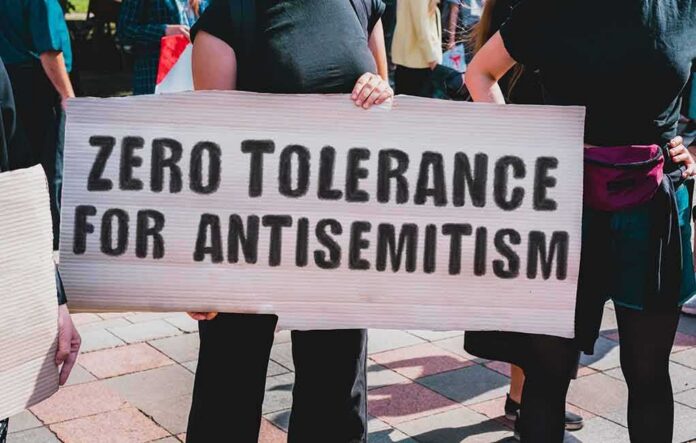
When activists target businesses over geopolitics and thousands show up to defend those storefronts, you are watching a live stress test of two American commitments that often collide: the right to organize political boycotts and the taboo against identity-based targeting. Understanding where one ends and the other begins is the crux of episodes like Philadelphia’s “boycott ride.”
The Short Version
- Organizers framed the action as a conventional political boycott aimed at businesses they described as supporting Israel; critics called it antisemitic targeting of Jewish-owned restaurants.
- The campaign used flyers, a named ride, and anti-Zionist messaging, but offered uneven, restaurant-specific evidence connecting each target to Israel policy.
- Officials denounced the effort; counterprotesters and patrons produced long lines, creating a narrative of boycott failure.
- U.S. law protects nonviolent, political boycotts, but the boundary with identity-based discrimination—and the role of timing, rhetoric, and proof—drives the public dispute.
What Happened And Why It Mattered
In Philadelphia, a cycling-linked protest called for a boycott of six restaurants—Mac Mart, K’Far Cafe, Huda, Goldie, Dizengoff, and Schlesinger’s Deli—circulated via a flyer and a planned bike ride. Organizers said the list reflected “support for Israel,” described the businesses as “Zionist,” and presented the campaign as anti-Zionist rather than anti-Jewish. The format was familiar: a public call, a defined target set, and a march-like demonstration consonant with decades of consumer boycotts in U.S. politics.
The action triggered an immediate backlash. City and state officials condemned it as singling out Jewish-owned establishments; counterprotesters lined up outside the named restaurants, some waiting hours to buy food, and the day ended with three arrests and minor injuries to police. The optics cut against economic pressure: the restaurants looked busier than usual, and supporters framed the turnout as proof the boycott failed to bite.
Mechanism And Playbook: Political Boycott Versus Identity Targeting
Political boycotts are a recognizable expressive tool: organizers announce a grievance, identify targets tied to the contested policy, and ask consumers to withdraw patronage. The Supreme Court’s Claiborne Hardware decision placed nonviolent, political boycotts squarely within the First Amendment—protecting speeches, marching, organizing, and peaceful picketing as expressive conduct, while withholding protection from violence and coercion. That doctrinal baseline explains why protest formats like marches and flyers recur: they are lawful ways to communicate and mobilize.
But the same mechanics can backfire when the category of targets looks like an identity proxy. Here, the six businesses shared owners who are Jewish or perceived as Israeli-affiliated. Organizers insisted the criterion was support for Israel, not Jewishness; they also asserted, in general terms, that some owners made statements or raised funds for Israel. Yet the public record, as reported in mainstream coverage, did not provide a restaurant-by-restaurant evidentiary dossier—no dated donations, events, or policy-linked actions for each target. That evidentiary gap made room for critics to argue the list tracked identity first, politics second.
Evidence And Its Limits: What The Record Shows
On the organizers’ side, there was an explicit statement: “the reason we are calling for a boycott of these businesses is because of their support for Israel,” and a flyer that named the six restaurants and promoted the bike ride. The group self-described as anti-Zionist and claimed the targets were “Zionist” because of that support. Those are direct assertions of motive—important, but not the same as documented proof attached to each establishment.
On the other side, public officials, business owners, and Jewish community leaders pointed to the common identity of the owners and the timing near the Kristallnacht anniversary to frame the campaign as antisemitic. Large supportive lines outside the restaurants on boycott day reinforced the perception that the tactic misfired economically. Arrests—though not directly tied to organizers—shifted part of the narrative to public order rather than message.
Where The Real Disagreement Lies
The dispute is not over whether boycotts are protected speech; they are, when nonviolent and political. It is over categorization and proof. If the targets are chosen because they materially support a government’s policies, a boycott falls within the Claiborne paradigm. If they are chosen because the owners are Jewish, the social meaning—and possibly legal risk under public-accommodations or anti-discrimination frameworks in different contexts—changes dramatically. Philadelphia’s episode sits in that gray space because the organizers offered a political rationale, but did not publish a consistent, verifiable record linking each business to specific conduct supporting Israeli policy.
This is why the same set of facts could be described, credibly but differently, by each side: organizers say “anti-Zionism, not antisemitism,” while critics point to the shared identity of owners and the absence of individualized proof to conclude the opposite. Add the charged timing and rhetoric, and perception hardens quickly.
How We Got Here: The History That Shapes Today’s Reactions
American consumers have long used boycotts to express disapproval—from civil-rights era campaigns to farm-worker movements to contemporary divestment efforts. Claiborne Hardware is the doctrinal anchor many advocates cite: it treats consumer withdrawal, advocacy, and peaceful picketing as speech on matters of public concern. But the case also drew a line between protected persuasion and unprotected violence or threats. That line has animated later disputes over Israel-related boycotts, where legislatures and litigants contest whether governments can condition contracts on a pledge not to boycott, and courts often reach back to Claiborne to evaluate those rules.
Against that backdrop, the Philadelphia dynamic makes sense. A familiar protest tactic enters a context where identity and politics are entangled; public officials respond to perceived identity targeting; supporters flood the zone to counteract the economic message; and the day becomes a referendum on social meaning rather than a ledger of lost sales.
PHILADELPHIA ERUPTS! ANTI-ISRAEL BOYCOTT PROTEST OUTSIDE JEWISH-OWNED RESTAURANTS SPARKS MASSIVE BACKLASH
Tensions escalate as demonstrators target six Jewish-owned restaurants over alleged ties to Israel, prompting hundreds of counterprotesters to rally in support of the… pic.twitter.com/3Si59jSZFv
— NewYork-Insight (@NewYork_Insight) November 9, 2026
What Would Clarify The Line Next Time
Clarity requires evidence and category discipline. If organizers intend to target “support for Israel,” the credible way to do it is to publish a transparent methodology and a dossier for each business: dated posts, donations, event sponsorships, or policies that meet a preannounced threshold. That allows the public to assess whether the category is political conduct, not a proxy for identity, and it narrows the space for officials to dismiss the action as discriminatory. Without it, the social meaning defaults to the most visible commonality: who the owners are, not what they did.
Consequences And Practical Lessons
First, effectiveness. Boycotts succeed by sustained consumer withdrawal, not by adversarial attention. If counterprotests create long lines at targeted storefronts, the short-run economic signal goes the wrong way; it may still have expressive value, but the lever of pressure is blunted.
Second, legitimacy. Political speech gains resilience when it is specific and documented. A list that appears underinclusive, inconsistently sourced, or timed to evoke historical trauma will be received—and opposed—accordingly. That is not simply optics; it is how communities infer motive.
Third, law and norms. Claiborne protects the form; communities judge the substance. Nonviolence and verifiable, conduct-based criteria keep the protest in the strongest constitutional and moral posture. When arrests, even on the periphery, and identity inference dominate the narrative, the cause cedes the high ground it seeks to claim.
Sources:
facebook.com, abc7news.com, kmbc.com, usatoday.com, today.com, wesh.com