
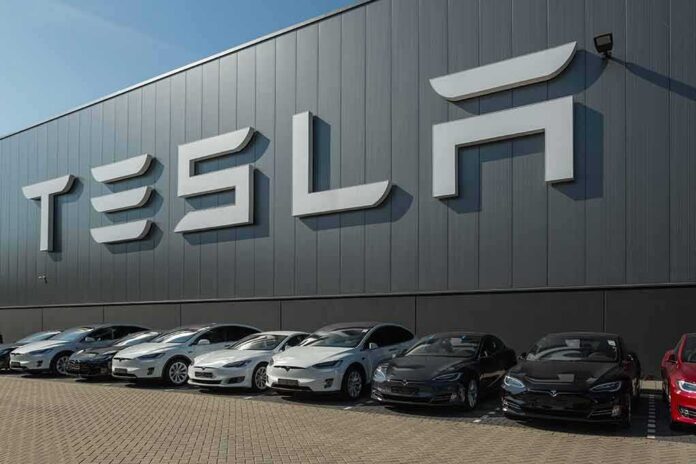
Tesla is winding down Cybertruck production in Texas to clear factory space for paid Cybercab robotaxis already running in Austin, even as federal regulators audit the robotaxi’s safety compliance.
Story Snapshot
- Tesla began paid Cybercab service in Austin and told regulators the cars meet federal safety rules.
- Elon Musk said Gigafactory Texas will shift from Cybertruck to Cybercab production next year.
- Federal safety regulators opened an audit into Tesla’s certification and the car’s lack of manual controls.
- Reported factory plans suggest large Cybercab capacity if approvals and safety questions are resolved.
What Tesla Changed And Why It Matters
Tesla launched paid Cybercab rides in Austin in September, marking a real commercial test and not just a demo. The National Highway Traffic Safety Administration record states Tesla told the agency the robotaxi meets all applicable federal safety rules. Musk then said Texas will taper Cybertruck output around mid-year to make more Cybercabs, signaling a major bet on driverless service over a slow-selling pickup. This pivot shifts jobs, supply chains, and investor hopes toward autonomy-first growth.
Tesla’s move fits a familiar pattern in automated driving. Companies self-certify first, deploy in a small area, and face regulator review after launch. That flow makes fast rollouts possible but pushes proof of safety into the public eye. People across the spectrum worry that big tech gets green lights while rules lag. Others welcome new options and jobs. The key test now is whether data from Austin shows safety and reliability that justify wider use at scale.
Regulators Are Probing The Safety Basis
The National Highway Traffic Safety Administration opened an “Audit Query” after launch. The agency said it would examine the process and technical data behind Tesla’s self-certification, including whether Tesla treated some safety standards as not applicable. Regulators highlighted missing traditional controls: no steering wheel, brake pedal, gas pedal, or mirrors. They also pressed Tesla on how braking rules that mention a foot control are met by electronic systems. This is a live review, not a final ruling.
Reuters reported that regulators also asked if a person can drive the Cybercab or move it using the touchscreen. Officials said current standards still apply while any future updates are pending. That means Tesla must defend each design choice under today’s code, not tomorrow’s proposals. If the audit finds gaps, Tesla could face limits or fixes before expanding. If the audit confirms compliance, the company gains ground for growth. Either way, a clear answer matters for public trust and city cooperation.
Factory Capacity And The Road To Scale
Reports tied to Tesla executives describe a plan for significant robotaxi output, with more than one hundred thousand units of annual capacity and broader deployment beyond Austin if approvals and performance allow. Big numbers on a slide do not equal safe rides in traffic, though. Scale needs consistent autonomy in bad weather, complex roads, and busy pickup zones. It also needs clean data on crashes, near-misses, rider incidents, and response times that city leaders and riders can check.
Early Austin service gives Tesla a chance to prove its case. But the fleet remains small, so public evidence is thin. That leaves room for hype and fear to grow. Many readers, right and left, worry that elites make decisions in back rooms while regular people pay the price. Transparent safety data can cut through that. Trip-level reporting, independent audits, and clear emergency procedures would show whether the promise of fewer crashes and cheaper rides matches reality on the street.
What Riders, Cities, And Workers Should Watch Next
Riders should look for basic service quality: accurate pickups, direct routes, and safe behavior near bikes and walkers. Cities should require clear playbooks for emergency access, including how first responders secure and move a car that lacks pedals and a wheel. Regulators should publish audit outcomes in plain language so anyone can see how each rule was met. Tesla should share aggregated safety data from Austin to back its claims, not just quotes and demos. This is how trust is built mile by mile.
The CyberTruck is officially being discontinued 🪦
Elon Musk announced that Tesla will wind down Cybertruck production at its Texas factory around mid-2027 to make room for increased production of its two-seat Cybercab robotaxi. pic.twitter.com/VvGY1Kbuta
— Complex (@Complex) November 6, 2026
The stakes go beyond one company. If robotaxis cut injuries and expand mobility, that is a win for public safety and household budgets. If they raise congestion or sidestep rules, costs fall on taxpayers and local workers. The next few months will show whether Tesla’s pivot is a smart retooling or a risky gamble. The audit outcome, factory ramp, and real-world safety data will tell the story—more than any headline or post. Until then, eyes on the road and facts over spin.
Sources:
washingtontimes.com, finance.yahoo.com, nhtsa.gov, abc30.com, insideevs.com