

When an incumbent publicly concedes that a signature enforcement policy overshot its mark, the admission is not a footnote; it is a window into how blunt instruments in immigration can boomerang—operationally, economically, and politically.
The Short Version
- President Trump said on 60 Minutes that his deportation approach “was too tough,” particularly toward nonviolent workers with long ties in the U.S.
- He linked that approach to political costs in the midterms, saying, “I think ultimately that hurt me.”
- His comments distinguished targeted removals of dangerous offenders from broader actions that swept up employed, taxpaying residents.
- Research shows intensive enforcement can impose local labor-market and community costs, even as it signals border control to voters.
What Trump actually said—and why it matters
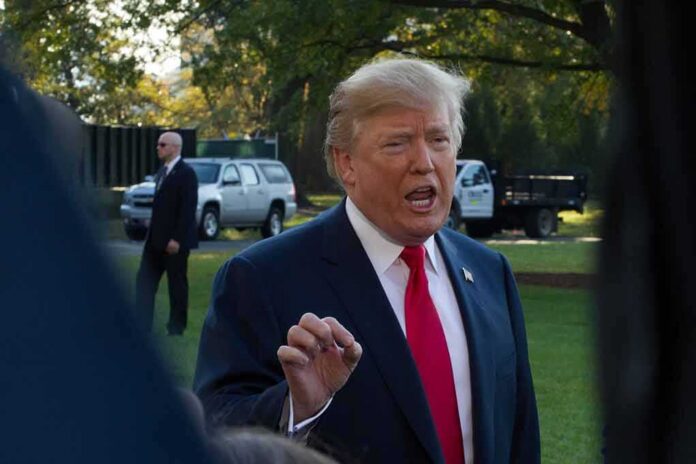
In a post–midterms 60 Minutes interview, President Trump reflected on his administration’s deportation strategy and broke with his own hardline rhetoric at a crucial seam: distinguishing the pursuit of “the bad ones” from removals that captured people embedded in the economy and community life. “I think it was too tough,” he said, adding that workers in landscaping or hospitality, some paying taxes, were removed despite no serious criminal record beyond unlawful entry. He also made the political connection explicit: “I think ultimately that hurt me.” The on-air exchange provides a clear, attributable account of his recalibration, not as a repudiation of enforcement itself, but as an acknowledgment that breadth and bluntness carried costs beyond their intended targets.
That distinction—between symbolically forceful enforcement and administratively selective enforcement—sits at the center of modern U.S. immigration politics. Leaders routinely seek the optics of control; trouble starts when enforcement regimes do not discriminate between dangerous offenders and long-settled, economically active residents. Trump’s framing, as reported by CBS and summarized across outlets, reinforces that point: claim credit for removing serious criminals, but concede overreach when enforcement sweeps into the mainstream workplace and family life.
Mechanism: how broad deportation regimes reach beyond “the bad ones”
Deportation policy is not a single switch; it is a layered set of arrest priorities, detention use, expedited removal tools, and workplace or community encounters that, taken together, determine who is actually touched by the system. When priorities are drawn broadly, operational incentives drive casework toward the most reachable populations—often people with stable jobs, fixed addresses, and decades-long residence. Remove bright-line exclusions for long-term, nonviolent residents and the machine will inevitably process them. Trump’s own examples—workers in hotels and landscaping—are telling; workplace enforcement and collateral arrests during targeted operations commonly pull in precisely those profiles, even when the stated aim is serious criminality.
In practice, two feedback loops form. First, employers in sectors with thin margins and chronic vacancies—care work, food processing, hospitality, construction—absorb immediate shocks when work-authorized or tolerated labor disappears. Second, communities experience the spillovers: school withdrawals, vacant rentals, shuttered microbusinesses, and a climate of avoidance around civic life. The administration’s desire for visible results interacts with these ground truths, producing removals that are legible to voters and, at times, painful to neighborhoods.
Evidence from the interview, and what it does and does not claim
The record is straightforward on three points. First, Trump stated on national television that parts of his deportation approach were “too tough.” Second, he specified that some of those affected had jobs and limited legal violations beyond illegal entry. Third, he connected that approach to electoral harm in the midterms. These elements are corroborated by CBS’s account and additional summaries from Bloomberg and Newsweek, which characterize the remarks as an admission that the breadth of removals created political exposure beyond the intended deterrence signal.
Two clarifications sharpen, rather than dilute, the takeaway. The interview does not constitute a formal policy reversal—no DHS directive or enforcement memo is cited in the reporting. And while Trump linked deportations to midterm losses, that is his political judgment, not a causal study. Still, as presidential after-action analysis, it is consequential: it delineates between the public safety mandate he continues to champion and a category of removals he now regards as counterproductive, practically and politically.
The recurring policy tension: symbolic control versus selective enforcement
The U.S. has cycled through variants of this trade-off for two decades. Programs like Secure Communities, workplace audits, and 287(g) agreements expand the aperture of removals; when implemented aggressively, they surface the same problem Trump described—large numbers of nonviolent, economically active residents pushed into the pipeline. Academic and policy syntheses assessing prior waves of enforcement find measurable labor-market and community effects: wage and employment disruptions for U.S.-born workers in certain segments, declines in local economic activity, and frictions that do not map neatly onto partisan talking points.
While methodologies differ, the direction of the findings is instructive for understanding Trump’s reappraisal. Brookings’ review argues that increased deportations can worsen outcomes for U.S.-born workers by destabilizing local labor markets; CRS summaries highlight mixed effects by segment and geography; and peer-reviewed work on enforcement programs documents employment and earnings shifts that cut against simplistic “fewer immigrants, more jobs” narratives. Translate that to politics, and the mechanism for alienating swing constituencies—employers, suburban voters uncomfortable with family separations, communities reliant on essential workers—becomes legible.
Where the line often belongs: targeting dangerous offenders while insulating embedded workers
Trump’s own language sketches a prioritization regime many enforcement professionals have long advocated: concentrate resources on individuals who pose threats to public safety and national security; cabin collateral arrests that capture long-settled, nonviolent workers; and preserve tools to address recent unlawful entries and trafficking networks. That balance acknowledges the state’s obligation to enforce the law without pretending that every unauthorized presence poses equal risk or yields equal public benefit when removed. It also recognizes operational reality: indiscriminate enforcement burns trust with local partners and crowds dockets with cases that neither prosecutors nor judges view as the highest and best use of scarce capacity.
The political dimension is not incidental. Voters can reward credible border control while punishing what they perceive as gratuitous disruption to community life and local economies. Trump’s concession threads that needle—defend “getting the bad ones out,” but concede the costs of a broader sweep that reached people with jobs, tax records, and roots. That is not a retreat from enforcement; it is a course correction grounded in lived outcomes as much as in polling.
Trump admitted that his deportation policy is too tough. I am actually in shock rn.
— Tɪɴᴀ 🤍 (@AthenaMarley) November 9, 2026
Implications for future policy design
Three design choices follow directly from this episode. First, write priorities with teeth: define threat tiers precisely, constrain collateral arrests to narrow exceptions, and require supervisory sign-off when operations risk sweeping in long-settled, nonviolent workers. Second, link enforcement posture to labor-market intelligence—coordinate with agencies and states to anticipate vacancies and critical services exposure, particularly in health care, elder care, construction, and food systems, where substitutability is low and disruptions ripple quickly. Third, build transparency into outcomes: publish anonymized, high-level data on removals by criminal history, years of residence, and sector to anchor public debate in facts rather than anecdotes.
Trump’s acknowledgment creates room for that recalibration without abandoning the core security objectives his administration continues to emphasize. It also aligns with the empirical record that broad-brush deportations can impose real costs at home, beyond their deterrent intent. The enduring lesson is not partisan. Enforcement that is precise, proportionate, and publicly intelligible is more sustainable—operationally and politically—than enforcement that is merely loud.
Sources:
mediaite.com, cbsnews.com, abs-cbn.com, cnn.com, journals.uchicago.edu, brookings.edu