
Fifty-three people were reported dead after a November 2 airstrike hit an aid site and nearby shelter in Komyshuvakha, underscoring the rising cost civilians pay in this war.
Story Highlights
- Officials said 53 people died after a strike on an aid site and shelter area in Komyshuvakha.
- Rescue crews dug through rubble for days under threat of more attacks.
- The strike sequence began at a school used for aid, followed by blasts near a shelter.
- Police video showed bodies recovered and heavy equipment clearing debris.
What Officials Reported From the Strike Zone
Zaporizhzhia regional official Mykhailo Semikin said the death toll reached 53 as searches continued days after the November 2 strike on Komyshuvakha. Ukraine’s State Emergency Service had earlier reported 50 dead as crews pulled more bodies from collapsed structures. Both accounts placed the attack on November 2 and identified the small settlement in the Zaporizhzhia region as the site. These figures come from on-scene efforts to count victims as rubble was cleared.
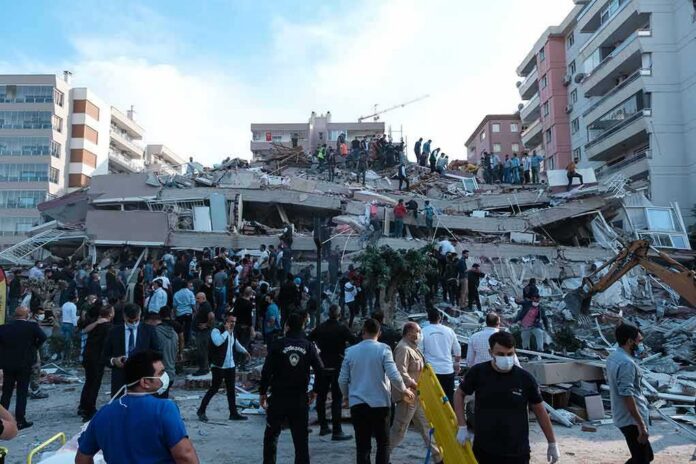
Ukraine’s State Emergency Service described a hard, slow rescue. Teams kept clearing debris and searching for people while facing the risk of more strikes. The agency said crews worked for days in dangerous conditions, which explains why the numbers rose as they moved deeper into the wreckage. This kind of work often takes time because buildings are unstable, dust and debris hide voids, and weather or power loss can slow tools and lighting.
How the Attack Unfolded, According to Local Accounts
Reports from Ukrainian officials said a school that was being used to hand out aid was hit first. After the first blast, civilians moved toward a shelter. Then, a series of nine aerial bombs struck near the shelter area, adding to the toll and damage. That sequence, if accurate, explains why so many people were caught in one place. It also helps explain the number of bodies found as crews reached deeper layers of debris.
Police-released footage, cited by international outlets, showed rescuers loading bodies into vehicles and an excavator removing rubble from the site. Video from the ground does not settle every question, but it does confirm that trained crews worked the scene and recovered victims. Visual proof like this supports the core facts: a large blast zone, many dead, and a search that stretched on for days as teams tried to reach everyone trapped below.
Evacuations and the Ongoing Human Cost
Evacuations followed as authorities cleared people from damaged areas and moved survivors to safer ground. While the exact number evacuated was not published in the reports reviewed, the public updates focused on the rising death count and the continued recovery work. In past strikes across Ukraine, evacuation counts often arrive after the first casualty updates because saving lives and securing the area come first in the response timeline.
Ukraine's emergency service says the death toll from the November 2 Russian airstrike on a school distributing humanitarian aid in Komyshuvakha has risen to 55. Rescuers recovered the remains of nine more victims and continue searching despite the threat of further attacks.… pic.twitter.com/zbTRHel6oc
— NOELREPORTS 🇪🇺 🇺🇦 (@NOELreports) November 7, 2026
The pattern seen at Komyshuvakha fits a larger wartime reality. Casualty numbers often change as crews identify victims and confirm records. United Nations human rights monitors say numbers can rise as more data becomes available. Their reporting explains that missiles, loitering munitions, and air-dropped bombs drive much of the civilian harm in urban or semi-urban areas, where blast effects trap people in collapsed buildings and make each hour of delay more deadly.
Why This Matters Beyond the Battlefield
American readers see this story through tired eyes. Many feel that leaders talk about strategy but fail to protect people caught in the crossfire. Scenes like Komyshuvakha feed a shared worry on the right and the left: that regular people pay the price while elites manage headlines. The strike hit places where people sought help and safety. That fact cuts through politics. Whether you lean conservative or liberal, 53 dead neighbors at an aid point is not how a just world should work.
The details also highlight a hard lesson about modern war. When bombs fall near schools, shelters, and aid lines, rescue workers rush in and risk their lives under threat of more attacks. The death count becomes a moving target because the work is slow and dangerous. Those realities are not spin. They are the ground truth that rescuers, families, and communities must face as they try to rebuild block by block while the sirens keep sounding.
The Road Ahead for Komyshuvakha
Local officials will continue identifying victims, clearing debris, and repairing basic services. Humanitarian groups will try to restore aid distribution points in safer locations. Law enforcement will process the site, gather witness statements, and seek to confirm the strike sequence. For now, the public record shows a deadly attack on November 2, a rescue that lasted for days, and a reported toll of 53 lives lost. Those facts will shape the next steps in relief and recovery.
People far from the front can still do something. Track credible updates, support vetted relief groups, and press leaders to focus on protecting civilians in practice, not only in speeches. Clear goals, real oversight, and respect for human life are not partisan asks. They are the floor for any policy worthy of a free nation that claims to stand with those who line up for food and shelter and never make it home.
Sources:
youtube.com, yahoo.com, en.interfax.com.ua, heraldonline.com, lbc.co.uk