
When states crowdsource targeting in an urban war, they don’t just compress the kill chain; they redraw the boundaries of accountability. Haiti’s strike on a 400 Mawozo–linked compound after social-media users supplied coordinates sits at that frontier—part battlefield innovation, part information operation, and a test of how modern forces verify what the internet delivers.
At a Glance
- Aerial attack footage and official boasts established that a compound tied to 400 Mawozo was hit; the gang’s top leader, Wilson “Lanmò San Jou” Joseph, was not killed.
- Salvadoran support to Haitian police featured prominently, but reporting points to a Haitian police drone task force as a central operator, with private contractors involved and four helicopters overhead.
- Bukele publicly asked users for the target’s exact address; responders posted coordinates. What’s missing is proof those coordinates directly drove the strike.
- Claims of “20 killed” circulated widely, yet casualty counts and identities remain unconfirmed—fueling concerns about civilian harm and narrative overreach.
What the evidence supports: a real strike, an absent kingpin, and a hybrid force
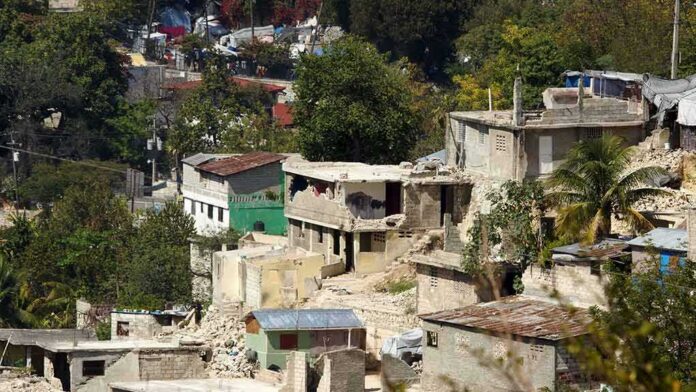
The public record supports three firm propositions. First, a two‑story compound associated with the 400 Mawozo gang was attacked from the air near Croix-des-Bouquets; video circulated by El Salvador’s President Nayib Bukele shows helicopters engaging the site, and multiple outlets reported the operation contemporaneously. Bukele framed the target as gang leader Wilson Joseph’s residence and the gang’s headquarters. The video proves an attack occurred, not the extent of destruction or the target’s precise role inside 400 Mawozo.
Second, Joseph—Lanmò San Jou—was not present when the strike hit. Accounts consistently put him away from the site, a meaningful gap if the operation is judged on decapitation value. Leadership survival often blunts strategic effect; organizations with deep recruitment pools can regenerate unless disruption extends beyond bricks and mortar.
Third, the force package was mixed. Reporting identifies a Haitian National Police drone task force using explosive drones, supported by private security contractors, with Salvadoran troops providing significant aerial support—four helicopters in total, reportedly split between Haitian task-force control and Salvadoran crews. That construct aligns with Haiti’s broader pattern of police–contractor–foreign partner operations in dense urban terrain.
The crowdsourcing claim: what actually traveled from the timeline to the target list
Bukele publicly asked for the exact address of Joseph’s house; users posted GPS coordinates for a property east of the capital. That sequence is on the record. What is not on the record is the missing middle: a documented targeting chain that shows those crowd-provided coordinates were validated and operationalized. Professional targeting ordinarily layers geospatial confirmation, pattern-of-life checks, collateral-damage estimates, and authority to strike; none of that has been released here. The strongest public evidence is that users surfaced a location and a compound was later attacked—suggestive but not dispositive that social media “called in” the strike.
For readers accustomed to modern strike narratives, that distinction matters. Crowdsourced geographic information can be valuable, but it is raw input, not finished intelligence; using it responsibly requires verification steps designed to filter spoofed data, misidentifications, and decoys. Without a disclosed validation process, the operational story remains an assertion framed by compelling video rather than a traceable audit trail.
Casualty numbers and the credibility problem of round figures
Several outlets relayed reports that up to 20 armed men were killed in the operation. None produced a name-by-name accounting, forensic report, or independent tally; other coverage noted the absence of an official figure. In conflict reporting, round numbers propagate because they are memorable, not because they are right. The risk is twofold: undercounting obscures the scale of force used; overcounting distorts efficacy and masks potential civilian harm. Given Haiti’s recent drone-war baseline—where casualty claims are frequent and verification scarce—prudence counsels treating the “20” as unconfirmed until morgue, hospital, or police records surface.
This isn’t academic nitpicking. Haiti’s drone campaign has produced significant lethality alongside recurring disputes over who died; reputable monitors and policy analysis have tallied hundreds of drone actions with documented civilian deaths, including children, across the broader conflict period. That background does not determine what happened at this single compound, but it sets a high bar for confidence when casualty claims arrive without corroboration.
Headquarters or house: why labels matter
Bukele’s framing leaned maximalist—destroyed house, destroyed headquarters. Much of the independent reporting stuck to a narrower description: a house linked to Joseph and used by 400 Mawozo was struck, while the status of any broader “headquarters” function was not established. The difference is consequential. Destroying the physical residence of a leader is a tactical effect and a psychological shot across the bow; eliminating a headquarters implies a blow to command-and-control nodes, logistics, and safe communications—all harder to verify and, in resilient networks, often redundant. Absent surveillance products, post-strike exploitation, or communications intercept summaries, “headquarters” reads as rhetoric rather than a proven operational category.
Mechanics and doctrine: how a strike like this typically comes together
Strip away the online theater and the mechanism is familiar to anyone who has worked targeting in urban environments. Tips—human, open-source, or signals-derived—cue geolocation. A drone task force can then probe the site, map ingress/egress routes, and watch for signatures of armed presence. Helicopters provide overwatch, fires, or troop insertion, with deconfliction handled by a joint coordination cell. Private contractors often support sensor integration and specialized munitions. The legal framework hinges on distinction (combatants vs. civilians), proportionality (anticipated military advantage vs. collateral harm), and feasible precautions; those rules bind even when gangs embed in neighborhoods. Haitian operations in recent years have increasingly resembled this model, though the public sees only its tip—the kinetic moment—for understandable but corrosive reasons: secrecy outpaces accountability.
The information war: imagery outpaces documentation
The first images the public sees tend to anchor the narrative. A leader’s post, a 40‑second clip of rotorcraft firing, and a declarative caption create a “completed story” long before chain-of-custody records or battle-damage assessments are releasable, if they ever are. Governments understand this; so do gangs, which counter with denials, symbolic gestures, and claims of civilian harm. In this case, the visual evidence supports that an attack occurred; it does not, by itself, establish the exact location, date, identities, or the extent of structural destruction. Those are separate propositions that require different proofs.
The communications strategy also carried a sovereignty message: Salvadoran-backed action, by design, signaled reach and resolve to armed groups who have normalized impunity in Port-au-Prince. It simultaneously invited scrutiny: when foreign troops and contractors operate alongside national police in residential districts, legitimacy questions follow—particularly if civilian casualty allegations arise.
What would settle the remaining questions
Three disclosures would convert a strong anecdote into an evidence-backed case study. First, a redacted targeting dossier linking the public coordinates to the struck building—showing the verification steps taken before release authority. Second, an authenticated geolocation of the strike video and time-stamped aviation logs tying specific airframes to weapons employment. Third, a casualty ledger—names, status, affiliation—cross-referenced with morgue and hospital records. These are routine products in professional operations; releasing carefully curated portions would not compromise sources and methods, and would materially elevate public confidence. Until then, the strike stands as tactically real, strategically ambiguous, and communicatively overdetermined.
The larger frame: effectiveness measured beyond a single blast
Does a hit on a leader’s residence move the needle? In Haiti’s present conflict, durable gains come from constricting gangs’ manpower, mobility, and money simultaneously—severing extortion channels, interdicting weapons flows, reclaiming corridors, and sustaining police presence after kinetic actions. A one-off aerial strike, however visually arresting, is a tactical tool. Its strategic value depends on follow-through: arrests, territorial stabilization, and reductions in kidnappings and targeted killings. On those metrics, the jury is still out for this operation—which is why transparency, not theatrics, will ultimately determine whether this becomes a template or a cautionary tale.
🔴 El Salvador military fires rockets at Haitian gang leader's compound
El Salvador's military fired rockets at a compound allegedly belonging to the leader of Haiti's 400 Mawozo gang. The strike came days after the gang leader requested the UN begin talks.
• 2,500 Salvadoran… pic.twitter.com/OhM4B5DuDY— NewsTongue (@NewsTongueX) November 11, 2026
Bottom line
A compound tied to 400 Mawozo was hit in a hybrid Haitian–Salvadoran operation; the gang’s leader lived to fight another day; casualty claims are unverified; and the social-media-to-strike pipeline, while publicly invoked, remains unproven in its decisive link. The episode captures modern urban warfare’s paradox: it is easier than ever to show a strike, and harder than ever to prove what it achieved.
Sources:
rfi.fr, en.wikipedia.org, ground.news, wral.com, haitiantimes.com, lieber.westpoint.edu, warwatch.ch