

A federal judge gave a 235-month prison sentence to the man who admitted he plotted a hit on a U.S. soil dissident, showing how far cross-border intimidation can reach when government insiders turn rogue.
Story Snapshot
- Nikhil Gupta pleaded guilty and received a 235-month sentence in New York for a murder-for-hire plot targeting Sikh activist Gurpatwant Singh Pannun.
- Prosecutors said Gupta arranged a $15,000 cash payment to what he thought was a hitman; it was an undercover officer.
- Court filings linked an alleged former Indian intelligence official, Vikash Yadav, as directing contact and logistics; India denies state involvement.
- The case fits a wider pattern of “transnational repression,” where regimes or agents pursue critics abroad.
What The Court Decided And Why It Matters
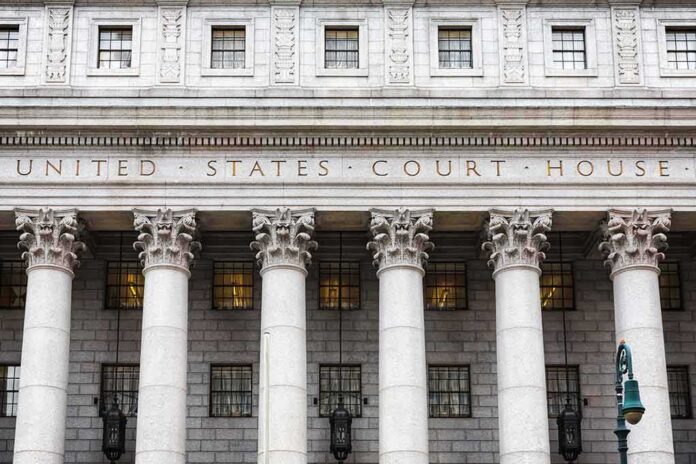
U.S. District Judge Victor Marrero sentenced Indian national Nikhil Gupta to 235 months, which is more than 19 years, in federal prison. The hearing took place in Manhattan. Prosecutors said Gupta conspired to kill U.S.-based Sikh activist Gurpatwant Singh Pannun in New York. Gupta pleaded guilty in February to murder-for-hire, conspiracy to commit murder-for-hire, and conspiracy to commit money laundering. The sentence signals that courts will treat cross-border hit plots on U.S. soil as serious national security crimes.
Federal filings said the plot moved beyond talk. Prosecutors alleged Gupta arranged a $15,000 cash delivery to a person he believed was a contract killer. That person was actually an undercover law enforcement officer. Such a controlled payment is a classic step in sting operations and is often key proof of intent. The prosecution said the plan included surveillance steps and timing concerns tied to when the target would be in New York.
Alleged Links To A Former Intelligence Official
Prosecutors linked Gupta’s actions to direction from Vikash Yadav, described in filings as a former Indian intelligence official. According to court documents and related reporting, Yadav allegedly guided Gupta to contact what Gupta thought was a criminal network to carry out the hit. Indian government representatives have denied that the state had any role and said such actions run against policy. Yadav did not provide a public defense in the records cited.
Gupta’s lawyers argued he acted under pressure from Yadav and believed Yadav had the power of the Indian state. They said Gupta did not stand to gain from the payment at the center of the case. The judge still imposed the long sentence after Gupta’s guilty plea. The court’s outcome shows that claimed pressure does not erase guilt when evidence shows planning and money changed hands toward a killing.
A Test Case In Stopping Transnational Repression
Rights groups and researchers track rising “transnational repression.” That term covers when governments or their agents threaten, stalk, or attack critics living abroad. Freedom House counted hundreds of physical attacks worldwide over the last decade, including killings and kidnap attempts. The group reported 126 new physical incidents in its most recent year of data, bringing the database total to over one thousand cases since 2014.
Congressional testimony about this pattern says many governments, not only authoritarian states, have reached beyond borders to silence dissent. The research highlights the danger to American residents and immigrants who speak out. Gupta’s case does not prove a foreign government ordered the hit. But the facts proven in court line up with known tactics: recruit a local fixer, move cash, and target a dissident on seemingly safe ground in the United States.
Why Readers Across The Spectrum Should Care
American citizens want safety on their own streets and fairness in the justice system. This case shows law enforcement stopping a hit before blood was shed. It also raises hard questions that both conservatives and liberals share. Who is guarding our borders and our neighborhoods from foreign intimidation? Who holds allies to account when lines are crossed? Many feel the federal system often reacts late while insiders play by their own rules.
This sentence sends a message to anyone who tries to import foreign political feuds into American cities. The government will act when a plot targets a person living here, no matter their politics. The case also adds weight to calls for stronger tools against overseas repression. That could include better tracking of cutouts, quicker sanctions, and tighter watch on money transfers used to fund criminal violence on U.S. soil.
What Comes Next
Further legal action could focus on any other suspects and on the alleged chain of command. India’s public denial of state involvement means Washington and New Delhi will balance law enforcement with diplomacy. For U.S. readers, the take-home is simple. When free speech is chilled by fear, the whole country loses. This ruling protects the idea that people can disagree with powerful interests and still be safe at home.
Sources:
theweek.in, gvwire.com, newindianexpress.com, thewire.in, hindustantimes.com, humanrightscommission.house.gov