
Washington just bet on a risky, fast-track military partnership with Venezuela to fight “narco-terrorists,” but the deal’s fine print and safeguards remain out of public view.
Story Snapshot
- Defense leaders tied the partnership to a wider U.S. operation against drug-linked groups in the Americas.
- An official watchdog later cited at least one coordinated action with Venezuela against a designated group.
- Human-rights monitors say Venezuela’s security apparatus has not been meaningfully reformed.
- Officials have not published the signed agreement or its rules for training and operations.
What the U.S. says the partnership is for
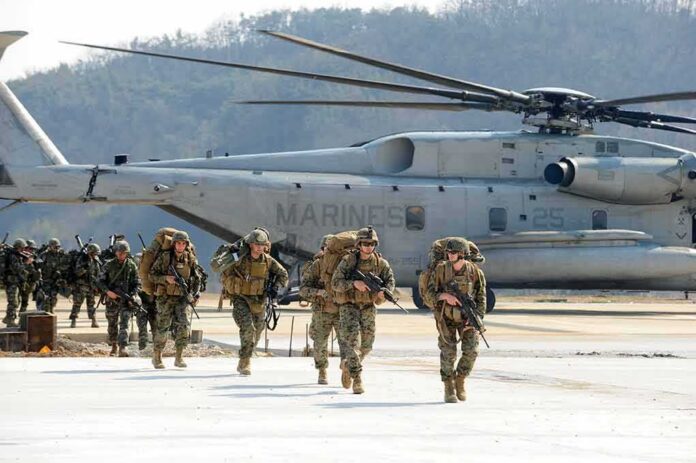
Defense officials say the goal is to stop drug flows, protect partners, and keep the region stable. Operation Southern Spear, the umbrella effort, sets that mission and frames work with regional forces, including Venezuela, as part of defending the homeland. Secretary of War Pete Hegseth also launched a hemisphere coalition to press “partner-led” actions against cartels and terror-linked groups, signaling that Washington wants local forces up front, with U.S. help behind them.
Top leaders tied Venezuela to named operations at the start of 2026. A Defense multimedia record shows President Trump, Secretary of State Marco Rubio, Secretary of War Pete Hegseth, and General Dan Caine discussing an operation in Caracas on January 2, 2026, called Operation Absolute Resolve. That reference places senior decision-makers on the record and links Caracas events to the broader counter-threat push, even as many legal and policy details remain sealed from public view.
Evidence of joint action, and what it does not prove yet
The Lead Inspector General reported at least one coordinated action later in 2026. The report said a U.S.-coordinated airstrike with Venezuelan forces killed Héctor Rusthenford Guerrero Flores, known as Niño Guerrero, identified as the leader of the Tren de Aragua network, which the United States designated a terrorist group. That is concrete activity beyond talk. But it does not confirm how the agreement works, what rules applied, or whether the action translated into safer streets over time.
Public records so far do not show a signed agreement, a rules-of-engagement annex, or a clear schedule for training, intelligence sharing, or equipment delivery. They do not show how civilian harm will be tracked or punished if it occurs. They do not document any territory “recovered” from criminal groups, how much, or when. Those gaps matter because they block Congress and the public from checking progress and holding leaders to their word.
The reform gap and why both left and right are wary
United Nations investigators say Venezuela’s security and intelligence services kept the same structures and practices after political changes. They said there was no meaningful reform of the state’s repressive apparatus and that armed colectivos tied to the state were not disarmed. The U.S. State Department has also recorded serious abuse allegations against Venezuelan forces in past reporting, including unlawful killings and torture. These findings raise the risk that U.S. help could strengthen unaccountable actors if controls are weak.
Americans across the spectrum see a pattern: big promises, thin oversight, and elites making choices far from public view. Supporters of a hard line on cartels will welcome fast results and point to the reported strike as proof of action. Civil libertarians and many conservatives and liberals alike will ask who writes the rules, who checks the numbers, and who pays when things go wrong. Both concerns can be true at once. Clear benchmarks and published guardrails could address both.
What to watch for next
Watch for release of the signed text, with annexes on training, intelligence access, equipment, and end-use checks. Look for maps and data that show changes in gang territory and cross-border smuggling over time. Track whether Venezuela adopts transparent discipline for abuses and whether joint missions report civilian-casualty numbers. Congress can demand briefings on legal authority and rules of engagement. Without these steps, the deal risks becoming another opaque promise with uneven results.
Sources:
youtube.com, media.defense.gov, jifco.defense.gov, defense.gov