
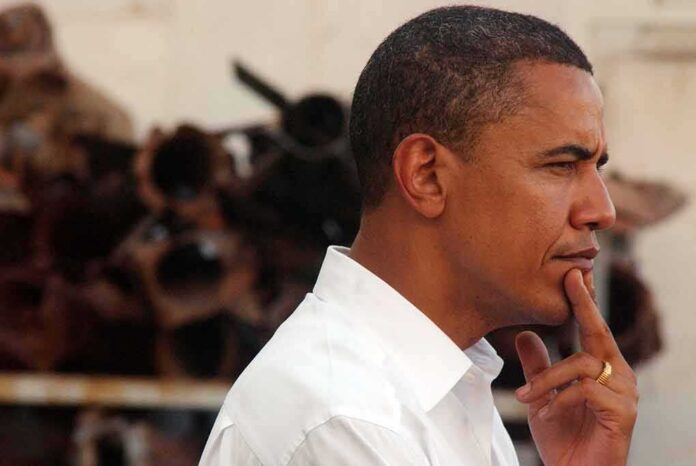
Barack Obama told incoming House Democrats that Republicans “all looked the same,” then just two days later posted a message urging Americans to rebuild trust by talking to people who “might seem different.”
Story Snapshot
- On November 18, Obama told incoming House Democrats that the Republican side of the chamber looked like “a golf country club.”
- Two days later, on November 20, Obama posted online that Americans should rebuild “bonds of social trust” by sitting down with people who seem different.
- Conservative outlets called the contrast hypocritical, saying Obama stereotyped an entire political party just days before preaching unity.
- A longer transcript of the same speech shows Obama also telling Democrats to listen and extend “grace” to colleagues they disagree with.
What Obama Told Incoming House Democrats
Obama met with newly elected House Democrats on November 18 and described the look of the chamber’s two sides. He said “on one side, everybody looked the same,” comparing it to “a golf country club,” before telling the Democrats they represented “America” instead. The remark reportedly drew laughter from the room, suggesting it landed as a partisan punchline rather than a serious policy point.
The exchange was captured and shared widely online within hours, including through a short clip that circulated on social media showing Obama praising the diversity of his own party while drawing the contrast with Republicans. That clip became the basis for most of the criticism that followed, even though it represents only part of a longer appearance.
A Quick Pivot to a Message of Trust
Two days later, on November 20, Obama posted a very different message. He wrote that “a lot of Americans don’t have trust in each other or in our institutions right now,” but said he believes “we can rebuild those bonds of social trust.” He said trust comes from “sitting down across from somebody who might seem different and start asking questions”.
The post was tied to the Obama Foundation’s Democracy Forum, an initiative focused on civic engagement. Posted just 48 hours after the “golf country club” comment, the timing was impossible for critics to miss, and it quickly became the centerpiece of accusations that Obama preaches unity while practicing division.
Critics Pounce, Citing a Pattern
Conservative commentators argued the sequence proved Obama applies different standards depending on who he is talking to. Writers at RedState and Townhall framed the “golf country club” line as evidence Obama views Republicans as a homogenous, mostly white group, then contrasted that with his call for people to engage across difference just days later.
Supporters note the available evidence does not show Obama meant the remark as a racial insult, nor does it prove he intended his trust message to apply to, or walk back, his earlier comment. The two statements addressed different topics: one was about party diversity in a House chamber, the other about public trust in institutions generally.
A Fuller Transcript Complicates the Picture
A more complete transcript of the November 18 remarks shows Obama pairing the “country club” line with advice for his own caucus. He told incoming Democrats that their diversity would create disagreement, and that the key was to “listen” and “extend grace” to colleagues they don’t agree with 100 percent of the time. That context is largely absent from the short clips that fueled the backlash.
Obama has used similar unity language before. In 2016, he told Americans they were “patriots first,” not Democrats or Republicans first. In 2015, he said political debate should rely on facts rather than “ad hominem attacks”. Those past statements suggest a consistent theme, even if critics say his recent remarks fell short of it.
Why This Resonates Beyond Partisan Lines
Researchers who study political language note that phrases aimed at energizing one’s own side often make that side trust the speaker more, while making the opposing side trust him less, widening the very divide leaders claim to want to close. That dynamic helps explain why a single two-day contrast attracted so much attention nationally.
For voters already skeptical that Washington figures practice what they preach, the episode fits a familiar pattern regardless of party. Both sides of the aisle increasingly complain that leaders talk about unity in public while drawing sharp lines in private, a gap that keeps fueling distrust in politicians on the left and the right alike.
Sources:
redstate.com, x.com, townhall.com, benzinga.com, nytimes.com