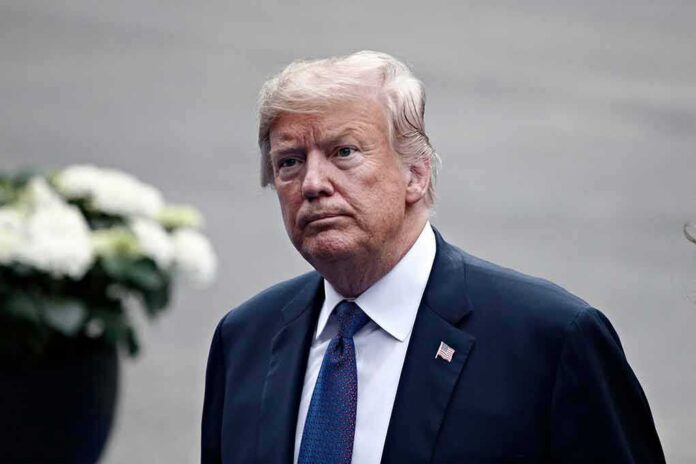
President Trump rejected Iran’s seven-day plan to reopen the Strait of Hormuz because it required the United States to lift core pressure first.
Story Snapshot
- Trump declined Iran’s phased offer tied to lifting the U.S. blockade and oil sanctions first.
- Iran said it could reopen Hormuz within a week if its conditions were met, relayed by mediators in New York.
- Talks remain far apart as Washington keeps leverage while Tehran seeks early relief.
- The Strait of Hormuz remains a global choke point with a long history of crisis bargaining.
What the offer was, and why Washington said no
Reuters and other outlets reported that Iran proposed a seven-day phased plan through mediators at the United Nations in New York. Under the plan, the United States would first lift its naval blockade on Iranian ports, ease oil sanctions, and pause fighting on several fronts. Iran said it would then reopen the Strait of Hormuz by day six or seven and restart talks, including on nuclear issues. President Trump rejected the proposal, viewing the terms as front-loaded concessions that would reduce U.S. leverage.
The gap reflects a core dispute over sequencing. Iran tied reopening the strait to early relief from the U.S. economic and military squeeze. U.S. officials signaled they want Iran to restore free navigation first, or at least move in lockstep, before major relief arrives. That stance matches Washington’s pressure-first strategy during the crisis. Tehran’s ask for sanctions waivers and release of frozen assets up front clashed with that approach, keeping the two sides stuck.
How the standoff fits past Hormuz crises
Congressional research and past reporting show a cycle at Hormuz: threats, disruption, and bargaining over access to the waterway that moves much of the world’s energy. Even partial slowdowns can rattle markets and pull navies toward confrontation. Both sides lean on the strait as leverage. Iran hints it can reopen it quickly if its demands are met. The United States uses blockades and sanctions to force talks on tougher files, like missiles and proxies, after lanes are secure.
That push and pull explains today’s hard lines. Iran’s promise to reopen within a week was real but conditional on relief that Washington sees as a giveaway. U.S. pressure has also hurt Iran’s economy, which may be why Tehran sought fast steps on funds and oil exports. Neither side wants to blink first. So ships wait, insurers fret, and families worldwide face higher costs when energy routes look risky. This is how chokepoints spread pain far beyond a war zone.
Why this matters to Americans watching Washington
Energy prices, shipping delays, and new military risks all flow from how this standoff ends. A front-loaded deal could have eased near-term market stress but might have locked in weak enforcement later. A pressure-first path could secure freer passage without paying twice, but it risks more strikes and shocks now. Leaders in both parties say they back security and prosperity. Many voters see the same pattern instead: short-term politics and messaging over steady problem-solving.
People on the right and the left share a core worry: Washington’s choices often feel driven by elite interests and election clocks, not clear goals and fair tradeoffs. The Hormuz case heightens that concern. The United States needs transparent aims, firm timelines, and public guardrails for any relief it trades for navigation. Clear sequencing and reporting would limit room for secret side deals and reduce fears that regular Americans will pay higher bills while insiders stay insulated.
What to watch next
Watch for signs of synchronized steps rather than lopsided moves. A narrow technical fix could start with safe-passage lanes, mine clearance, and third-party monitoring, paired with modest, reversible relief. Mediators like Qatar have been key conduits and may float revisions that bridge sequencing gaps. If talks stall and attacks resume, expect higher energy volatility and renewed calls in Congress for stricter oversight of any future deal path tied to Hormuz.
President Trump has rejected iran’s seven-day ceasefire offer, according to u.s. officials cited by the wall street journal. tehran wanted hormuz reopened within a week in exchange for a lift of the naval blockade, easier oil sanctions, and a release of frozen funds. washington… pic.twitter.com/pPx1bABD4h
— Princess Lily (@Ella_061599) September 26, 2026
For now, the United States holds the line on leverage, and Iran holds a closed door that the world needs open. The side that best matches firm pressure with credible, verifiable steps will shape not only shipping lanes, but also whether Americans see a government that protects their wallets and their principles, or one that lets another crisis drift until the costs land at home.
Sources:
redstate.com, reuters.com, iranintl.com, wsj.com, ksl.com, x.com