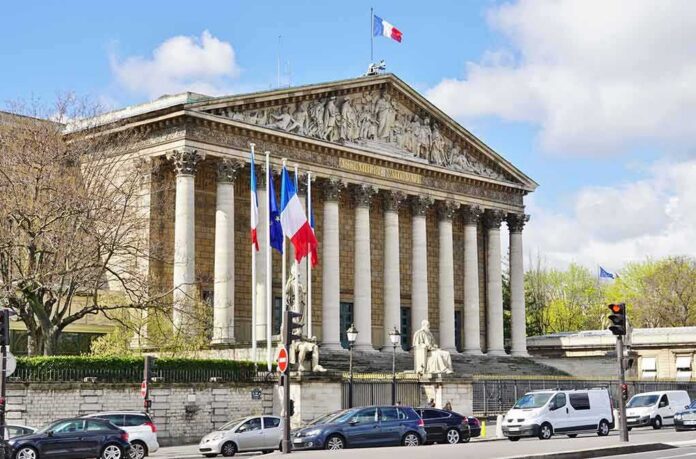
Standing beside President Emmanuel Macron in Paris, Pope Leo XIV said secularism is “just” only when it does not push faith out of public life, reviving a century-old fight over religion’s place in Europe’s public square.
Story Snapshot
- Pope Leo XIV told French leaders that fair secularism allows religion in public space.
- France’s constitution binds the state to strict religious neutrality, known as laïcité.
- French guides say laïcité protects belief while limiting displays in state settings.
- The visit spotlights deeper disputes over life issues, immigration, and technology.
What The Pope Said And Why It Matters
Pope Leo XIV delivered his first remarks to French authorities at the Élysée Palace. He said just secularism does not exclude religion from public space. Reporters present linked the line to France’s strict model of laïcité, which defines how faith may appear in public institutions. The moment mattered because the audience included President Macron and top officials. Two heads of state meeting made the message diplomatic as well as religious, and it set the tone for the full visit.
His comments also touched long-running fault lines. Major outlets described France as a country where the Catholic Church has less sway over public debates than in past decades. They noted that current battles include end-of-life laws, migration policy, and the ethics of artificial intelligence. These are all areas where Catholic social teaching often pushes for public moral reflection, not just private belief or worship.
How French Secularism Works On Paper
French government documents say laïcité is a founding principle of the Republic. They say it guarantees freedom of conscience and the right to believe or not believe. They also say the state must stay neutral toward religion and treat everyone equally without regard to belief. Guidance explains that people may practice religion in private or in public as long as they do not disturb the peace.
Applied rules grow sharper inside state-run settings. Reporting explains that many visible religious signs are limited for staff and students in public schools, and for certain roles in hospitals, courts, and sports. Visitors do not face the same tight limits. Supporters say these boundaries keep the state impartial and protect everyone in shared spaces. Critics say the lines can shade into a culture that nudges faith out of view.
Where Principle Meets Practice In Daily Life
News coverage during the visit showed how these ideas work on the ground. In Catholic schools, administrators stressed that prayer and hymns must remain optional during a special day for the pope. That step aimed to respect families who do not share the faith and to avoid pressure on students. Macron also did not attend Masses tied to the trip, a move consistent with keeping the presidency separate from formal worship.
These choices highlight a real tension. Officials point to laïcité’s promise of neutrality and equal rights. Church leaders call for space to witness to faith in public, in words and actions. The pope’s line tried to split the difference: a fair secular order can protect all people without forcing believers to hide who they are in civic life. That claim landed with force because it met France on its own constitutional ground.
Limits Of The Record And What To Watch Next
Journalists quoted the papal line widely, but the available source set does not include a full official transcript of his Élysée remarks. That gap limits how closely readers can test emphasis and full context. Still, multiple outlets tied the quote to the same setting and meaning. The larger clash does not turn on one sentence. It turns on how France applies neutrality rules in schools, agencies, ceremonies, and ethics debates over time.
The next test will come as lawmakers and courts weigh end-of-life measures, religious symbols, and speech in public spaces. Government pages will keep stressing freedom of conscience and neutrality. Church figures will keep urging visible moral witness on life, migration, and technology. Many citizens on both left and right, already wary of distant elites, will watch to see if rules protect pluralism or mute faith-driven voices at key civic moments.
Sources:
lifesitenews.com, opb.org, www-cdn.abcnews.com, ground.news, washingtonpost.com, ncregister.com, aa.com.tr, lemonde.fr, info.gouv.fr, tandfonline.com