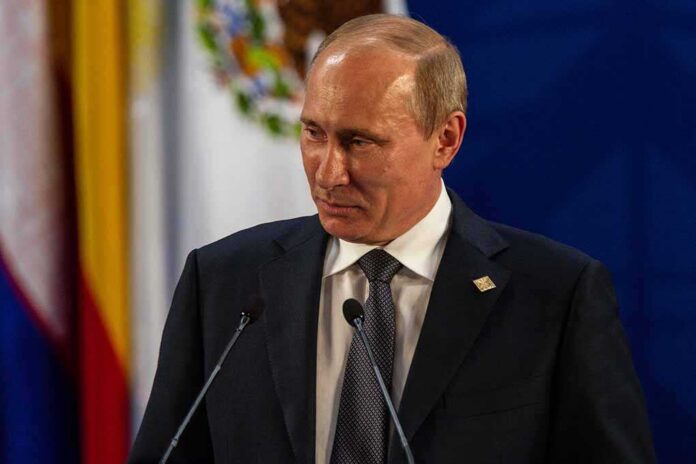
Russia’s president warned that “some European leaders are preparing for war with Russia” and vowed Moscow would respond if attacked.
Story Snapshot
- President Vladimir Putin said Europe is “preparing for war” and claimed Russia has no plans to attack Europe.
- Putin tied the warning to debates over European troops in Ukraine, saying that would mean war with Russia.
- Foreign Minister Sergey Lavrov said any European attack would trigger a “very short” war.
- Analysts say Russian threat talk has surged, shaping a tense cycle of signaling and deterrence.
What Putin Said And Why It Matters
On September 19, President Vladimir Putin said some European leaders are “openly preparing for war with Russia” and warned that Moscow would respond if needed. He added that Russia has no aggressive plans toward Europe and wants to restore ties where possible. The remarks follow months of sharp words over the Ukraine war and European support for Kyiv. Putin framed the talk of war as a political trend in Europe, not a one-off comment by a single official.
Putin linked his warning to the idea of European troops entering Ukraine. On September 12, he said that if European countries send troops to Ukraine, that would mean war with Russia. Several outlets reported European discussions about a possible multinational presence tied to a cease-fire scenario. The line between post-conflict plans and active war planning has become a point of argument, which Moscow now uses to set red lines and shape public views of risk.
Lavrov’s Amplifying Signal From Moscow
Russian Foreign Minister Sergey Lavrov echoed the message on September 16. He said that if Europe attacks Russia, the conflict would be “very short,” signaling that Moscow sees deterrence value in stark warnings. Lavrov also said Russia does not seek a fight with Western countries. His statement aligns with Putin’s pairing of threat and denial: Russia says it does not want war, but it will answer force with force if it is attacked.
These talking points have stayed consistent across Russian channels this month. Moscow claims European leaders are stoking fear at home by using the Ukraine war and a supposed “Russian threat” to justify policy choices. Russia’s version presents itself as reactive and defensive. That framing helps the Kremlin argue it is not escalating first, while maintaining pressure on Europe to step back from deeper military steps around Ukraine.
How This Fits The Wider Europe-Russia Standoff
Recent coverage shows a pattern of tough rhetoric and gray-zone moves between Russia and Europe. Analysts say Russia’s threatening talk has grown and that pressure on Europe aims to test unity and deterrence without starting a direct war. Western reporting and expert views often describe a cycle where each side signals resolve, reads the other’s messages in the worst light, and then doubles down. That loop raises the chance of missteps even when both sides claim they do not want open war.
The stakes are clear for Americans watching from afar. A clash in Europe would shake energy markets, strain supply chains, and risk drawing in the North Atlantic Treaty Organization (NATO). Many citizens on the right and the left already feel global crises get used to justify elite agendas while basic needs go unmet at home. When leaders talk about war, families hear higher costs, new risks, and fewer answers. Clear goals and honest limits from all sides could lower the temperature before it spikes again.
Sources:
anews.com.tr, washingtonpost.com, independent.co.uk