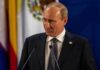
Palestinian leader Mahmoud Abbas used his United Nations address to demand a two-state path and warned leaders, “Do not allow another Nakba.”
Story Snapshot
- Abbas urged the United Nations to act on a two-state solution and prevent mass displacement.
- He delivered a prerecorded speech after the United States denied visas to his delegation for a second year.
- He called for Gaza and the West Bank, including East Jerusalem, to be unified under one lawful authority.
- Outlets reported his appeal as a push for peaceful coexistence alongside Israel.
Abbas’s Message: Two States, One Lawful Authority
Mahmoud Abbas addressed the United Nations General Assembly by video and pressed leaders to move now on a two-state solution. He warned that policies on the ground risk another mass displacement of Palestinians, known as a Nakba. He said Gaza and the West Bank, including East Jerusalem, should be brought under one government and one legal system. He urged swift steps during the current transition timeline, which runs into 2027, to avoid further delay.
German-based reporting and United Nations coverage said Abbas linked his appeal to peaceful coexistence. He described a future Palestinian state as democratic, rights-respecting, and living in security next to Israel. That framing aimed to show moderation and to rally countries that already back a two-state outcome in principle. Multiple outlets highlighted his plea to implement, not just discuss, that path after years of stalled talks and deepening mistrust.
Why He Spoke by Video: United States Visa Denial
Abbas appeared by video because the United States again denied visas to senior Palestinian officials. The United Nations General Assembly voted to allow a prerecorded address so he could still speak to world leaders. This was the second straight year of visa bans, which Washington tied to unmet reform commitments. The unusual setup added a layer of tension to the session and fueled debate over the United Nations’ role as a neutral forum.
News accounts and legal commentary have tracked this policy trend over the past two years. The decisions blocked travel for Abbas and other Palestinian Authority officials to New York during the major diplomatic week. Supporters of the bans say pressure is needed for change. Critics argue the move undercuts dialogue and the United Nations’ ability to host hard conversations in one place. The Assembly’s workaround kept Abbas’s message in the room despite the travel barrier.
What “Do Not Allow Another Nakba” Signifies
Abbas’s warning about “another Nakba” refers to the 1948 displacement of hundreds of thousands of Palestinians. He argued that current measures in Gaza, the West Bank, and East Jerusalem are pushing people toward loss of land and rights. He asked countries to back steps that protect civilians and keep families in their homes while broader talks continue. His speech framed the moment as a choice between deepening crisis and a structured political track with clear guardrails.
Abbas Addresses UN General Assembly by Video Following US Visa Denial
• Mahmoud Abbas and the Palestinian delegation were denied US entry visas for the second year in a row.
• Abbas delivered his address via pre-recorded video from Ramallah.
• He urged support for a two-state… pic.twitter.com/pkjM88yeyN— The Unbiased Update (@unbiased_update) September 24, 2026
For Americans, the moment also speaks to a wider worry: promises made on big stages often fade while facts on the ground harden. Voters on the right and left see leaders talk about peace, borders, security, and rights, yet day-to-day life does not improve. Abbas’s call presses world powers to act, not posture. Whether Washington, Jerusalem, Ramallah, and key regional players can align on enforceable steps will test if this is real movement or more empty theater.
Sources:
youtube.com, dw.com, nytimes.com, anews.com.tr, aljazeera.com, en.royanews.tv