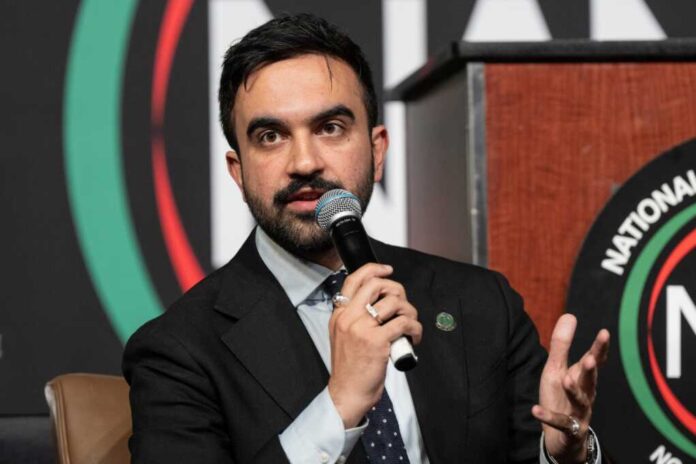
Mayor Zohran Mamdani’s aggressive housing policies could threaten the rights of property owners and challenge traditional governance structures.
Story Highlights
- Mayor Mamdani signed three executive orders focusing on tenant protection, housing supply, and streamlined construction.
- Cea Weaver, a noted tenant advocate, appointed to lead the Mayor’s Office to Protect Tenants.
- New task forces aim to utilize city-owned land for housing and reduce bureaucratic barriers.
- Landlords face increased scrutiny, potentially impacting NYC’s real estate market and property rights.
Mayor Mamdani’s Executive Orders: What They Entail
On January 1, 2026, Zohran Mamdani, the newly inaugurated Mayor of New York City, signed three executive orders designed to address the city’s housing crisis. These orders aim to revitalize the Mayor’s Office to Protect Tenants, establish the LIFT Task Force to expedite housing on city-owned land, and create the SPEED Task Force to streamline permitting processes. This approach combines tenant advocacy with pro-development initiatives, contrasting with traditional mayoral caution.
Mayor Mamdani’s executive actions are set to take immediate effect, with the Mayor’s Office to Protect Tenants now under the leadership of Cea Weaver, a prominent tenant advocate. This move is expected to intensify efforts against negligent landlords while expediting housing supply, potentially altering the dynamics of New York City’s real estate market. The LIFT Task Force is tasked with identifying suitable city-owned sites for housing by July 1, 2026, while the SPEED Task Force aims to cut through red tape, making construction processes more efficient.
Mayor Zohran Mamdani announces 3 Executive Orders:
✅ The city will intervene if your landlord doesn’t manage your property well
✅ Creation of a LIFT Taskforce (Land Inventory Fast Track)
✅ Creation of a SPEED Task Force (Streamlining procedures for equitable development) pic.twitter.com/nT0e32EhPJ— Mamdani Watch (@MamdaniWatch) January 1, 2026
Implications for Property Owners and the Real Estate Market
The introduction of these executive orders has sparked concern among property owners, who may face increased regulatory scrutiny and limitations on rent increases. The emphasis on tenant protection and rapid housing development could reshape the economic landscape for landlords and developers, potentially leading to a more regulated real estate market. This interventionist approach, while aiming to protect tenants, could also challenge the rights of property owners accustomed to less restrictive governance.
While the immediate focus is on tenant relief and the acceleration of housing supply, the long-term implications of these policies for New York City’s real estate sector remain uncertain. The potential for increased housing supply could lead to reduced costs, yet the regulatory environment may deter investment and development, impacting the broader economic climate.
Political and Social Ramifications
Mayor Mamdani’s swift action on housing reform underscores his commitment to addressing homelessness and affordable housing, a central tenet of his campaign. However, this approach has raised questions about governance, with the bypassing of the City Council for immediate implementation highlighting a shift towards centralized decision-making. As these policies unfold, the political landscape in New York City may witness heightened tensions between pro-tenant advocates and property owners, influencing future electoral dynamics.
As the city navigates these changes, the balance between tenant protections and property rights remains a focal point of debate, reflecting broader national conversations on housing policy and governance.
Sources:
Mayor Mamdani Signs EO to Revitalize Mayor’s Office to Protect Tenants
How Mamdani’s 2026 Housing Policies May Reshape NYC Real Estate
Executive Order 03