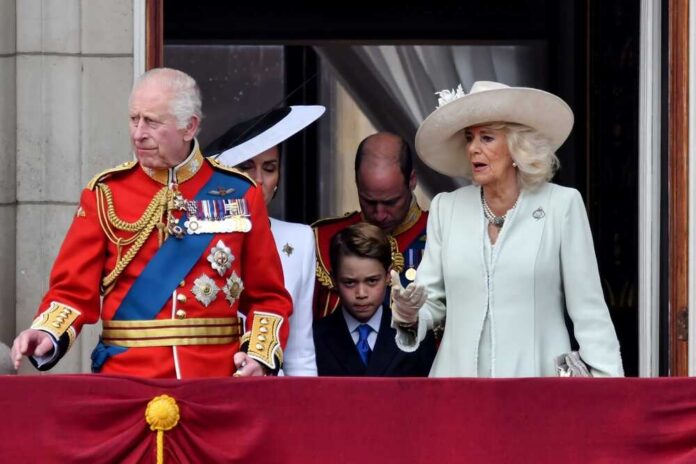
King Charles III is walking into the White House at the worst possible moment—when war, NATO nerves, and anti-elite anger are colliding on both sides of the Atlantic.
Story Snapshot
- King Charles III and Queen Camilla begin a U.S. state visit on April 27, 2026, hosted by President Donald Trump at the White House.
- The trip aims to “reaffirm and renew” the U.S.-U.K. relationship, but it lands amid tensions tied to Iran policy and NATO burden-sharing.
- A YouGov poll cited in reporting found 49% of Britons wanted the visit canceled, reflecting deep public hostility to perceived political endorsement.
- Reporting also describes a leaked Pentagon email floating a review of Falklands policy, a pressure tactic that highlights how hard power can overshadow symbolism.
A rare royal visit collides with America’s 250th anniversary politics
King Charles III and Queen Camilla arrived in the United States on April 27, 2026, for a state visit centered on events at the White House, including a state dinner and other high-profile gatherings. British monarch visits are deliberately rare, designed to signal continuity beyond day-to-day politics. This one is even more loaded because it overlaps with America’s 250th anniversary season, a reminder that the U.S. was founded by rejecting rule from London.
President Trump, now in his second term with Republicans controlling Congress, gets the pageantry of a royal visit while trying to steady a relationship strained by strategic disagreements. For Americans who prioritize national sovereignty and leverage abroad, the optics matter less than the substance: whether the U.K. remains a reliable partner in a world where energy, shipping lanes, and deterrence are again central. The visit’s timing forces both governments to address that question publicly.
Iran, NATO, and the limits of “special relationship” symbolism
Reporting surrounding the visit ties current strain to disagreements over Trump’s Iran war policies and broader debates about NATO commitments and “decoupling” from European partners. Those issues are not abstract. They drive defense procurement, intelligence sharing, and whether allied governments will take political risks at home to back U.S. choices abroad. For conservatives skeptical of globalism, the core test is whether alliances serve U.S. interests rather than becoming open-ended obligations.
The controversy also shows how quickly diplomacy can turn transactional. One report describes a leaked Pentagon email referencing a review connected to the Falklands, framed as retaliation for insufficient British support on Iran. The underlying point is hard to miss: when Washington signals it might reconsider long-standing assumptions, allies pay attention. Critics see coercion; supporters see leverage. Either way, it illustrates why many voters distrust foreign-policy “expert” classes that promise stability but deliver recurring crises.
British public backlash underscores a wider anti-establishment mood
Public opinion in the U.K. is a major subplot. A YouGov poll cited in coverage said 49% of Britons wanted the trip canceled, with a smaller share supporting it. Other reporting referenced a surge of protest messaging to Buckingham Palace urging the King not to proceed. That backlash is not only about Trump personally; it reflects anxiety that ceremonial diplomacy can look like moral endorsement, even when the official goal is merely to keep channels open.
Americans will recognize the pattern. Across the West, people on the right complain about border failures, high energy costs, and bureaucracies that never shrink; people on the left complain about inequality and institutions they believe serve the powerful. In that environment, any elite spectacle—royal motorcades, black-tie dinners, choreographed speeches—can feel disconnected from daily costs. The danger for both governments is that symbolism begins to substitute for accountability.
What this visit can realistically achieve—and what it cannot
Supporters argue the monarchy’s “soft power” can lower political temperature and preserve cooperation even when elected leaders clash. The itinerary reportedly includes major ceremonial events and the possibility of a congressional appearance, a format historically used to emphasize shared history and shared security. Skeptics counter that goodwill cannot paper over policy disputes on war aims, burden-sharing, and strategic priorities. The most realistic outcome is modest: keeping talks functional while each side manages domestic anger.
Several uncertainties remain because some of the most provocative claims are based on commentary and insider-style reporting rather than on-the-record confirmation. For example, assertions about the King’s private feelings toward Trump are inherently difficult to verify, and details about the reported security incident connected to the White House Correspondents’ Dinner were described as vague in summaries. What is verifiable is the pressure surrounding the trip: the polling, the protests, and the clear strategic friction. The visit’s success will be measured less by photographs and more by whether U.S.-U.K. cooperation holds under stress.
Sources:
this-is-why-king-charles-is-mad-to-visit-trump