
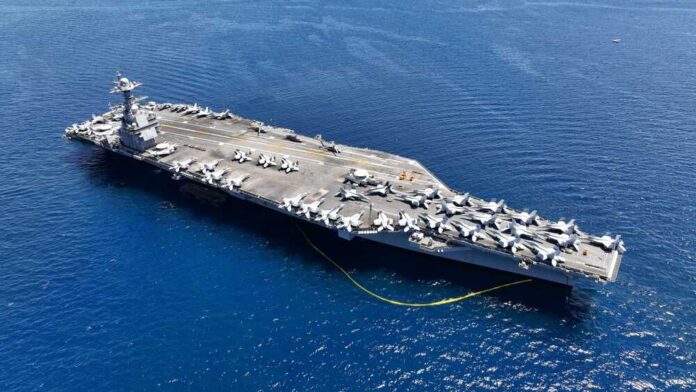
U.S. Navy aircraft carriers face a perfect storm of fires, delays, and breakdowns that threaten America’s naval supremacy amid wars in the Middle East and tensions with China.
Story Snapshot
- Navy struggles to maintain 11-carrier fleet mandated by federal law due to maintenance backlogs and shipyard crises.
- USS Dwight D. Eisenhower’s maintenance extended over six months from prolonged Red Sea deployment against Iran.
- USS John F. Kennedy delivery delayed to March 2027 for critical certifications and weapons integration.
- USS Gerald R. Ford hit by 30-hour fire destroying 600 sailors’ berths, following January sewage crisis.
- Overlaps in overhauls like USS John C. Stennis and USS Harry S. Truman risk dropping below legal carrier minimum.
Multiple Carrier Crises Unfold
USS Dwight D. Eisenhower returned from extended Middle East deployment with severe wear, pushing its planned July 2025 maintenance at least six months longer. Fiscal Year 2026 budget documents confirm the ongoing delays. Prolonged operations in the Red Sea against Iran accelerated component degradation. Navy leadership now juggles schedules to avoid falling below the 11-carrier mandate under 10 U.S.C. § 5062. These strains reveal deeper industrial weaknesses.
Shipyard Delays and Technical Failures
USS John F. Kennedy’s delivery slipped from July 2025 to March 2027 to complete Advanced Arresting Gear certification and weapons systems. USS John C. Stennis Refueling and Complex Overhaul, originally due August 2025, now targets October 2026 due to workforce shortages, material delays, and steam turbine issues. USS Harry S. Truman prepares for its June 2026 overhaul extending to 2031, creating East Coast carrier gaps. Shipyards like Newport News grapple with dry dock shortages.
Gerald R. Ford’s Habitability Nightmares
USS Gerald R. Ford suffered a 30-hour fire in early 2026, destroying over 600 sailors’ berths while supporting Red Sea operations. The carrier heads to Greece for repairs. January 2026 brought plumbing failures leaving crew without toilets on the $13 billion vessel. Navy claims sewage resolved, but events underscore Ford-class complexities like electromagnetic systems. Crews endure these amid high operational demands.
Geopolitical Risks and Industrial Strain
A $1.8 billion maintenance backlog for carriers and submarines compounds dry dock shortages and skilled worker deficits. Prolonged deployments wear ships faster, overlapping with overhauls that risk fleet availability below 11 carriers during Iran war and China tensions. Analysts warn of a hollowed-out industrial base, with carriers vulnerable to Chinese anti-access/area-denial missiles. Post-Cold War shipyard consolidations contribute to persistent delays.
The U.S. Navy Has An Aircraft Carrier Problemhttps://t.co/8S3BOGj0mn
— 19FortyFive (@19_forty_five) April 25, 2026
Shared Frustrations Across the Political Divide
Conservatives decry past policies eroding military readiness through overspending and globalist distractions, weakening defenses against threats like China. Liberals worry about growing divides and elite mismanagement in defense procurement. Both sides see a federal government prioritizing reelection over fixing shipbuilding crises, betraying the American Dream of secure prosperity through strong national defense rooted in founding principles.
Sources:
Navy Juggles Its Aircraft Carrier Plans To Stay Afloat (Updated)
U.S. Navy Aircraft Carriers Now Have a Serious ‘Battleship’ Problem
The Navy’s Aircraft Carriers Just Can’t Leave Port
The U.S. Navy Is Out of Supercarriers Options During the Iran War
A troubled US aircraft carrier is moving away from Iran. Does it reflect bigger problems?