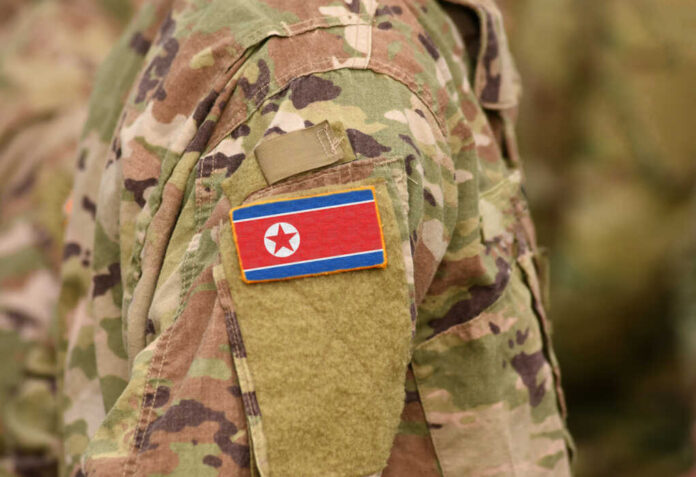
Kim Jong Un is now calling Russia’s invasion of Ukraine a “sacred” war—while North Korean troops fight and die alongside Moscow’s forces.
Quick Take
- Kim used a Pyongyang memorial tied to fighting in Russia’s Kursk region to reaffirm “unshakable” support for Moscow’s Ukraine war.
- Russian officials publicly thanked Kim for North Korean help in the claimed “liberation of Kursk,” signaling deeper operational cooperation.
- Outside estimates say roughly 14,000–15,000+ North Korean troops have been deployed, with reported casualties in the thousands.
- A 2024 Russia–North Korea strategic partnership treaty is accelerating a long-term alignment that could outlast the Ukraine conflict.
Pyongyang’s Memorial Messaging Signals a Hardening Alliance
Kim Jong Un’s latest pledge of support for Russia was not delivered as a routine diplomatic note—it was staged around public ceremonies honoring North Korean servicemen linked to operations in Russia’s Kursk region. Russian State Duma Speaker Vyacheslav Volodin traveled to Pyongyang for events tied to a memorial complex, and Russian officials publicly credited North Korean troops for helping repel Ukraine’s incursion. The symbolism matters: it frames the relationship as shared sacrifice, not transactional convenience.
Kim’s rhetoric also matters because it elevates the war into ideological territory. Describing the conflict as “sacred” or “holy” is designed to justify long-term commitments and normalize casualties at home. For American readers, the practical takeaway is that Moscow and Pyongyang are trying to move beyond quiet arms deals into an openly celebrated military partnership. That shift complicates deterrence, sanctions enforcement, and any near-term diplomatic off-ramp for the wider war.
What Kursk Reveals About North Korea’s Role in the Ukraine War
Reporting and analyst tracking describe a North Korean presence in and around Kursk under Russian command, with troops reportedly wearing Russian uniforms. Estimates cited in the research place deployments at roughly 14,000–15,000+ personnel, with Seoul estimating around 2,000 killed—though casualty totals remain disputed and hard to independently verify. Even with uncertainty, the scale described is significant because it suggests direct manpower support, not merely exports of ammunition or missiles.
The Kursk angle also explains why Russian officials are leaning into public gratitude. Moscow has faced ammunition and manpower pressures during the prolonged conflict, and outside analysis has documented large-scale North Korean munitions transfers—described in the research as more than 12 million artillery shells. If those figures are broadly accurate, the relationship is helping Russia sustain the tempo of war, while giving North Korea battlefield experience that can be applied to its own doctrine and weapons development.
The 2024 Treaty Turns a Shadow Partnership Into a Strategic Commitment
The research points to a major inflection point in June 2024, when Vladimir Putin visited Pyongyang and both governments signed a Comprehensive Strategic Partnership treaty that includes a commitment to provide immediate military aid if either side is attacked. That is a serious promise between two heavily sanctioned nuclear-armed states. It reduces room for either side to quietly de-escalate without appearing to betray the other, and it signals a shared posture against U.S. influence and allied security architecture.
This is also where Americans frustrated with “globalism” and decades of elite-driven foreign policy can connect dots. A durable Moscow–Pyongyang bloc increases pressure on U.S. defense planning in both Europe and the Indo-Pacific. The policy question is not only about Ukraine; it becomes about how Washington prioritizes resources, supports allies, and enforces sanctions when adversaries coordinate. The research indicates Russia is planning structured cooperation extending to 2031, reinforcing that this is being built as a long-term alignment.
Sanctions Evasion, Warfighting Lessons, and the Risk of Technology Transfer
Multiple sources in the research describe overlapping incentives: Russia receives shells and manpower, while North Korea seeks food, energy, and access to advanced technology that could support nuclear weapons, satellites, or long-range missile programs. Analysts cited in the research warn that North Korean troop deployments represent a “Rubicon” moment—evidence of full commitment rather than opportunism. That concern is grounded in observable behavior: personnel deployments, public ceremonies, and reciprocal honors from Russian officials.
North Korea’s Kim reaffirms support for Russia’s ‘sacred’ Ukraine warhttps://t.co/hAz3wjaoH4
— Insider Paper (@TheInsiderPaper) April 27, 2026
Still, key details remain murky. Exact troop numbers, the full scope of battlefield roles, and the extent of any technology transfers are difficult to verify from open sources. What is clear from the documented pattern is escalation: from diplomatic support, to arms deliveries, to a formal treaty, to troops and memorials that sanctify the partnership. For U.S. policymakers, the conservative-limited-government lens is straightforward: deterrence and border security at home are essential, but so is avoiding strategic surprise abroad when adversarial regimes formalize war alliances.
Sources:
State Duma Speaker Thanks North Korea’s Kim for ‘Liberation’ of Kursk
North Korea’s Kim Reaffirms Support for Russia’s ‘Sacred’ Ukraine War
North Korean involvement in the Russo-Ukrainian war (2022–present)
North Korea-Russia Cooperation