
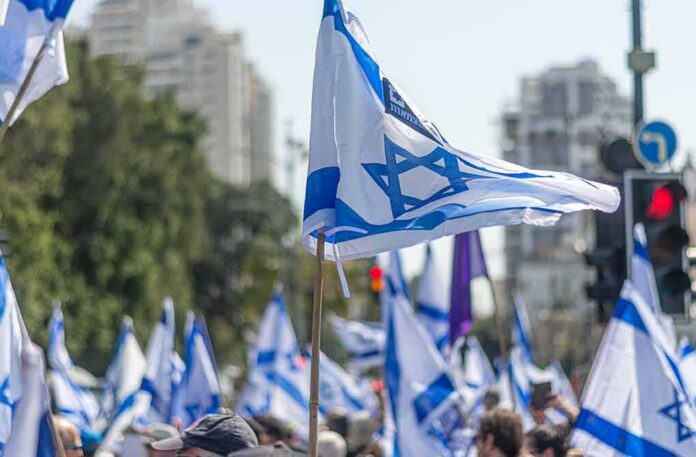
Israelis turned out in the highest midday numbers in decades to vote in an election widely cast as a referendum on Prime Minister Benjamin Netanyahu’s rule.
Story Snapshot
- Voters cast ballots in Israel’s first national election since the October 7, 2023 attack.
- Multiple outlets framed the race as a referendum on Netanyahu’s leadership and wartime record.
- Turnout hit the highest midday levels in decades, signaling intense public engagement.
- Former military chief Gadi Eisenkot led the main challenge in a tight contest.
Election Day Framed Around Netanyahu’s Leadership
Associated Press and Public Broadcasting Service reports described Tuesday’s vote as widely seen as a referendum on Prime Minister Benjamin Netanyahu’s long tenure and crisis leadership. The election followed the October 7, 2023 attack and the wars that came after, focusing voters on security, national direction, and leadership. Coverage emphasized how the campaign centered on Netanyahu’s handling of war, the state’s character, and core policies that split religious-nationalist and liberal-secular blocs.
News accounts identified former military chief Gadi Eisenkot as Netanyahu’s principal rival, leading the Yashar party in a race that polls suggested was tight. The choice presented voters with competing paths on war strategy, justice issues, religious exemptions, and economic priorities. While many described the vote in personal terms around Netanyahu, Israel’s system awards seats to party lists, so leadership turns on coalition math after ballots are counted.
Record Midday Turnout Signals High Stakes
Official figures cited by Associated Press reported nearly 56 percent turnout by 4 p.m., the highest at that point since at least 1973. Public Broadcasting Service reporting separately noted more than 31 percent turnout by noon, the highest midday figure since 1977. These numbers reflected a public that viewed the vote as consequential. High turnout, however, measures engagement rather than direction. It can lift several blocs at once and does not by itself show support for or against Netanyahu.
Reports portrayed the stakes as both personal and structural. Voters weighed Netanyahu’s crisis record, the wars’ heavy costs, and the country’s social fabric. Parties campaigned on security first, but also on courts, drafting of the ultra-Orthodox, the economy, and the place of religion in public life. These threads made the ballot feel like a single yes-or-no on one leader while also serving as a choice about Israel’s broader identity and direction.
Parliamentary Rules Shape What Comes Next
Israelis voted for parties, not directly for a prime minister, so coalition bargaining will decide who governs. No party has ever won a solo majority in the 120-seat Knesset, and parties that pass the threshold divide seats by their vote shares. After results are tallied, parties negotiate to reach 61 seats for a government. That process can confirm, blur, or even reverse the simple “referendum” story the campaign encouraged.
Benjamin Netanyahu's political future hangs in the balance as the Israeli prime minister casts his vote in Jerusalem.
Millions of Israelis are heading to the polls for the first general election since the October 7 terror attack, with Netanyahu facing a challenge from former…
— Dane Morningstar (@petermillars) October 27, 2026
Reports on Election Day focused on momentum and mood, not certified outcomes. Media described a close race and high engagement, but final results and coalition talks will determine whether Netanyahu stays or goes. That gap between headline framing and parliamentary reality is common in Israel. Leaders loom large in wartime and crisis, but coalitions decide power. The votes cast today will soon meet the hard math of parties, partners, and policy deals.
Sources:
youtube.com, inquirer.com, the-journal.com, pbs.org