

The Justice Department asked a federal court to halt Alaska’s Senate certification if the Republican incumbent loses, citing possible voter confusion between two “Dan Sullivans.”
Story Highlights
- Justice Department filed a case to pause Alaska’s Senate certification based on name confusion claims.
- Two candidates named Dan or Daniel Sullivan appeared on the same ranked-choice ballot.
- The request would trigger only if the incumbent lost and reallocated votes could change the result.
- Democratic groups moved to intervene; President Trump’s role fueled partisan backlash.
What Triggered the Federal Lawsuit in Alaska
The United States Department of Justice filed United States of America v. Alaska on October 22, 2026. The filing asked a judge to delay certifying the Senate race if Senator Dan S. Sullivan lost. The core claim said ballots may have confused voters because an independent candidate, Daniel J. Sullivan, shared a near-identical name. The government said it aimed to protect election integrity and to allow review before certification if the outcome hinged on miscast votes.
Press reports said the request was conditional, not automatic. The court pause would apply only if Senator Sullivan trailed after the ranked-choice count and if reallocating votes cast for Daniel J. Sullivan would flip the result. In other words, the judge would act only if the “other Sullivan” votes, treated as intended for the incumbent, could change the winner under Alaska’s rules. That narrow trigger shaped the legal theory and the remedy sought.
Why Two “Sullivans” on a Ranked Ballot Matters
Alaska uses ranked-choice voting, which lets voters list candidates in order. That system can handle close races cleanly, but it still depends on clear ballot choices. This contest featured Senator Dan Sullivan and Daniel J. Sullivan on the same ballot. News outlets identified Daniel J. Sullivan as an independent candidate and a retired teacher. That pairing created a plain, testable scenario for possible confusion tied to similar names, not a vague theory.
Researchers have found that ranked ballots can see mismarked votes, though rates vary by place and design. One multi-state review reported that about 4.8 percent of ranked ballots had at least one improper mark. Other studies show lower error rates and note that some incomplete rankings are intentional. The Alaska case does not yet present voter affidavits or statistical tests that quantify mistaken votes for this race, which limits firm conclusions today.
The Partisan Heat and the Legal Uncertainty
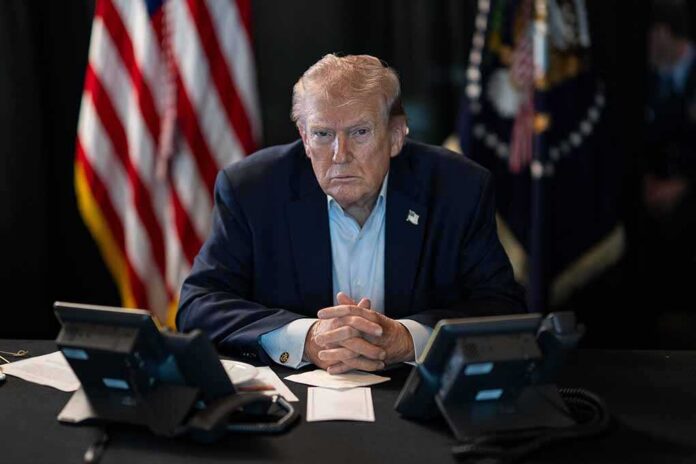
Coverage said President Trump confirmed he ordered the filing, which made the action look political to many. Democratic groups and voting-rights advocates quickly moved to intervene against the Justice Department. Their filings framed the request as an effort to block certification if the Republican lost, and argued the court should reject the theory. The record provided does not include a court ruling on the federal government’s power to seek this specific remedy.
Outside Alaska, critics warned that a larger election monitoring push could cross lines. Democratic lawmakers and some Republican officials said aggressive federal observers might intimidate voters or overstep state authority. A group of senators urged the Justice Department to avoid any deployment that discourages voting or pressures local workers. These concerns add to the sense that both parties fear the system is being gamed by those in power, not fixed for the people.
What This Means for Voters and Trust
For voters across the spectrum, the message is mixed. The Alaska case uses a narrow, specific ballot issue that a court can test with facts. That is better than a broad, open-ended claim. Yet the timing and White House involvement invite suspicion. Without clear voter evidence and a court ruling, each side can fill the gap with its own story. That vacuum feeds the belief that elites fight over rules while everyday citizens pay the price.
Here is the practical bottom line. If a judge finds that similar names on a ranked ballot likely changed the winner, a brief certification pause could be warranted. If not, the result should stand and certification should proceed. Transparency can help either way. Alaska officials and the parties could release anonymized data on spoiled ballots, assistance logs, and any voter reports. Sunlight, not spin, is the best tool to protect trust in close contests.
What to Watch Next
Watch the federal court docket for any order on jurisdiction and remedy. Look for affidavits from voters who claim they picked the wrong Sullivan by mistake, and for expert analyses using the actual ballot. Track whether the court accepts, narrows, or rejects the Justice Department’s theory. Beyond this case, watch how election monitors behave on the ground and whether officials publish clear rules, logs, and outcomes for every incident reported.
Shared standards can lower the temperature. Both parties should support common-sense steps: plain ballot design, clear voter education, and neutral incident audits. These are not partisan asks; they are basic guardrails. They honor a simple promise that most Americans still want kept: count every legal vote, follow the law, and show your work. If leaders cannot agree on that, the public’s patience will keep thinning, and faith in elections will keep falling.
Sources:
redstate.com, politico.com, democracydocket.com, cnbc.com, detroitnews.com, usatoday.com, axios.com, nbcnews.com, mercurynews.com, usnews.com, thehill.com, us.cnn.com, krishnamoorthi.house.gov, edition.cnn.com