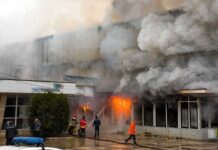
Polish prosecutors say a key drone factory fire was deliberate and are probing possible foreign-backed terrorism.
Story Snapshot
- Prosecutors opened a terrorism case tied to suspected foreign intelligence activity.
- Officials say the fire began overnight at a WB Electronics site in Skarżysko-Kamienna.
- Investigators are testing arson and sabotage theories; no injuries were reported.
- The case fits a wider pattern of suspected state-linked arson plots in Poland.
What prosecutors say happened at the WB Electronics plant
Polish prosecutors launched a terrorism investigation after a fire at a WB Electronics factory in Skarżysko-Kamienna. Officials said the blaze was started on purpose by planting a device with flammable material. They framed the case as potential participation in foreign intelligence activity against Poland and an offense of a terrorist nature. Authorities reported major damage but no casualties. The decision moves the probe beyond a routine fire review into a national security case.
Police and national security services took over the scene early on August 31. Reports said an intrusion alarm triggered around 12:23 a.m., and a security operator called police. Media accounts, citing officials, said the fire started in the assembly department. Investigators did not rule out arson. The Internal Security Agency, Poland’s domestic counterintelligence, is testing whether sabotage played a role. No official has presented suspects or final findings yet.
Why this factory matters for Poland and Ukraine
WB Electronics builds components for uncrewed systems used by Poland and supplied to Ukraine, according to press reports. Damage to such a plant hits production that supports defense needs on NATO’s eastern flank. A successful attack could slow deliveries, raise costs, and force tighter security at many sites. That is why Polish security leaders treat fires at defense facilities as high-priority cases and move fast when early signs suggest outside interference.
Over the past two years, Poland has charged multiple suspects in arson or planned sabotage cases it links to Russian services. Prosecutors accused a Belarusian of setting a major Warsaw fire in 2024 on behalf of Russian intelligence. Poland’s prime minister later said Russian intelligence was behind a separate Warsaw shopping center fire after a year-long probe. These cases show that foreign-backed arson campaigns are not a new fear but a documented risk in Poland.
Signals, limits, and what to watch next
Officials cite several early signals: an overnight break-in alert, reports of suspicious access, and evidence pointing to an incendiary act. Those indicators often drive a fast shift to a sabotage frame. Still, investigators have not publicly named a suspect, shown surveillance video, or released forensic lab results. That gap is normal at this stage, but it means the public case rests on initial statements rather than complete proof. Authorities say the cause remains under investigation.
🇵🇱🔥🇺🇦 A fire at a Polish defense plant producing drone components for Ukraine is being investigated as possible arson, raising fresh concerns over sabotage against Europe’s military-industrial support network for Kyiv.
According to Onet, the facility belongs to WB Electronics,… pic.twitter.com/hga8WleQbf
— Visioner (@visionergeo) August 31, 2026
If investigators confirm sabotage with foreign links, Poland will likely harden security at defense plants, tighten worker screening, and share more threat data with allies. Insurance costs and delivery timelines could rise across the defense sector. If the fire proves accidental, the swift terrorism framing could face scrutiny. Either way, this event highlights a shared worry across politics: critical industry sites look exposed, and the government must protect them without delay or spin.
Sources:
insiderpaper.com, euronews.com, defence-blog.com, polskieradio.pl, yahoo.com, spidersweb.pl, amp.dw.com