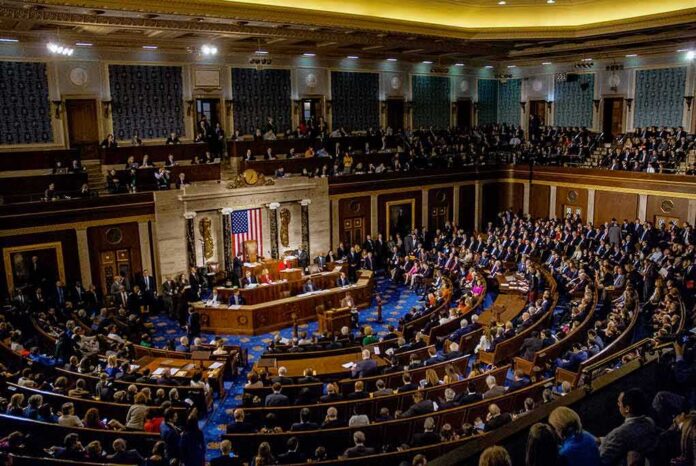
House lawmakers reopened the fight over birthright citizenship, tying a live constitutional battle to real families, immigration policy, and presidential power.
Story Snapshot
- House Judiciary members examined what “subject to the jurisdiction” means in the Fourteenth Amendment.
- Witnesses and members referenced the Supreme Court’s 1898 Wong Kim Ark ruling as the key precedent.
- Debate connected to President Trump’s 2025 executive order that sought to limit citizenship at birth.
- Analysts say courts have mostly read birthright citizenship broadly, with narrow exceptions.
What Congress Put On The Table Today
House Judiciary’s Subcommittee on the Constitution and Limited Government held a hearing focused on the Citizenship Clause. Members asked how the phrase “subject to the jurisdiction thereof” should apply to children born in the United States. The hearing title and notice framed the session around text, history, and President Trump’s executive order. Lawmakers used the forum to test arguments for a narrower reading and to press concerns about immigration incentives and national allegiance.
The Constitution’s text set the baseline for both sides. Section 1 of the Fourteenth Amendment states that all persons born or naturalized in the United States, and subject to the jurisdiction thereof, are citizens. Members probed whether that jurisdiction phrase creates real limits beyond long-accepted exceptions. Supporters of a narrower view argued the clause ties citizenship to allegiance and legal authority. Others said the text already has one stable meaning in modern law.
The Ruling That Shapes Today’s Debate
The Supreme Court’s 1898 decision in United States v. Wong Kim Ark anchored much of the discussion. The Court held that a child born in the United States to noncitizen parents, who were not diplomats, is a citizen at birth. The opinion described narrow carve-outs, like children of foreign diplomats and similar situations. That case remains the leading authority and is cited by government references and legal summaries as the controlling rule.
Committee members and witnesses pointed to how agencies and legal guides apply that rule. Summaries used in classrooms and courts present birthright citizenship as broad, with only a few clear exceptions tied to foreign sovereign status or hostile military occupation. That view shapes passports, vital records, and daily administration. Any change would need to fit within or overcome that line of cases and practices built over more than a century.
Why The Executive Order Still Looms
President Trump’s 2025 executive order challenged the status quo by seeking to limit automatic citizenship for some children born to parents without lawful status. The move targeted the same jurisdiction phrase now at issue in Congress. The order prompted quick legal challenges and forced agencies to assess guidance and paperwork flows. Today’s hearing revisited those choices and asked whether executive action can redefine a constitutional term on its own.
Independent analysts say the courts have long read the clause to cover nearly everyone born on American soil. They stress that only specific, historic exceptions apply. That consensus is reflected in the Library of Congress’s Constitution Annotated and State Department materials. Lawmakers who want limits argue those sources read Wong Kim Ark too broadly and that allegiance and lawful ties must matter. The clash shows how legal theory meets the hard edge of paperwork, identity, and rights.
What This Means For Families And For Power In Washington
For families, the stakes are simple and large. A birth certificate can unlock healthcare, school, work, and a stable future. If rules change, children could face years of proof fights, court delays, and agency backlogs. For Washington, the fight is about who gets to decide: Congress, the President, or the Supreme Court. Hearings like today’s test arguments and signal bills, but courts will still guard the constitutional line when disputes reach the bench.
For many Americans across the spectrum, this hearing hits core worries. People see a government quick to argue but slow to solve real problems. Conservatives fear that loose rules invite abuse and strain schools and hospitals. Liberals fear that new limits will create a shadow class of children without secure status. Both sides fear a system that bends to insiders while everyday families navigate the fallout. Clear law, clear process, and real oversight remain the public’s demand.
Sources:
facebook.com, judiciary.house.gov, aila.org, rev.com, scotusblog.com, en.wikipedia.org