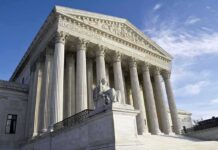
America just watched the Supreme Court stop President Trump from redefining who counts as a citizen at birth, exposing once again how Washington power fights over ordinary families while leaving the deeper immigration mess unsolved.
Story Snapshot
- The Supreme Court ruled 6–3 that babies born in the United States keep birthright citizenship, even if their parents are here illegally or only temporarily.
- Trump’s executive order tried to split newborns into “real citizens” and “non‑citizens” based on their parents’ status, but was blocked in court and ultimately struck down.
- The Court said the Fourteenth Amendment’s words are clear and follow more than 100 years of precedent: if you are born here and under U.S. law, you are a citizen.
- The fight highlights a deeper problem both left and right see: a political class playing legal games with citizenship while failing to fix the broken immigration system.
Trump’s Order Tried To Redefine Citizenship At Birth
On his first day of his second term, President Trump signed Executive Order 14160, called “Protecting the Meaning and Value of American Citizenship.” The order said the government would no longer treat many babies born in the United States as citizens if neither parent was a citizen or a lawful permanent resident. That covered children of undocumented immigrants and parents here on temporary visas, like students or workers. Trump framed this as stopping “abuse” of birthright citizenship and claimed other countries do not give automatic citizenship this way.
The order rested on a narrow reading of the Citizenship Clause of the Fourteenth Amendment. Trump’s team argued that people born here must be “completely subject” to U.S. political jurisdiction, with “direct and immediate allegiance,” to qualify as citizens. They said undocumented parents and short‑term visitors do not show that kind of allegiance, so their children fall outside the promise of the Constitution. Supporters saw this as restoring “original meaning.” Critics saw it as an attempt to write millions of Americans out of the national community.
Courts Blocked The Order And Sent The Fight To The Supreme Court
Civil rights groups, including the American Civil Liberties Union and the Legal Defense Fund, sued almost immediately, saying the order violated the Constitution, long‑standing Supreme Court precedent, and federal law. Federal judges in several states issued nationwide injunctions, stopping the policy from taking effect. One appeals court said bluntly that the order contradicts the Fourteenth Amendment’s promise that nearly all children born here are citizens, with only narrow exceptions like children of foreign diplomats. So for families on the ground, paperwork and passports stayed the same while the legal war moved up the ladder.
The key case, Trump v. Barbara, became a nationwide class action on behalf of affected babies and their parents. The Supreme Court heard arguments in April 2026, and President Trump did something rare: he sat in the courtroom as lawyers debated his own order. Government lawyers pushed the “allegiance” theory, saying only children of parents with a permanent home in the United States meet the Constitution’s test. Opponents answered that everyone under U.S. civil and criminal law is “subject to the jurisdiction” and that the Court had already settled this issue in 1898.
Supreme Court Reaffirms Birthright Citizenship, 6–3
On June 30, 2026, the Supreme Court ruled 6–3 against Trump’s order and in favor of keeping broad birthright citizenship. Chief Justice John Roberts wrote that the Fourteenth Amendment’s text is “unequivocal” and covers all persons born in the United States who are under U.S. jurisdiction, no matter their parents’ status. The Court leaned heavily on the 1898 case United States v. Wong Kim Ark, which held that a man born in San Francisco to Chinese immigrant parents was a citizen from birth.
That earlier case said the Fourteenth Amendment affirms an old rule: citizenship follows place of birth, with limited exceptions for diplomats, enemy occupiers, and some tribal members. In Trump v. Barbara, the Court said nothing in the text or history adds a special “allegiance” or “domicile” test for children of undocumented or temporary visitors. Justice Brett Kavanaugh agreed the order must fall, adding that it clearly violates a federal statute—section 1401 of the Immigration and Nationality Act—which copies the Amendment’s language without extra limits. Even Trump‑appointed justices joined the result, showing this was not a simple partisan split.
Trump’s Reaction And What It Means For Ordinary Americans
After the ruling, mainstream outlets described it as a major defeat for Trump’s immigration agenda and a strong win for families who feared their children could lose citizenship. Trump responded by blasting the Court and pointing to past decisions he says cost the country billions of dollars. He repeated his claim that birthright citizenship invites people to “game the system,” but he now faces a clear Supreme Court line: the Constitution, not the president or Congress, defines who is a citizen at birth.
Birthright citizenship ruling – as it happened: 'Big defeat' for Trump as he loses Supreme Court fight https://t.co/QNWedf1z6a
— Quinton G (@QuintonGodsell) June 30, 2026
For conservatives, this fight taps real anger about illegal immigration, strained public services, and a political class that dodges serious border and visa reform. For liberals, it highlights fears that leaders are willing to strip basic rights from vulnerable children to score political points. What both sides can see is a deeper pattern: leaders in Washington use executive orders and lawsuits to signal toughness or compassion, while the core problems—broken laws, slow courts, and unclear rules—stay in place. The Court’s ruling protects babies born here, but it also underlines how far the country is from a stable, fair, and trusted immigration system.
Sources:
[1] Web – President Trump Responds to SCOTUS Birthright Citizenship Ruling
[2] Web – Executive Order 14160 – Wikipedia
[3] Web – Supreme Court rejects Trump’s attempt to limit birthright citizenship
[4] Web – Supreme Court rejects Trump limits on birthright citizenship – PBS
[5] Web – [PDF] 25-365 Trump v. Barbara (06/30/2026) – Supreme Court
[6] Web – Trump loses Supreme Court battle to end birthright citizenship – BBC
[7] Web – Trump’s Birthright Citizenship Executive Order FAQ: Know Your Rights
[8] Web – The U.S. Supreme Court ruled Tuesday to uphold birthright …
[9] Web – Protecting The Meaning And Value Of American Citizenship
[13] Web – Supreme Court Arguments Wrap in Landmark Challenge to Trump …
[14] YouTube – Oral Argument on birthright citizenship: Trump v. Barbara
[16] Web – 8 FAM 102.3 SUPREME COURT DECISIONS – Foreign Affairs Manual
[18] Web – The History of Birthright Citizenship in the United States