Millions of Americans just heard their president say the 2020 election was touched by foreign hands and broken at home — and both sides are left wondering if anyone in Washington can be trusted anymore.
Story Snapshot
- President Trump used a rare primetime speech to unveil declassified files and claim China stole 220 million voter records and that 278,000 non-citizens were registered to vote.
- The White House says new intelligence and Homeland Security reviews expose deep election weaknesses, while many experts and officials insist past fraud claims were already disproved in court.
- Trump’s message electrified loyal supporters and alarmed critics, but it also fed a broader belief across left and right that the system is rigged and the “elites” are hiding the truth.
- Research shows repeated fraud claims, even without clear proof, steadily erode public trust in elections and push the country further toward anger, fear, and division.
Trump’s Primetime Bombshells on China and Voter Rolls
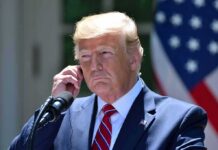
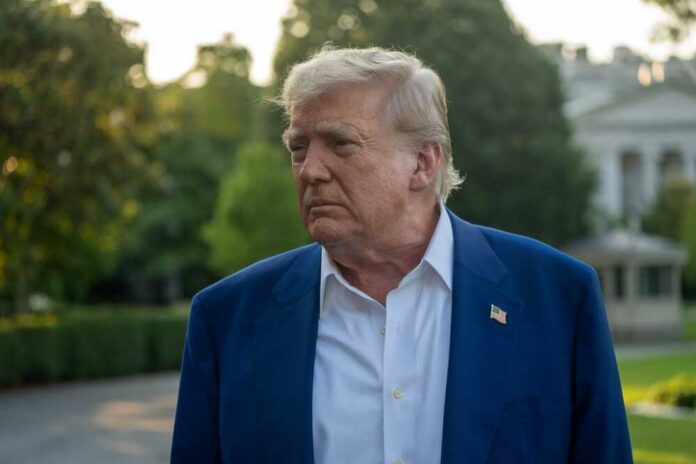
President Donald Trump delivered a rare national address from the White House, focused almost entirely on alleged election fraud and foreign interference. He claimed newly declassified intelligence shows China obtained personal data for about 220 million American voters during the 2020 election cycle, calling it “the largest compromise of election data in history.” Trump also told viewers a Department of Homeland Security review found roughly 278,000 non-citizens registered to vote in federal elections, across several states. He ordered the Department of Justice, the Federal Bureau of Investigation, the Central Intelligence Agency, and the director of national intelligence to investigate and prosecute anyone involved in a supposed cover-up.
The White House released redacted documents alongside Trump’s speech, framing them as proof of shocking election weaknesses and years of foreign probing of voter systems. Supportive media outlets highlighted claims that American intelligence officials hid warnings about Chinese activity in the president’s daily briefings, feeding Trump’s long-running narrative about a “deep state” working against him. Homeland Security officials, now led by Trump allies, asked several states to check their voter rolls for non-citizens after the address. For many conservatives already angry about past “woke” policies and lax border enforcement, the speech sounded like long-awaited validation that powerful insiders let the system rot.
How These Claims Fit Years of Election Fraud Battles
Trump’s new allegations build on a pattern that began after he lost the 2020 race, when he insisted for months that massive fraud had stolen the election. Courts rejected more than 60 lawsuits tied to those claims, and bipartisan election officials and security agencies said they found no evidence of widespread fraud or altered vote counts. A declassified assessment from the Office of the Director of National Intelligence later stated foreign actors did not change technical parts of voting, like registration files or tabulation systems. Academic reviews of post-2020 fraud theories found that while some data patterns were real, the math used to label them “proof” of fraud was often flawed or illogical.
Election researchers say that, over decades, proven voter fraud cases are extremely rare and never near the scale needed to flip a national election. Detailed studies of supposed non-citizen voting show most “hits” on voter rolls come from data errors or people marked incorrectly, not organized schemes to pack the electorate. That has not stopped politicians across the world, including in the United States, from using fraud stories as a political weapon. Calling elections “rigged” can rally donors, harden supporters, and justify tighter voting rules, even when investigators and judges find no large-scale wrongdoing. This tension sits at the heart of today’s anger: millions feel something is deeply wrong, yet the official record keeps saying the basic results were fair.
Public Reactions: Fear, Outrage, and Exhaustion
Trump’s address landed in a country already weary from years of election fights and culture wars. Many conservative viewers, especially older voters who feel burned by globalism, inflation, and illegal immigration, saw the speech as proof that their warnings were right and that elites sold out American sovereignty. Some cheered calls for stricter voter identification and citizenship checks, arguing that basic fairness requires hard rules and real penalties. On the left, many older liberals heard the same speech as a renewed attack on democracy, fearing that persistent fraud claims will be used to shrink voting access and punish minority communities. Both sides, however, share a deeper frustration: they suspect powerful insiders, in government and media, hide facts and protect themselves first.
Social media exploded during and after the speech, with Trump allies blasting major networks for not airing his remarks live and accusing them of shielding the public from “truth.” Clips of the president warning that future elections could be “rigged and stolen” raced across partisan feeds. Supporters pushed hashtags about election integrity and demanded state-level audits of voter files, while critics circulated fact-checks and reminders of past court rulings. In cities like Chicago, local political groups used the moment to promote pro-Trump rallies and frame their own campaigns as part of a national push to clean up elections. The loudest voices on both sides only deepened the sense that America is trapped in a permanent information war.
The Deeper Cost: Trust in Elections Keeps Crumbling
Political scientists have tracked what happens when leaders repeat fraud claims without strong evidence, and the findings are sobering. When people hear repeated charges that elections are corrupt, their faith in the system drops, even if they never see proof. One nationwide study found that many Trump voters came to believe fraud was widespread and that he won the 2020 election, despite courts and investigators saying otherwise. Another paper shows that such narratives can create a lasting “confidence crisis,” making citizens more likely to see every close race as suspicious and every loss as theft. Over time, this steady erosion of trust can be more dangerous than any single data breach.
You don't protect democracy by telling people to stop asking questions. During his national address, President Trump again referenced allegations involving Venezuelan-linked election software and claims of possible digital vote manipulation. Supporters believe these concerns… pic.twitter.com/CUmjEgty9m
— Debbie (@debbieliz56) July 17, 2026
Experts warn that a democracy cannot function if large groups of citizens think every election is a scam. When one side feels elections are stolen and the other side feels voting rights are under attack, compromise becomes almost impossible. Ordinary Americans looking at Trump’s latest claims and the pushback from institutions see a familiar picture: competing power centers, each insisting they alone defend the truth, while economic and social problems go unsolved. Whether Trump’s new declassified records lead to hard evidence or more stalemate, the larger story is the same. The country’s faith in fair, honest elections keeps slipping, and most people do not believe Washington’s “fixes” are truly aimed at serving them.
Sources:
pjmedia.com, nytimes.com, aljazeera.com, newsmax.com, indiatoday.in, youtube.com, instagram.com, nypost.com, local3news.com, substack.com, tandfonline.com, frontiersin.org, humsci.stanford.edu, journalofdemocracy.org, misinforeview.hks.harvard.edu, academic.oup.com, cambridge.org