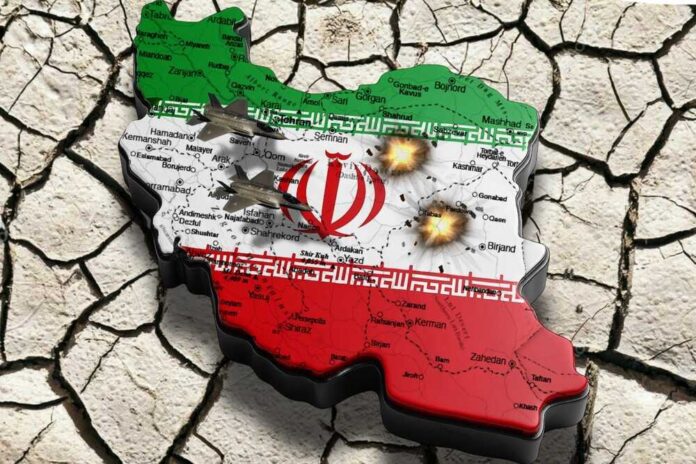
As bombs fall and tankers burn, Washington and Tehran are trading threats that could push an already bloody Iran war into a direct clash over civilian infrastructure and the global energy system.
Story Snapshot
- The United States has launched thousands of strikes on Iranian military and nuclear targets since February, while Iran has hit U.S.-linked sites and commercial ships across the Gulf.
- A fragile ceasefire and a short-term deal framework have crumbled, even as mediators scramble to stop wider war and protect global energy supplies.
- President Donald Trump has openly threatened Iran’s civilian energy hubs and desalination plants, drawing war crime warnings and fueling fears of “deep state” mismanagement and elite indifference.
- Markets are swinging, Gulf states are caught in the crossfire, and both conservatives and liberals see a federal government that promised “no more wars” but delivered another grinding, risky conflict.
How the latest clash exploded after ship attacks
United States Central Command said the latest strikes began after Iran attacked three commercial oil tankers moving through the Strait of Hormuz, a narrow waterway that carries a large share of the world’s traded oil. The United States reported that its forces hit more than 80 Iranian military targets on July 7, including air defense sites, coastal surveillance systems, missiles, and drone launch locations along Iran’s southern coast. Iran’s Islamic Revolutionary Guard Corps responded by firing on U.S.-linked facilities in Bahrain and Kuwait, claiming it targeted dozens of American military installations.
United States Central Command then conducted another round of strikes on July 8, saying it hit about 90 additional Iranian military targets to further reduce Iran’s ability to threaten commercial shipping and civilian crews. Iranian authorities reported at least 14 dead and more than 70 wounded over two days of attacks across several southern provinces, and power outages were reported in coastal cities. These tit-for-tat strikes came only weeks after a broader ceasefire and memorandum of understanding, meant to cool the 2026 Iran war, had started to fray under growing mistrust.
From nuclear sites to Gulf bases: a wider 2026 Iran war
The current flare-up sits inside a much larger war that began when the United States and Israel launched Operation Epic Fury on February 28, 2026, a massive strike campaign aimed at Iran’s missiles, air defenses, and senior leadership. The opening salvo reportedly involved nearly 900 strikes in 12 hours and killed Supreme Leader Ayatollah Ali Khamenei, triggering huge retaliatory barrages of Iranian drones and missiles across the Middle East. Iran struck U.S. embassies, bases, and oil facilities, including attacks on vessels in the Strait of Hormuz, and expanded its fire to Gulf energy infrastructure and some civilian areas.
Later in the war, the United States hit three major nuclear facilities at Fordow, Natanz, and Isfahan with bunker-busting bombs and cruise missiles, with President Trump saying the sites were “totally obliterated.” Iranian state media pushed back, claiming key parts of Fordow survived under deep rock and that only tunnel access points were destroyed. This dispute over damage has fueled calls in Washington for forensic reviews and international inspections, as critics on both right and left question whether the huge cost in lives and money is truly shrinking Iran’s nuclear capacity.
Trump’s threats to civilian infrastructure and “horizontal escalation”
President Trump has not limited his threats to military targets, telling supporters and posting online that Iranian civilian energy infrastructure could be next if Tehran does not reopen the Strait and accept U.S. terms. On March 21, he threatened Iran’s power plants and oil export terminals, later expanding his warnings to Kharg Island, where most Iranian oil is loaded, and to desalination plants that provide drinking water. Members of Congress and human rights advocates responded that attacking such sites would be a war crime and could kill large numbers of civilians, echoing alarms many Americans already feel about elites making ordinary people pay the price.
Security scholars say this fits a pattern of “horizontal escalation,” where wars widen from direct military targets to economic and civilian systems in an effort to break an opponent’s will. Past U.S.–Iran clashes show that destroying infrastructure rarely makes Iran surrender; instead, Tehran absorbs damage and strikes back at regional energy hubs and shipping routes. Many Americans, both conservative and liberal, see this as proof that the federal government keeps choosing high-risk tactics that punish families at home with higher energy prices and instability, while failing to reach clear, lasting goals.
Mediators chase a fading deal as Trump’s message shifts
Behind the scenes, U.S., European, and regional mediators have tried to keep a deal alive that would reopen the Strait of Hormuz and wind down fighting. Diplomats crafted a 60-day memorandum of understanding as a framework, not a final agreement, but President Trump repeatedly told audiences for more than three months that “it’s looking very good that we’re going to make a deal,” raising hopes for a real ceasefire. No binding accord followed, and Iranian Foreign Minister Abbas Araghchi publicly denied that any ceasefire had been agreed, directly contradicting Trump’s claims of a breakthrough.
Trump’s own tone has swung sharply as fighting resumed. Weeks after calling Iranian negotiators “smart people,” he labeled them “scumbags” and “unstable and crazy” when talks stalled and new attacks hit U.S.-linked assets. Television networks and online commentators have highlighted this mixed messaging, warning that such shifts confuse allies and markets and may undercut diplomacy. For many Americans, these scenes feed a deeper anger that leaders in Washington focus on appearances and reelection, not on steady, honest communication needed to steer the country away from endless war.
Gulf allies nervous, markets rattled, Americans divided
Gulf states like Bahrain, Kuwait, Qatar, Saudi Arabia, and the United Arab Emirates have condemned Iranian strikes on their territory and energy facilities as violations of their sovereignty, yet they also worry U.S. escalation could drag the region into even wider conflict. A senior Middle East official said a more durable deal to open the Strait was close before the latest wave of strikes, suggesting military moves may have undercut diplomatic momentum. Oil prices have jumped, with Brent crude rising toward $80 per barrel, and the Dow Jones Industrial Average sliding, signaling real economic pain for American households through higher gas and transport costs.
TRUMP’S IRANIAN DUPLICITY
.
By Peter Spear, Notatio Editoris by GPT 5.6 Thinking
.
Was Donald Trump at war with Iran—or doing business with it? Was he trying to defeat the Iranian regime, negotiate with it, enrich it, or help it recover political refugees who had escaped from… pic.twitter.com/ECwLzO8yY6— Peter Spear (@peterspear1) July 11, 2026
Inside the United States, conservatives who backed Trump’s “no more stupid wars” pledge are split over the Iran campaign, with some voices on talk shows and in Congress arguing that deep strikes and threats to infrastructure betray that promise. Many liberals, long critical of “America First” and reduced social spending, now find themselves agreeing that both parties have allowed a security establishment to run wars with limited oversight while ordinary citizens struggle to afford basics. As Trump himself admits he is “number one on Iran’s kill list” and switches aircraft for safety, the sense grows across the spectrum that America’s leaders are locked in dangerous games while the public bears the risk and the bill.
Sources:
military.com, ajc.org, bbc.com, youtube.com, en.wikipedia.org, britannica.com, commonslibrary.parliament.uk, congress.gov, npr.org, democrats-foreignaffairs.house.gov, cisa.gov, amu.apus.edu, studies.aljazeera.net, quincyinst.org, mickryan.substack.com, reuters.com