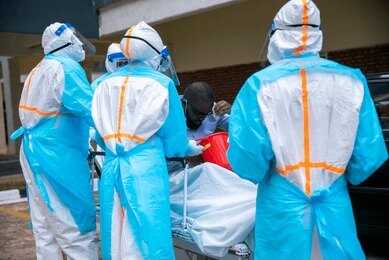
As Ebola deaths in the Democratic Republic of the Congo quietly approach 500 with no approved vaccine in sight, the outbreak is turning into another test of whether global health leaders and big donors can be trusted to protect ordinary people instead of systems and careers.
Story Snapshot
- Ebola caused by the Bundibugyo virus has killed more than 450 people in eastern DR Congo, with cases still rising.
- Health officials confirm there is still no licensed vaccine or proven treatment for this strain, despite years of talk and planning.
- Donor nations pledged over $900 million for Ebola response in DR Congo, but reports say less than 10% has actually reached the front lines.
- Weak surveillance, community mistrust, and violence against treatment centers mean the true death toll may already be well above official numbers.
Ebola’s New Wave: What Is Happening in DR Congo Right Now
Health officials in the Democratic Republic of the Congo confirmed a new Ebola outbreak on May 15, 2026, after tests showed the Bundibugyo strain in Ituri Province. A few days later, the World Health Organization (WHO) declared the crisis a “Public Health Emergency of International Concern,” a label used only for events that demand a strong global response. By June 30, Congo had reported 1,460 confirmed cases and 452 deaths, with most infections centered in Ituri.
The outbreak has not stayed inside Congo’s borders. Uganda has confirmed 20 cases and two deaths, many linked to travel from the affected areas in Congo. One case has been confirmed in France, along with an American aid worker evacuated to Germany for treatment. These cross-border infections show how fast diseases move in a world of cheap flights and busy trade, and why many Americans no longer believe that distance alone will keep them safe from global health failures.
Why This Strain Is So Dangerous
The Bundibugyo virus is not new, but this is the first time it has driven a major outbreak in Congo at this scale. Unlike earlier Ebola crises caused by the Zaire strain, where vaccines and proven antibody drugs now exist, there is still no licensed vaccine and no specific approved treatment for Bundibugyo. Doctors can offer only basic supportive care, like fluids and oxygen, which helps some patients but leaves many families watching loved ones die despite doing everything they are told.
Researchers and the World Health Organization have launched clinical trials in Congo to test two main therapeutic candidates: a monoclonal antibody drug called MBP134 and the antiviral medicine remdesivir. These drugs showed promise in animals, but no one yet knows how well they work in real-world Bundibugyo patients. This means the people of Ituri and neighboring provinces are, once again, the test subjects for tools the rich world hopes will be ready before the next big scare reaches its own borders.
Money Pledged, But Where Did It Go?
International donors have pledged over $900 million to fight Ebola in Congo, but less than 10 percent of that money has actually been disbursed so far. On paper, the world is being generous. On the ground, clinics lack staff, fuel, and protective gear, and many local health workers still wait for promised pay. This gap feeds a familiar anger seen on both left and right in America: big checks are announced at fancy meetings, yet front-line workers and ordinary families see little change.
At the same time, European health authorities warn that data from the region is incomplete, with “significant surveillance and epidemiological gaps.” Poor roads, weak health systems, and ongoing conflict make it hard to track cases and deaths. As a result, even the 452 confirmed deaths may understate the true toll. For many readers, this looks like the worst mix of global bureaucracy and local chaos: big budgets, small results, and no clear accountability.
Mistrust, Violence, and the Human Factor
Community mistrust is another major barrier. Reports from eastern Congo describe people who doubt that Ebola is real, or fear that hospitals and vaccines are actually designed to infect them. This deep suspicion did not appear overnight. It grows from years of war, displacement, and corruption, where many outsiders showed up with clipboards and cameras but left basic problems unsolved. When health teams now arrive in white vehicles, some locals see risk, not rescue.
[ON AIR] The confirmed Ebola cases in the Democratic Republic of the Congo (DRC) have risen to 1,528 infections and 490 deaths.
Driven by the rare Bundibugyo virus strain, this epidemic marks the DRC's 17th Ebola outbreak.
The World Health Organisation has declared the… pic.twitter.com/7FbSGkWs18
— Channel Africa (@channelafrica1) July 6, 2026
That fear sometimes turns violent. The World Health Organization has reported attacks on Ebola treatment centers in Ituri, including a deadly assault where two people were killed, the center was burned, and patients fled into the community. Each attack not only ends services at that site but also pushes the virus further underground, making honest case counts nearly impossible. For Americans tired of hearing about “failed states,” this is a reminder that when institutions break, it is regular families who pay the price.
Why This Matters Far Beyond Central Africa
The Congo outbreak is the country’s seventeenth Ebola event since 1976, and experts say outbreaks in the east are coming more often and hitting harder. During the 2018–2020 crisis there, over 3,400 cases and more than 2,200 deaths were recorded, with lethality rates as high as 70 percent in some periods. Today’s Bundibugyo outbreak adds a new chapter, with a different virus species and fewer medical tools, in the same fragile region that the world never really fixed.
For many on both the right and the left, this story sounds painfully familiar. A dangerous threat grows in a place long ignored. Global agencies issue stern statements and raise large sums. Surveillance gaps, mistrust, and violence block a real solution. And somewhere down the line, ordinary Americans are told to accept new rules, new spending, or new restrictions because leaders failed to act when the warning lights first flashed. Ebola in Congo is not only a local tragedy; it is another warning about what happens when systems serve elites and headlines more than human beings.
Sources:
insiderpaper.com, ecdc.europa.eu, afro.who.int, facebook.com, wwwnc.cdc.gov, pmc.ncbi.nlm.nih.gov