A Texas-backed $3.2 billion warship factory promising 10,000 jobs is coming to Brownsville, and local taxpayers will carry much of the risk to make it happen.
Story Snapshot
- Autonomous sea drone maker Saronic will build its massive Port Alpha shipyard at the Port of Brownsville.
- Texas leaders tout 10,000 jobs and a $160 billion economic boost, backed by state grants and huge local tax breaks.
- Port Alpha will build AI-driven Navy vessels, raising questions about military power, local benefits, and transparency.
- Brownsville’s deal fits a wider Texas pattern of deep tax abatements for big industry that many residents now question.
Texas lands a giant autonomous shipyard
Austin-based Saronic Technologies has now officially chosen Brownsville, Texas, as the home for its next-generation Port Alpha shipyard. Governor Greg Abbott announced that Saronic will invest about $3.25 billion to build what state leaders say will be the largest shipyard in the country. The facility will produce both autonomous and crewed commercial and military vessels, including medium and large AI-powered ships for the United States Navy. Construction is slated to start in 2026, with shipbuilding operations targeted for 2028.
The Port Alpha complex will start on about 835 to 850 acres at the Port of Brownsville, with room to grow to roughly 4,400 acres over four phases. Company officials say the first phase will be able to build ships up to 850 feet long and handle about 150,000 gross tons of shipbuilding capacity each year. With full build-out, Saronic claims the yard could reach about 2 million gross tons annually and produce vessels over 1,200 feet long. Supporters call it a once-in-a-generation upgrade to American shipbuilding strength.
Jobs, incentives, and who pays the bill
Texas leaders are selling Port Alpha as a huge win for workers and the economy. Governor Abbott’s office says the project will create 10,000 new jobs, backed by a Texas Enterprise Fund grant of $80 million and a special $78,000 bonus tied to hiring military veterans. Saronic projects more than $160 billion in economic impact for Cameron County over the next decade and over $260 billion statewide. On paper, those numbers sound like a dream for a region that has long chased better-paying industrial jobs.
To lock in the project, Cameron County commissioners approved a tax abatement agreement that amounts to a 95 percent cut in county property taxes on the new investment for about 20 years. Local reporting values that package at about $211 million over four phases tied to Port Alpha’s build-out. That means homeowners and small businesses will keep paying full freight while a major defense contractor gets decades of relief. Across Texas, similar Chapter 312 property tax abatements have already led to billions of dollars in forgone revenue for schools and counties.
Military power and a new kind of factory town
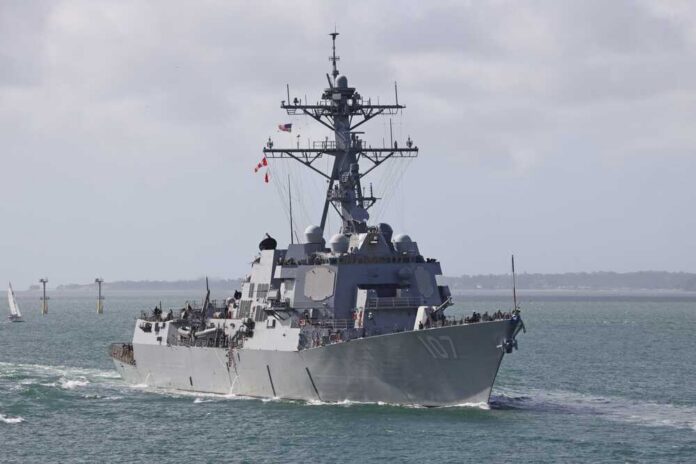
Port Alpha is not just another industrial project; it is built around autonomous warships. Saronic has already secured a $392 million production contract from the United States Navy to build unmanned vessels, and Navy officials are working toward a “hybrid fleet” of manned and unmanned ships to counter China’s growing naval power. The Brownsville yard is pitched as a key hub to mass-produce these AI-driven boats at speeds not seen since World War II. For many Americans, that promise feels like both a defense boost and a step deeper into permanent war-time industry.
The Rio Grande Valley has seen this movie before with SpaceX’s rocket site nearby. That project brought national attention and some high-paying jobs, but it also brought lawsuits, environmental worries, and complaints that many of the best jobs went to workers brought in from elsewhere. Residents now ask whether Port Alpha will truly hire local people, or repeat the pattern of importing specialized labor while pushing up housing costs and straining roads, schools, and public services.
Tax breaks, transparency, and growing public distrust
Public meetings in Cameron County show sharp divides over the Port Alpha deal. Some residents welcome the shipyard as a path out of low-wage work, while many others question giving a wealthy defense firm a 95 percent tax abatement when local families struggle with rising bills. Texas-wide studies of tax abatements find that big industrial projects often avoid huge sums in taxes while counties must still fund police, fire, schools, and flood control for the new growth. This fuels a sense on both the left and the right that the rules favor deep-pocketed companies over ordinary taxpayers.
Saronic Technologies has announced a $3.2 billion investment to build the largest autonomous shipyard in the United States at the Port of Brownsville, a transformative project expected to create 10,000 jobs at full buildout. pic.twitter.com/Sm22ffs7Wz
— Rio South Texas Region (@RioSouthTexs) July 17, 2026
The Port Alpha agreement also fits a pattern where major deals move fast and key details stay murky. Different reports list economic impact at $160 billion or closer to $168 billion, showing that officials are using varying models. Construction dates have shifted from earlier marketing claims to the current 2026 start. So far, there are no public, detailed environmental impact studies or engineering plans for the full 4,000-plus-acre expansion zone. For a community already worried about coastal erosion, wildlife, and hurricane risk, that lack of clear data makes trust even harder.
What this means for a frustrated America
The fight over Port Alpha mirrors a deeper national mood. Many conservatives see it as proof that government still bends over backwards for big business while ignoring issues like illegal immigration, high energy costs, and inflation. Many liberals see another example of the “America First” defense machine getting tax gifts while social programs struggle and local inequality grows. Both sides increasingly agree on one thing: the system seems wired to serve corporate and political elites first, and regular people last.
Brownsville’s new autonomous shipyard might bring real jobs and real money. It might also bring higher rents, more traffic, and a heavier military footprint on a fragile coast. The size of the tax breaks and the lack of full public studies so far ensure that questions will follow this project for years. As Port Alpha breaks ground, the real test will be whether this deal helps everyday families reach the American Dream—or simply deepens the feeling that the game is rigged.
Sources:
washingtontimes.com, workboat.com, theeagle.com, theia.global, btxtoday.com, facebook.com, texastribune.org, theborderchronicle.com, baynature.org, saronic.com, linkedin.com, static1.squarespace.com, en.wikipedia.org