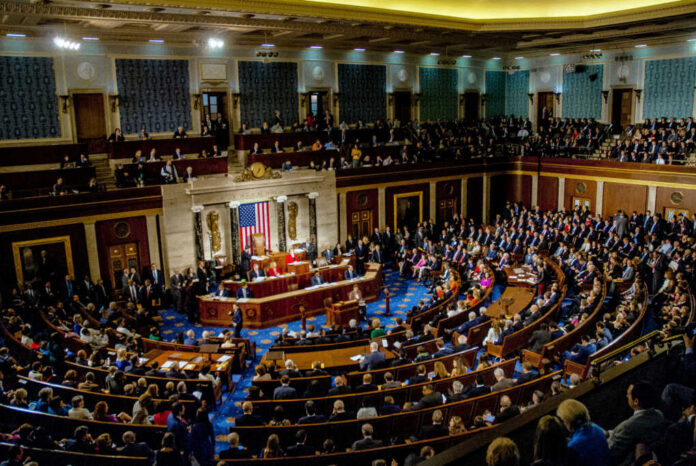
House Republicans just passed a giant tax-and-spending package they call patriotic—while official estimates say it could deepen debt, cut safety net programs, and push America’s divide even wider.
Story Snapshot
- House Republicans passed Trump’s “One Big Beautiful Bill Act” by a tight 218–214 vote after an all‑night push.
- The bill keeps Trump’s 2017 tax cuts, ends taxes on tips and overtime, and raises the child tax credit.
- Nonpartisan estimates say it adds about $3.3 trillion to the national debt and includes steep cuts to Medicaid and food aid.
- Analysts say higher‑income households gain most, while the poorest Americans lose resources and health coverage.
What The House Just Passed
House Republicans, led by Speaker Mike Johnson and President Donald Trump, forced through the “One Big Beautiful Bill Act” with a narrow 218–214 vote after an overnight session. The bill extends the 2017 tax cuts from Trump’s first term, locking in lower income tax rates that were set to expire. It also eliminates federal income taxes on tip earnings and overtime pay, key promises Trump made to service workers and hourly employees. Supporters cast the package as a celebration of hard work and American success.
The bill does more than cut taxes. It raises the child tax credit, sending more money directly to families with children. It also sets aside hundreds of billions of dollars for border security, deportations, and national defense, reflecting long‑standing Republican focus on immigration enforcement and military strength. For many conservatives, these moves answer years of anger over illegal immigration, crime concerns, and what they see as government favoring global interests over American citizens. The package is framed as putting “America First.”
Hidden Costs: Debt And Safety Net Cuts
The same bill that Republicans hail as a patriotic win is projected by the Congressional Budget Office to add about $3.3 trillion to the national debt over ten years. That figure fits a pattern: every time Republicans hold full federal power, they push big tax cuts that widen deficits and lead to later demands for spending cuts. To help pay for the new tax breaks and security spending, the package cuts roughly $1.2 trillion from Medicaid and food assistance programs, according to Democratic fact sheets. Those cuts come through tighter work rules and funding caps.
Democrats warn that those changes could strip health coverage from up to 11 to 15 million Americans and reduce food help for many low‑income families. Policy analysts say the poorest households may see their overall resources drop by about 4 percent by 2033, while the richest households gain about 2 percent. That would make this one of the largest upward transfers of wealth from lower‑income Americans to higher‑income Americans in modern history. For frustrated citizens on both left and right, it looks less like defending America and more like defending those already doing well.
Who Wins, Who Loses, And Why People Are Angry
High‑income earners are expected to gain the most from the permanent extension of the 2017 tax rates, with some seeing tax cuts around $12,000 per year. By contrast, the poorest Americans face higher costs and fewer supports, with estimates of around $1,600 in added costs when health, food, and other basics are counted together. The bill also rolls back billions in green energy tax credits, which critics say will wipe out planned wind and solar projects and keep energy tied to fossil fuels. That alarms many liberals who already believe climate policy has been gutted.
Republican leaders argue that ending taxes on tips and overtime, boosting the child tax credit, and funding border enforcement show they are on the side of workers, families, and national security. But the way the benefits and cuts are stacked deepens a broader fear shared by many Americans: that Washington serves wealthy donors, corporations, and entrenched insiders first. When a thousand‑page bill moves overnight, with warnings about debt and millions losing coverage, it feeds the feeling that the “deep state” and political elites are gambling with ordinary people’s future while calling it patriotism.
How This Fits A Long Political Pattern
This fight over Trump’s new bill is part of a decades‑long cycle. Since the Reagan era, every time Republicans fully control the federal government, they pass large tax packages that promise growth and liberty but leave bigger deficits and pressure to cut safety net programs. Democrats, for their part, often respond with their own spending plans, higher taxes on the rich, and new regulations—adding to the sense that neither party truly fixes the underlying problems. Many Americans now see both sides as arguing over which group of elites wins, while everyday families struggle.
For conservatives angry at “woke” agendas, illegal immigration, and high prices, this bill feels like long‑awaited action on taxes and borders. For liberals angry at wealth gaps, health care cuts, and fossil fuels, it looks like a direct attack on vulnerable people and the planet. Yet under those surface fights sits one shared worry: the federal government keeps passing massive, rushed bills that change the rules for millions, pile on debt, and never seem to make the American Dream easier to reach. Whether this package truly “defends America” will depend on who you ask—and how its impacts show up in people’s lives over the next decade.
Sources:
bbc.com, youtube.com, apnews.com, npr.org, thehill.com, nbcnews.com, washingtonpost.com, democrats-budget.house.gov, bipartisanpolicy.org