In less than an hour, a little-known legal gap let Washington’s power players turn a routine prosecutor appointment into a full-blown showdown over who really controls federal justice in America.
Story Snapshot
- President Trump’s team fired Seattle’s new court-appointed U.S. Attorney Roger Rogoff just 54 minutes after he was sworn in.
- The White House claims clear legal power to remove any U.S. Attorney, citing federal law and the Constitution.
- Federal judges and legal experts point to a different law that lets courts fill vacancies, creating a direct clash over who is in charge.
- This fight highlights a deeper problem both conservatives and liberals see: a confused system where elites bend the rules and regular Americans pay the price.
What Happened in Seattle, Minute by Minute
On Wednesday morning in Seattle, federal judges for the Western District of Washington swore in Roger Rogoff as the new United States Attorney at about 7:40 a.m. Rogoff was chosen under a law that lets district judges appoint a prosecutor when the office has sat vacant after an interim appointment runs out and the White House has not sent a nominee to the Senate. At 8:34 a.m., Rogoff received an email from the White House Presidential Personnel Office saying the president had removed him from the job. That made his time in office just 54 minutes.
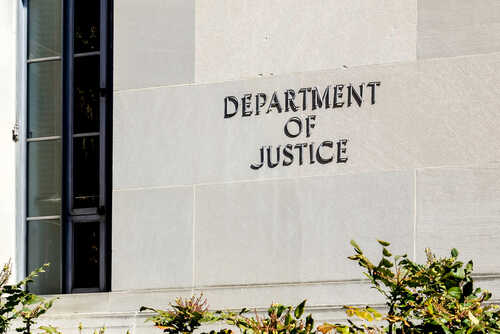
Acting Attorney General Todd Blanche quickly defended the move in a social media post, saying judges can appoint temporary United States Attorneys but the president can fire them. Blanche and a Justice Department spokesperson both pointed to Title 28, Section 541(c) of the United States Code, which says “each United States Attorney is subject to removal by the President,” and to Article II of the Constitution, which gives the president power over executive branch officers. To Trump’s allies, this was proof that the president was simply taking back control over his own prosecutors.
The Laws Behind the Clash: Two Statutes, One Big Conflict
The judges who picked Rogoff relied on a different law, Section 546(d), which says a district court may appoint a United States Attorney to serve until the vacancy is filled when an interim appointment expires with no confirmed replacement. Courts have used this tool for decades when the executive branch slows down or stalls on nominations, and one federal ruling has said this appointment power does not break the separation of powers. At the same time, past Justice Department opinions have said the president’s removal power applies to “each” United States Attorney, no matter how he or she got the job.
Legal scholars note that Congress created Section 546(d) in 1986 on purpose, to give judges a backstop when the Senate does not confirm anyone and the Justice Department cannot keep the office empty. One law review article argues there is strong evidence Congress did not want the general removal rule in Section 541(c) to wipe out this special judge-appointment system. The result is a “collision” between two parts of federal law: one clearly gives judges the power to appoint in a vacancy, the other clearly gives the president the power to remove United States Attorneys. So far, the Supreme Court has never fully settled which rule wins when they conflict.
Politics, Blue States, and a Growing Pattern of Power Struggles
Seattle is not the first place to see this kind of fight. Reports show that Todd Blanche has already moved to terminate other judge-appointed United States Attorneys, including in New York’s Northern District, soon after local federal judges announced their picks. In 2020, a similar battle broke out in New York over Geoffrey Berman, where legal experts again pointed back to the same 1979 Justice Department memo and the president’s Article II powers. These repeat clashes suggest both parties use the gray areas in the law when it suits their political goals.
Media outlets focused heavily on the “less than an hour” timeline, painting the firing as unusually swift and harsh. Democratic Senator Patty Murray of Washington called the move “illegal” and said Rogoff was lawfully appointed by federal judges. Rogoff’s legal team has argued the action unlawfully overrode a judicial appointment and is preparing a lawsuit to challenge the firing. On social media, lawyers and everyday users are picking apart the two statutes and asking whether the president should be able to fire court-appointed prosecutors at all.
Why This Matters Beyond Seattle: Trust, Elites, and the American Dream
For many Americans, the biggest takeaway is not about the fine print of Sections 541 and 546. It is that the rules for something as basic as “who hires and fires the top federal prosecutor” seem confusing, changeable, and driven by insiders. Conservatives see judges in deep-blue states stepping in to keep control when the White House tries to put its own people in place. Liberals see a president and an acting Attorney General, who was once Trump’s personal lawyer, yanking out a judge’s pick before he even finds his desk.
Trump admin fires US attorney in Seattle minutes after he was appointed https://t.co/1Y6WIuFRQK #FoxNews
— Greg Shields (@GregShield83077) July 16, 2026
Both sides share a deeper worry: that powerful people in Washington use legal ambiguity to serve their own interests, not the public’s. Past investigations into United States Attorney firings, including the 2006 episode where nine prosecutors were removed, have stressed that presidents have wide legal power to fire these officials “for any reason or for no reason,” as long as the reason is not illegal. Yet that very flexibility makes it easy for any administration to look like it is punishing enemies or protecting friends, especially when actions cluster in politically opposite states.
What To Watch Next in This Legal Showdown
The next key step will likely be in court. Rogoff is considering legal action, and his team is preparing to sue, which would force a judge to decide how the two statutes fit together and whether a sworn court-appointed United States Attorney can be removed that quickly. Some experts have called for a new opinion from the Office of Legal Counsel, the Justice Department unit that writes formal legal memos, directly addressing the clash between Section 541(c) and Section 546(d). Others say Congress should rewrite the laws to make clear who is in charge when there is a vacancy.
Until that happens, this kind of fight may keep popping up, especially in states where local politics clash with the White House. For readers who feel the “deep state” and distant elites play by different rules, the Seattle firing looks like more proof that the system is built for insiders, not for citizens trying to build a life through hard work and fairness. The law will decide who wins this round. The larger question is whether anyone in Washington is willing to fix the broken rules that keep creating these conflicts in the first place.
Sources:
cbsnews.com, reuters.com, wltreport.com, english.mathrubhumi.com, facebook.com, reddit.com, govinfo.gov, reason.com, justice.gov, storage.courtlistener.com, oig.justice.gov, lawreview.gmu.edu