Federal agencies, local police, and private camera networks have collided in a new Fourth Amendment fight over who can watch the roads and who can search the data.
Quick Take
- Flock Safety cameras can feed a cloud database with shared search settings.
- Reporting and oversight material says federal agencies have had access in practice.
- Courts and lawsuits are split on whether that access crosses a constitutional line.
- Critics want warrants and tighter limits before more data sharing spreads.
How Flock Data Became a National Privacy Fight
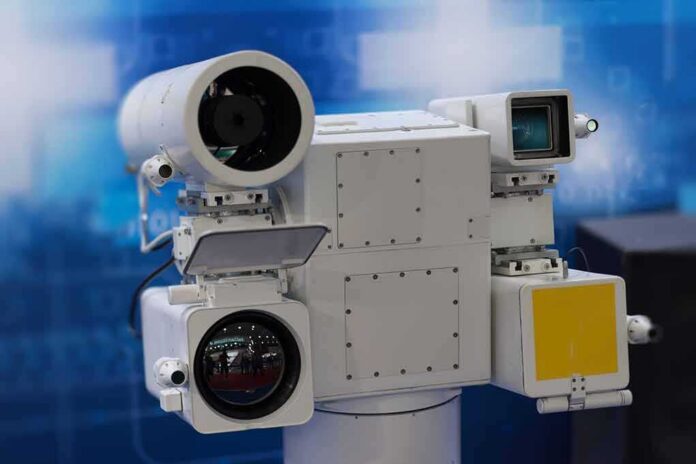
Flock Safety’s system is built to collect license plate data from fixed cameras and store it in a searchable cloud network. Reporting says local agencies can turn on “national lookup” and “statewide lookup” settings, which can let other agencies search records beyond the city that paid for the cameras. That design has pushed the debate far beyond ordinary street surveillance and into the deeper question of how much location history the government can assemble.
That concern sharpened after a summary of Senator Ron Wyden’s letter said Immigration and Customs Enforcement, the Secret Service, and the Navy had access to Flock’s nationwide network of cameras. University of Washington researchers also reported that at least eight Washington agencies enabled direct sharing with Border Patrol during 2025, and they described access paths they called “front door,” “back door,” and “side door.” Together, those findings suggest the system can be used as a broad search tool, not just a local traffic aid.
Courts and Lawsuits Are Testing the Boundaries
The legal picture is still unsettled, but the pressure is real. California drivers sued Flock Safety, saying it violated state law by allowing out-of-state and federal agencies to access camera data. A Washington court also ruled that Flock images are public records under that state’s public records law, which reinforces the idea that the data belongs to government surveillance systems, not private consumer devices. At the same time, a federal judge in Norfolk said the cameras were not an invasion of privacy on the record before the court.
That split matters because Fourth Amendment fights often turn on scale, retention, and aggregation, not just whether a camera sits in public. Critics argue the system can reconstruct travel patterns over time in a way older street observation could not. Supporters say fixed license plate readers still record what is openly visible on public roads, and that courts have often upheld their use without a warrant. The result is a legal gray zone that keeps moving as the technology spreads.
Why Congress and Civil Liberties Groups Are Pushing Back
Rep. Keith Self has proposed a bill that would require warrants before federal agents query Flock-style systems, showing that lawmakers now see the access issue as a privacy problem, not just a technical one. Civil liberties groups are making a similar argument in court, saying mass camera databases can violate the Fourth Amendment under the same logic the Supreme Court used in Carpenter v. United States for long-term location tracking. That is why the battle is now about more than one vendor. It is about whether public life can be turned into a permanent, searchable record.
KEITH SELF: "You ought to have to take that information to a judge and get a warrant… this is an abuse of that."
A Republican congressman saying out loud what a lot of folks feel every time they roll past one of those little black camera poles.
Flock cameras sit on public…
— Bill Mitchell (@mitchellvii) August 7, 2026
For many readers, the deeper worry is familiar. Government agencies at every level often promise safety, then expand data collection faster than public oversight can keep up. Flock’s own rules say agencies can share data only if they choose to do so, but the research packet also shows that cities, police departments, and federal users have used the platform in ways many residents did not clearly understand. That gap between the promise and the practice is what keeps this fight alive.
Sources:
youtube.com, techtimes.com, thecongressionalinsider.com, eff.org, whro.org, theguardian.com, courthousenews.com, facebook.com, pbs.org, reddit.com, aclu.org