Surveillance-based court records say a TikTok couple sparked a late-night fire inside a vacant West Virginia home, and both now face felony arson counts.
Story Snapshot
- Court records cite video placing the pair at the scene just before the blaze.
- Investigators say paper was lit and placed inside the vacant house.
- Dakota Harper, 21, and Felicity Eatmon, 22, were arrested and arraigned.
- The fire hit an abandoned, utility-free home on Maryland Avenue in Charleston.
What Police And Court Records Describe
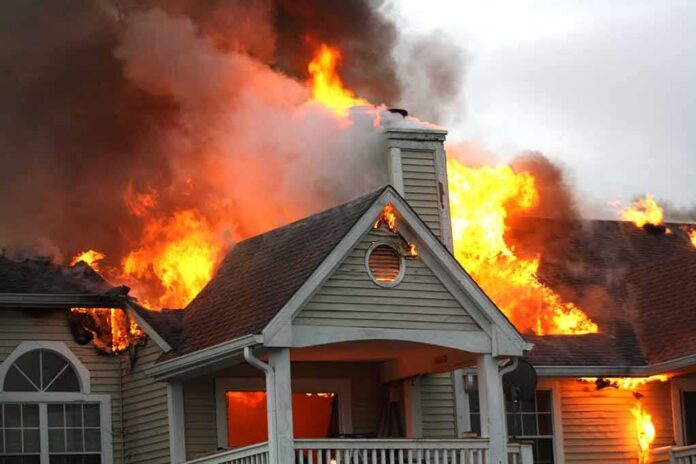
Charleston authorities say a late Sunday fire started inside a vacant home on the 400 block of Maryland Avenue around 11:15 p.m. on September 27, 2026. A criminal complaint, summarized by local media, says surveillance video shows Felicity Eatmon handing what looks like a piece of paper to Dakota Harper, who then lights it and places it in the residence. Reporters say the footage places both in an alley beside the home right before flames grow inside the structure.
Officials and court records identify the address as 405 Maryland Avenue on Charleston’s West Side. Media accounts say the building had no active utilities and was abandoned. That detail matters in arson law because intentional ignition inside a vacant dwelling still qualifies as a serious crime. Outlets reporting from court filings add that the pair appeared to enter the structure at points before leaving as the fire intensified, consistent with active involvement, not mere presence.
The Charges And Where The Case Stands
Kanawha County authorities arrested Harper and Eatmon and charged both with first-degree arson and conspiracy to commit arson. Reports say they were arraigned shortly after the incident. First-degree arson in West Virginia carries heavy penalties due to the risk to neighbors and first responders, even when a house is empty. The complaint-based coverage does not discuss a motive at this time. As with all criminal cases, the charges are allegations until proven in court.
Multiple outlets, both local and national, reported the same core points from the complaint and the video description. This kind of alignment across outlets suggests a single evidentiary spine running through the case: location, time, the two named defendants, and an ignition sequence described by investigators. That shared detail set includes the alley placement, the handoff of paper, a visible flame, and the fire growing after the object was placed inside the house.
Why This Case Drew National Attention
The defendants’ social media identity helped push the story beyond Charleston. National entertainment and news sites echoed the same complaint details, which often happens when a crime story involves online personalities. That fast spread of a single account can harden public views early. But in court, the key remains whether the video, scene photos, and other records meet accepted fire investigation standards and hold up under cross-examination and expert review.
TikTok Couple Charged With Arson After Surveillance Video Allegedly Captures Them Setting Vacant West Virginia Home Ablaze https://t.co/SOBsXz45mB #gatewaypundit via @gatewaypundit
— Edward Jobin (@TedRox) October 1, 2026
Modern fire investigations lean on a structured method, often described in federal guidance used by public safety agencies. Investigators document the scene, test hypotheses, and rule out accidental causes before calling a fire intentional. Courts and juries weigh items like origin-and-cause analysis, witness statements, and surveillance footage together. In this case, the complaint’s video narrative is central. The next steps will show how the technical record supports that version inside a courtroom.
Sources:
thegatewaypundit.com, nebraska.tv, wchsnetwork.com, ladbible.com, cbsaustin.com