President Trump’s push to reinstate the death penalty for murders in Washington, D.C. has ignited fierce debate over federal power, local autonomy, and core American values—drawing battle lines between constitutional principles and progressive opposition.
Story Snapshot
- Trump announced federal pursuit of the death penalty for D.C. murder cases, reviving capital punishment in a city that abolished it decades ago.
- The move is framed as a law-and-order strategy, promising strong deterrence and federal intervention amid rising crime concerns.
- D.C. officials and progressive leaders condemn the policy, citing racial bias, federal overreach, and threats to local autonomy.
- Legal experts warn of constitutional challenges and political fallout as national debate over capital punishment intensifies.
Trump’s Federal Death Penalty Initiative Targets D.C.
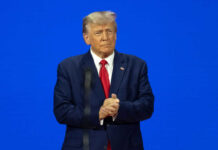
On August 26, 2025, President Donald Trump declared that his administration would seek the death penalty for homicide convictions in Washington, D.C., labeling the measure as a “very strong preventative” and stating, “we have no choice.” Trump’s announcement, made during a Cabinet meeting, marks a dramatic escalation in federal criminal policy, with the president positioning himself as a tough-on-crime leader ahead of the 2026 election cycle. This federal intervention targets a jurisdiction with unique oversight—a city that abolished the death penalty in 1981 and has not witnessed an execution since 1957.
Trump: 'No Choice' but Death Penalty for Murders in D.C. https://t.co/I7BY389Gzj
— Observing Time 🏴☠️ (@TimeObserving) August 26, 2025
Trump’s move is designed to resonate with Americans frustrated by rising crime and perceived leniency in urban centers. By invoking federal authority in D.C., he aims to bypass local opposition and enforce stricter penalties, appealing directly to conservative values of law, order, and safety. The announcement immediately sparked controversy, with critics arguing it undermines local governance and democratic principles. Trump’s approach is consistent with his broader law-and-order agenda and reflects his willingness to override local statutes when he believes national security or public safety is at risk.
Local Opposition and Federal Overreach Concerns
Washington, D.C.’s leaders—including the Mayor, City Council, and Attorney General—have strongly opposed Trump’s initiative, describing it as an attack on the city’s autonomy. Progressive lawmakers, such as Rep. Ayanna Pressley, denounced the policy as “flawed and deeply racist,” highlighting concerns about racial disparities in death penalty enforcement and warning of potential wrongful convictions. Civil rights organizations like the ACLU and NAACP have also criticized the plan, citing longstanding evidence that capital punishment has failed to deter crime and is disproportionately applied to minority communities.
Locals view the federal push as a violation of D.C.’s right to self-governance, especially since Congress and the federal government already exert significant control over the city’s laws. The tension between federal and local authorities is expected to intensify, with D.C. officials preparing to contest the move through legal channels. The policy’s announcement phase has triggered immediate condemnation and set the stage for a broader debate about the limits of federal power.
Legal, Political, and Social Implications
Legal scholars question both the constitutionality and practicality of enforcing the federal death penalty in a city that has long rejected it. They warn of challenging court battles, political polarization, and the potential for dangerous precedents in federal intervention. Advocacy groups caution that the policy may erode vital constitutional protections, including due process and equal treatment under the law. The controversy comes as national trends move away from capital punishment, with several states abolishing it in recent years, signaling a possible disconnect between federal action and public sentiment.
In the short term, Trump’s announcement has heightened political tensions and fueled public debate. In the long run, it could reshape federal-local relations and impact the broader criminal justice landscape. The policy may increase federal prosecution costs and provoke protests from anti-death penalty activists, while reinforcing conservative demands for robust crime deterrence. As the 2026 elections approach, the death penalty issue is poised to become a flashpoint for discussions about constitutional rights, federal authority, and the future of American justice.
Sources:
Pressley Condemns Trump’s Calls for Expanded Death Penalty in Washington DC
Chabria Column: Trump Death Penalty Threat DC