
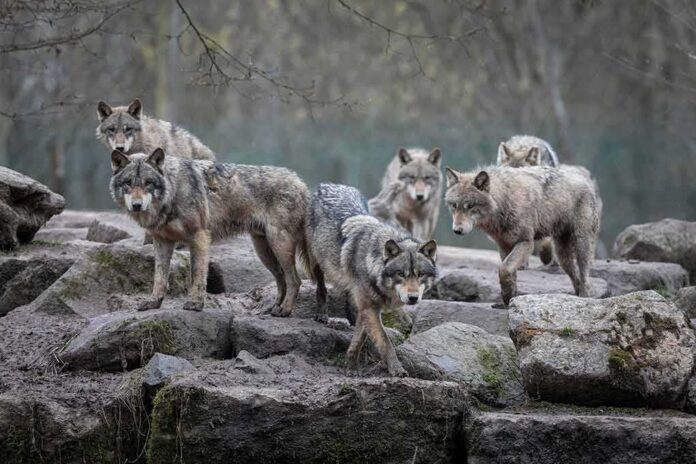
Police in Germany say a wolf mauled an eight-year-old girl inside a wildlife park enclosure, leaving her seriously injured.
Story Snapshot
- Police attributed the attack to a wolf at a Brandenburg wildlife park.
- The girl was in an enclosure with two children and a park employee around 9:30 a.m..
- Rescuers airlifted the child to a Berlin hospital; the park closed after the attack.
- Police opened an investigation and are reviewing possible negligence.
Police Confirm Wolf Involved at Brandenburg Wildlife Park
Police in the state of Brandenburg said a wolf attacked an eight-year-old girl at Wildpark Johannismühle in Baruth/Mark on the morning of October 28. A police spokesperson told the German press agency the incident “originated from a wolf” after early reports cited an unidentified wild animal. Officers said the attack happened at about 9:30 a.m. inside an enclosure. The group included the injured girl, two other children, and a park employee at the time.
Emergency crews responded with multiple units and a rescue helicopter. The child suffered serious injuries and was flown to Unfallkrankenhaus Marzahn in Berlin for treatment, according to contemporaneous reporting that matched police statements. The wildlife park said it is fully cooperating with authorities. The park’s website stated it would remain closed following the incident, signaling a pause in operations while officials investigate what went wrong.
Investigators Probe Access and Safety Procedures
Police opened a case to determine the exact circumstances that placed children and a staff member inside the enclosure at the time of the attack. Investigators are reviewing whether negligence occurred and how access was managed that morning. Reports so far have not identified the activity, the enclosure’s safety features, or the specific animal’s status. Authorities have not publicly confirmed whether one or more wolves were present when the attack occurred.
Wildlife parks and zoos typically design barriers and stand-off zones to prevent direct contact between visitors and dangerous animals. European guidance stresses trained staff oversight and measures that stop hands-on contact across, under, or over barriers for hazardous species. When incidents do occur, reviews often focus on training, gate controls, and checklists to learn where procedures failed and how to reduce risk in the future. Investigators in Brandenburg are expected to examine similar factors.
Why This Rare Event Matters for Public Safety
Attacks by wolves on people are rare in Europe. A research update counted hundreds of incidents worldwide from 2002 to 2020, but found far fewer verified cases and no fatal attacks in Europe during that period. Risks differ when animals are captive or habituated, where enclosure design, staff rules, and visitor management play a larger role than in the wild. The Brandenburg case sits in this managed setting, where safety systems are supposed to reduce already low odds even further.
A young girl has been attacked by a wolf in a German wildlife park, police have said, adding that the eight-year-old was seriously injured https://t.co/kfnjeC6eFE
— RTÉ News (@rtenews) October 28, 2026
Families expect basic safeguards to work every time, especially when children join educational visits. Officials will need to clarify why the group was inside an enclosure, what protections were in place, and how first responders coordinated care. The big test now is transparency and correction. Clear findings, and fixes where needed, can help restore trust that parks and governments can protect the public without ignoring real-world risks from large predators in captive settings.
Sources:
insiderpaper.com, sueddeutsche.de, merkur.de, rnd.de, spiegel.de, link.springer.com, wwf.de, eur-lex.europa.eu