
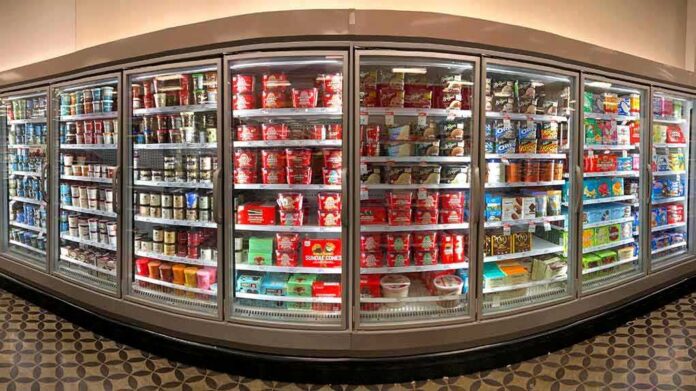
Multiple U.S. military base commissaries reported overnight freezer failures in August, and the Pentagon is treating the pattern as a suspected cyberattack, citing similar tactics seen in France.
Story Snapshot
- Pentagon is probing clustered freezer malfunctions at base stores as a suspected hack.
- Incidents reportedly hit several states, with freezers kicking into defrost mode overnight.
- France just faced confirmed hacks on supermarket refrigeration, with temps reaching 122°F.
- Known control-system flaws make remote manipulation of cold units technically plausible.
What the Pentagon Is Investigating
Reuters reported that the Pentagon is treating freezer breakdowns at several U.S. military commissaries in August as a suspected cyber incident, not a confirmed attack. Officials pointed to a pattern of similar malfunctions across multiple bases and states, often occurring overnight. That pattern can point to remote control issues rather than random hardware failure. The Department of Defense has not named a culprit or a specific exploit. The inquiry continues while stores replace spoiled goods and check their systems.
The Defense Commissary Agency runs grocery stores on bases. When their freezers fail, meat, dairy, and medicine can spoil fast. The reported failures involved units shifting into defrost cycles, which rapidly raises temperatures. The government has not released a full list of affected locations or the exact loss totals. But the clustering across different regions made leaders take this seriously. The Pentagon’s choice to flag it as suspected cyber activity signals concern about critical systems tied to networks.
Why France’s Case Matters Right Now
French authorities spent October tackling a wave of attacks on connected refrigeration at major retailers. Reports say hackers forced systems into extended defrost, heating cases up to about 50 degrees Celsius, or 122 degrees Fahrenheit. Food spoiled, and some equipment reportedly caught fire. Coverage linked many events to Danfoss controllers running old firmware. France’s cybersecurity agency said numerous compromises had occurred across retailers, confirming a broad campaign against these systems.
The French pattern echoes what U.S. officials fear: remote access to cold-chain controls can trigger warming with a few commands. That link does not prove the same actor or method in the United States. It does show how a simple change in settings can cause real-world harm. When stores connect controllers for monitoring and service, that link can become a path for attackers. French cases showed that the cold chain is now part of the attack surface, not just a back-room machine.
How Attackers Could Manipulate Freezers
Security researchers and trade reports have flagged weaknesses in common refrigeration controllers. They warn about outdated firmware, exposed management portals, and default or weak passwords. Forescout reported that French authorities identified Danfoss AK-SM and AK-SC lines, and other brands, as present in compromised environments. The same report stressed that legacy devices often lack updates and sit on flat networks, which raises risk for remote tampering of settings like defrost cycles and temperature set points.
Industrial control incidents can look like routine equipment trouble. A technician may first blame a compressor, a sensor, or a power blip. But simultaneous failures across separate sites suggest a common cause. Investigators look for audit logs, firewall records, and time-matched changes to settings. They also check whether outside connections or vendor portals were used during the event window. That work takes time and care, especially on defense systems where logs may be sensitive.
Food Security, Readiness, and Accountability
Base commissaries are not just stores; they support service families and troops on tight budgets. Sudden spoilage dents family wallets and morale. During heat waves or storms, losing cold storage can also hit medical supplies. If attackers can disrupt food and medicine with a few clicks, that becomes a national readiness issue. Leaders in both parties have pushed for stronger protection of “smart” building gear, which often lags behind other parts of the network in security.
🇺🇸 The Pentagon is treating freezer failures at U.S. military base stores in August as a suspected cyberattack, Reuters reports, and investigators are in touch with France, where a similar hack hit hundreds of supermarkets this month.
Four officials told Reuters the late-August… pic.twitter.com/a0WUZzdc1Y
— 🔥🗞The Informant (@theinformant_x) October 29, 2026
Many readers see a bigger pattern. They worry that basic systems are connected without enough guards, while officials argue over budgets and blame. Conservatives point to years of neglect and waste. Liberals point to gaps that hurt working families first. Both see a government that moves too slowly to fix known flaws. This freezer scare adds weight to that view. A simple, preventable weakness can ripple into real costs for people who already feel squeezed.
What to Watch Next
Watch for whether the Pentagon or the Defense Commissary Agency identifies a shared vendor, controller model, or remote management platform. A common link would help define fixes, from firmware updates to network segmentation. Watch also for guidance from the Cybersecurity and Infrastructure Security Agency and United States Cyber Command on hardening cold-chain devices. Clear, public steps—like changing defaults, isolating control networks, and logging access—would show action, not talk.
Sources:
dw.com, abcnews.com, instagram.com, academic.oup.com