

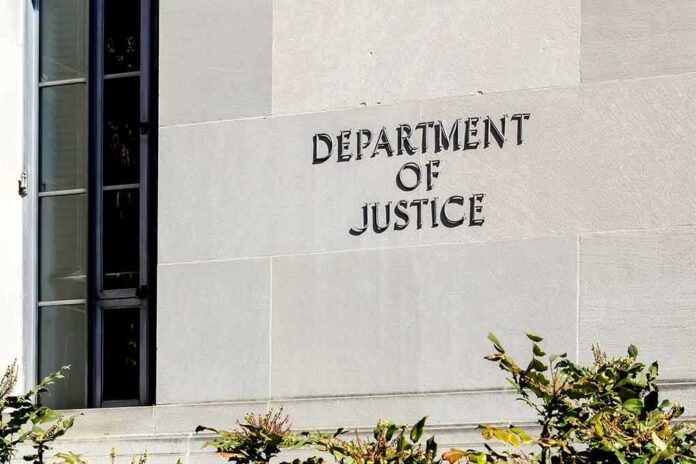
The Justice Department asked a federal court to block Alaska’s Senate certification if confusion over two “Dan Sullivans” could change the outcome — and President Trump says he ordered it.
Story Snapshot
- Justice Department sued before Election Day to pause certification under certain results.
- Reports say Democratic-aligned aides helped recruit a namesake challenger to Senator Dan Sullivan.
- Peltola and Democrats deny directing any recruitment and call the lawsuit a power grab.
- Senate history points to seating a certified winner while an election dispute is reviewed.
What triggered the lawsuit in Alaska
The Justice Department filed a pre-election lawsuit in federal court in Alaska on October 23, 2026. The complaint asked a judge to block certification only if Senator Dan Sullivan lost and if confusion over another candidate named Daniel J. Sullivan might have affected the result. The filing argued that two candidates with the same first and last name could mislead voters. It requested an inquiry to determine voter intent before final certification moved forward.
President Trump later told reporters that he directed the legal move. He said, “I was the one who said to do it,” framing the case as an election-integrity step tied to voter confusion risk. The action came before ballots were fully counted. The lawsuit did not claim a miscount. It sought a pause if a narrow margin and confusion signs emerged. That structure invites political heat because the remedy depends on who wins.
The namesake candidate and the recruitment claims
Coverage by major outlets reported a backstory on the second Dan Sullivan. Reporting summarized New York Times findings that aides tied to Democrat Mary Peltola, along with national Democratic operatives, helped recruit the namesake candidate for the Alaska Senate race. Poynter said the Times relied on interviews, text messages, and draft legal materials describing a broader “spoiler candidates” effort. These reports fueled the Justice Department’s concern about possible “purposeful” voter confusion.
Peltola’s campaign denied recruiting anyone and denied involvement with either Sullivan campaign. The Democratic Senatorial Campaign Committee also denied involvement with Daniel J. Sullivan. Peltola argued that Alaskans can tell the difference and that the lawsuit is a desperate use of federal power to shape the outcome. She said the case “is clearly corruption” and that voters should have their decision respected. Those denials, paired with the reporting, leave a live dispute over who did what and why.
How Alaska’s ballot and courts fit in
Alaska election officials earlier challenged the namesake candidate’s eligibility on confusion grounds. The Alaska Supreme Court allowed Daniel J. Sullivan to appear on the primary ballot, rejecting that bid to remove him. The ruling recognized his candidacy under state law despite the identical name issue, clearing the way for his participation in the race. That state-level decision does not end the federal confusion question, but it set the ballot lineup before voting began.
Primary results showed Peltola leading Senator Sullivan, while Daniel J. Sullivan drew a small share of the vote. Those figures did not resolve the central question: whether enough general-election voters could be misled by the two names on the final ballot to sway the outcome. The Justice Department filing highlighted the risk but did not present completed voter-level proof. It asked for an investigation if the final margin and facts warranted a pause.
What Congress can do if the race is contested
The United States Constitution gives the Senate authority to judge the elections and qualifications of its members. Senate history shows a common path in close or disputed cases. The chamber often seats a senator-elect with valid state credentials while it reviews a challenge. That approach allows representation to continue while evidence is gathered and tested in committee. This pattern could guide any Alaska dispute that reaches Washington.
The Justice Department issued a new wave of subpoenas on Thursday in a criminal probe of Alaska’s U.S. Senate race targeting Democratic officials linked to efforts to recruit a candidate sharing the name of Republican incumbent Sen. Dan Sullivan, according to ABC News.
Multiple… pic.twitter.com/8p93Duwdn3
— Forward Observer (@fowatchfloor) October 29, 2026
The stakes stretch beyond one seat. Many voters on the right and left doubt that powerful insiders play fair, and they see tactics that seem to game the rules. Others fear that federal power can be used to tilt outcomes. This case touches both fears at once. It raises questions about ballot design and political tricks, and about whether Washington should pause a state’s certification. Clear evidence and transparent process will be needed to rebuild trust.
Sources:
nytimes.com, cnbc.com, pbs.org, politico.com, usatoday.com, thehill.com