President Trump’s blunt claim that “you have to have religion” to be a “great nation” just reignited the biggest fight in Washington: whether faith is being protected—or politicized—at the highest level.
Quick Take
- Trump used the Feb. 5, 2026 National Prayer Breakfast to argue faith is essential to America’s national strength.
- Trump also said he doesn’t know “how a person of faith can vote for a Democrat,” drawing sharp backlash from advocacy groups.
- The White House Faith Office is highlighting what it calls major “pro-faith” wins, including parental rights and ending DEI policies.
- Critics say the event and rhetoric risk eroding church-state boundaries and turning a traditional gathering into a partisan weapon.
Trump’s Prayer Breakfast Message: Faith, National Strength, and a Political Line in the Sand
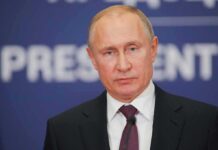
President Donald Trump addressed the 74th National Prayer Breakfast on February 5, 2026, using the high-profile gathering to connect religious belief to America’s greatness. Trump told attendees that faith is necessary for the country to be a “great nation,” and he went further by tying religious identity to partisan choice. Trump said he doesn’t know “how a person of faith can vote for a Democrat,” a remark that immediately became the focal point of the reaction.
The National Prayer Breakfast has long been described as bipartisan in structure, with members of Congress involved and presidents often delivering remarks. Fox News reported that the event dates back to 1953, when President Dwight D. Eisenhower accepted an invitation tied to an early version of the breakfast. The modern gathering blends speeches and prayer, but Trump’s latest comments landed in an already heated environment where religion, cultural conflicts, and government power are constantly colliding in national politics.
How Trump’s Second-Term Faith Agenda Is Being Marketed by the White House
Trump’s administration has elevated faith outreach as a governing theme, including establishing a White House Faith Office by executive order. In early 2026, Trump also issued a proclamation for “Religious Freedom Day 2026,” framing religious belief as a foundational force from the earliest colonies through modern national challenges. That broader messaging has been reinforced by the Faith Office’s public campaign promoting “150 reasons” it calls Trump the most pro-faith and pro-religious liberty president in American history.
According to the White House framing cited in Fox News reporting, the administration says it has fought anti-Christian and anti-Semitic bias and ended government “weaponization” against people of faith. The Faith Office campaign also lists policy themes that resonate strongly with conservatives who felt steamrolled during the Biden years, including expanding school choice, protecting parental rights, restoring “biological truth,” and ending DEI policies. The administration’s argument is straightforward: faith communities deserve equal treatment in public life, not pressure to conform to progressive ideology.
Critics Warn of Church-State Issues and a Narrower Public Square
Interfaith Alliance responded forcefully, arguing Trump crossed a line by implying religious legitimacy depends on voting Republican. Its president, Rev. Paul Brandeis Raushenbush, said faith “has never belonged to one party,” calling Trump’s framing outrageous and warning that government can target neighbors and silence dissenting faith leaders. That critique is less about whether Americans can be openly religious—most conservatives say they should—and more about whether the president’s language turns faith into a political loyalty test.
Americans United for Separation of Church and State focused on the structure of the event itself, calling the National Prayer Breakfast “deeply problematic” because members of Congress help host a religious gathering that critics say favors a narrow version of Christianity. Americans United also points to the event’s origins in the 1950s, arguing it emerged during a wave of Christian nationalism and has long tested church-state boundaries. These are assertions from advocacy groups; the provided sources don’t independently prove constitutional violations, but they show the legal and political pressure building.
What This Means for Conservatives Watching Constitutional Boundaries
Conservatives who spent years fighting Biden-era cultural mandates and administrative overreach should separate two issues that are now being conflated. First, the Constitution protects the free exercise of religion and the right to speak about faith openly in public life—rights many voters believe were treated with hostility under progressive cultural enforcement. Second, America also rejects an official state religion, which is why critics are scrutinizing Congress’s role in a faith-centered event and Trump’s partisan framing.
Based on the available reporting, the most verifiable takeaway is not a new federal restriction or mandate, but a political escalation: Trump is explicitly arguing that faith and Democratic voting are incompatible, while critics claim that stance undermines pluralism and weaponizes religion. The debate is likely to intensify because the White House Faith Office is built to keep faith issues at the center of policy messaging. With limited detail in the provided sources about specific policies beyond broad claims, the practical impact will depend on what the administration does next.
Trump says the Department of Education will protect the right to pray in schools.https://t.co/kuyoII0bLb
— LifeSiteNews (@LifeSite) February 6, 2026
International and domestic attention also followed the event, with foreign leaders and well-known performers present, underscoring that the Prayer Breakfast is not a small niche gathering. The political reality is that faith remains a major voting driver for millions of Americans, especially those who see family stability, parental rights, and free speech as under attack. Trump’s rhetoric may energize that base, but it also invites intensified pushback from organizations positioning themselves as guardians of constitutional boundaries.
Sources:
Trump returns to National Prayer Breakfast as faith takes center stage in second term
Interfaith Alliance responds to Trump’s dangerous politicization of National Prayer Breakfast & religion
National Prayer Breakfast & The Family