President Trump’s push to pull roughly 5,000 U.S. troops from Germany is reigniting a blunt question many Americans have been asking for years: why does the U.S. keep underwriting European security while allies fall short?
Quick Take
- The Pentagon has confirmed an order from Defense Secretary Pete Hegseth to withdraw about 5,000 U.S. troops from Germany, according to multiple reports.
- The move follows President Trump’s announcement that he is reviewing troop levels, citing Germany’s defense-spending shortfalls and broader NATO tensions.
- U.S. bases in Germany are central hubs for NATO deterrence and operations beyond Europe, adding logistical and strategic complications to any drawdown.
- Congress previously moved to restrict large Europe drawdowns, meaning the order may face legal, operational, and political constraints before full execution.
Pentagon confirms an order, but execution details remain unsettled
Defense Secretary Pete Hegseth has ordered the withdrawal of about 5,000 U.S. troops from Germany, and the Pentagon has confirmed the directive to news organizations. The order appears to align with President Trump’s public review of America’s posture in Germany, but the practical “how and when” is still the open question. Reporting indicates internal surprise inside the Defense Department, suggesting planning, timelines, and destination basing are not fully settled.
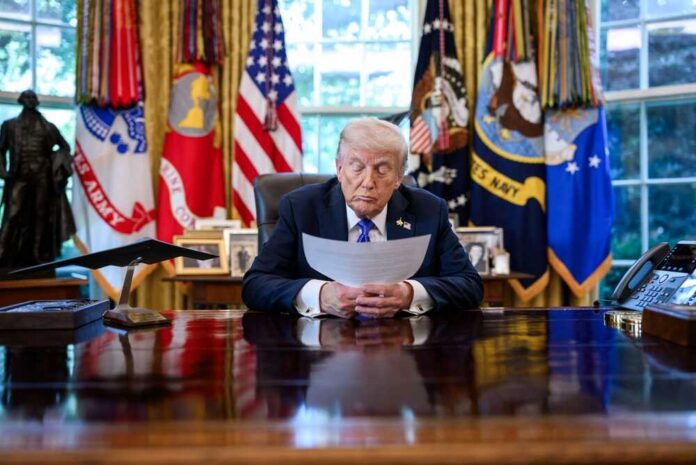
President Trump’s latest comments framed the issue around burden-sharing and leverage: if Germany is “delinquent” on defense spending, the United States should not automatically provide the same level of protection at the same cost. That framing plays to a long-running conservative critique of global commitments that seem open-ended and weakly enforced. At the same time, the administration is dealing with active demands elsewhere, making personnel moves more than a symbolic message.
Germany’s bases are not just about Europe, and that complicates “simple” cuts
U.S. forces in Germany have been a fixture since World War II, with roughly 35,000 to 40,000 troops historically and about 36,000 active-duty service members reported as of late 2025. Those installations are not merely political totems in a NATO debate; they function as operational infrastructure. The U.S. uses Germany-based assets for readiness, training, command-and-control, and support for missions that can extend beyond Europe, including Middle East operations.
That reality is why Pentagon officials have warned that pulling forces out during a period of elevated conflict risk can be operationally difficult. Even when Washington wants to pressure allies, force posture changes still require transportation, housing, training pipelines, and replacement basing. Conservatives who favor efficiency in government often focus on waste and bureaucracy, but the military reality is that hurried changes can create new costs and new vulnerabilities unless the transition is planned and resourced.
Trump’s earlier Germany drawdown fight is back—only smaller and faster
The current directive differs from Trump’s 2020 attempt to pull about 12,000 troops from Germany, an effort that met bipartisan resistance and was later reversed under President Biden. This time, the reported number is smaller—around 5,000—and it is tied to an order attributed directly to the Defense Secretary rather than an extended interagency tug-of-war. Even so, the political dynamic is familiar: supporters call it overdue accountability; critics warn of strategic self-harm.
Recent history also shows the difference between “posture adjustments” and signaling. In 2025, the U.S. rotated roughly 700 troops home from Germany, Romania, and Poland in what was described as a routine adjustment rather than a NATO message. The new order is drawing more attention because it lands amid heightened tensions with allies over access and cooperation connected to the Iran conflict, when U.S. planners typically prefer stability rather than disruption.
Congressional guardrails and public distrust frame the next phase
One constraint is legal and political: a defense law passed in late 2025 requires a risk assessment before U.S. troop levels in Europe can drop below a set threshold, adding friction to rapid reductions. That kind of requirement reflects a broader reality of modern Washington—big decisions are often pulled between the elected chain of command, entrenched institutions, and lawmakers protecting parochial interests. For voters already skeptical of “deep state” incentives, the tug-of-war is part of the story.
Trump administration to cut 5,000 U.S. troops from Germany – CBS News https://t.co/PQUm8DqRTr
— Clint Hale (@ClintHale0u812) May 1, 2026
The immediate question is whether the administration can translate a 5,000-troop order into a clean, strategically coherent shift rather than a messy relocation. A limited drawdown could increase pressure on Germany to spend more, but it could also strain U.S. logistics if alternative hubs are not ready. For Americans on the right and left who believe the federal government too often acts without accountability, the most important metric will be transparency: clear basing plans, clear costs, and clear definitions of success.
Sources:
Trump says U.S. may cut the number of American troops in Germany
Trump’s call to reduce US troops in Germany shocks Pentagon
US to withdraw thousands of troops from Germany – reports