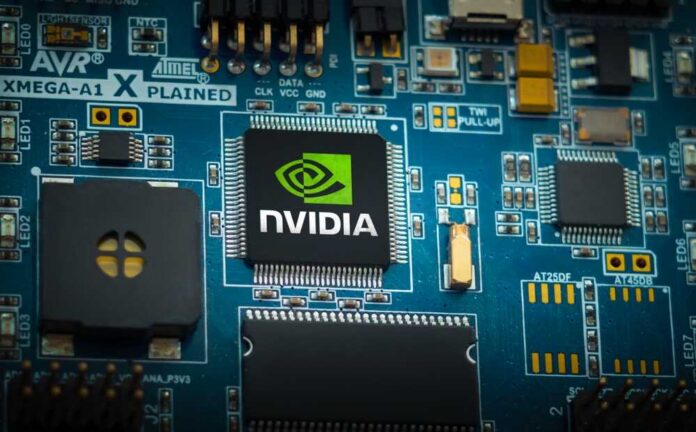
Nvidia’s board confirmed it is investigating founder and CEO Jensen Huang after he told employees he had an affair with a woman that U.S. officials reportedly linked to Chinese intelligence.
Story Snapshot
- Nvidia’s board opened an independent probe after reports that Huang was targeted by a foreign intelligence effort.
- Huang acknowledged an intimate relationship with the woman, identified in reporting as Alice Huang, a former executive at an Nvidia customer.
- Major outlets tied the case to a broader claim that Chinese intelligence tried to use the relationship to learn about Nvidia’s chips.
- Nvidia’s board said it has no evidence that company secrets or national security were compromised.
- China denied the spying claim, calling it a smear campaign, while Nvidia shares swung sharply on the news.
Board Opens Probe After Affair Admission
Nvidia’s Board of Directors announced on November 8, 2026, that it was launching an independent investigation “in light of recent reporting that founder and CEO Jensen Huang has been the target of a foreign intelligence effort.” The board put independent directors in charge, backed by outside counsel. The move came after CNBC reported that Huang told his own staff he had an affair with a woman tied to the allegations.
The New York Times reported Huang acknowledged intimacy with a business executive that U.S. intelligence had identified as a Chinese spy. NBC News and NPR described the claim as part of a larger Chinese intelligence operation built around advanced Nvidia chips, the kind of hardware central to the global artificial intelligence race and tightly restricted under U.S. export rules.
Espionage Allegations Lack Public Proof
No public intelligence report, court filing, or named official has laid out the evidence behind the spy claim. Reporters have attributed the assessment to U.S. intelligence sources without disclosing the agency, the method, or the underlying proof, which means the core accusation remains reported but not independently verified.
Nvidia’s own board statement said something important: the company has “no reason to believe” that its secrets or national security had been compromised. That single line undercuts the loudest version of the story even as it confirms the board took the matter seriously enough to investigate. Both things can be true at once, and the public record does not yet resolve which one matters more.
China’s government rejected the espionage label outright. The BBC reported Beijing called the allegations “entirely groundless, speculative and intended to smear and malign China”. That denial does not disprove the claim, but it shows the central accusation is actively disputed by a government with its own stake in the outcome, not a settled fact everyone accepts.
Market Jitters and Governance Questions
Investors reacted fast. Nvidia shares fell roughly 8% when U.S. markets opened after the investigation news broke, before recovering much of that loss within days. The swing shows how much weight markets place on Huang personally, since Nvidia has grown into one of the most valuable companies on earth under his leadership.
Nvidia CEO Jensen Huang resigns
Nvidia, the chipmaker whose processors power much of AI, said its board accepted co-founder Jensen Huang's resignation as CEO and president.
The Verge reports it followed two extramarital affairs, one with an alleged Chinese spy.
— Peter S.Y. Kim (@petersykim) November 12, 2026
Not everyone wants a hard response. Commentator Joe Borrelli argued the public only knows about this because active U.S. counterintelligence work exposed it, and he warned against a “throw the kitchen sink” reaction that could hurt Nvidia and the broader market. He said bluntly he cares more about Huang’s chip pipeline than his personal life. That view clashes with analysts who say Nvidia’s lack of a chairman or clear succession plan leaves the board exposed right when it needs the most credibility. Whether Huang stays or goes, the episode has already exposed a gap between a founder-led company’s governance and the scale of the national-security questions now swirling around it.
Sources:
mediaite.com, cnbc.com, investor.nvidia.com, nbcnews.com, bbc.com, nytimes.com