
Europe’s top executive body told households to keep three days of basic supplies on hand, underscoring how citizens may be on their own at the start of a crisis.
Story Highlights
- The European Commission urged 72 hours of household self-sufficiency for crises.
- Officials cited risks ranging from floods and pandemics to cyberattacks and armed aggression.
- The goal is to bridge the gap before authorities can restore services or reach people.
- Guidance pointed to food, water, medications, light, radios, cash, and power banks.
EU Calls for 72-Hour Household Self‑Sufficiency
The European Commission announced a preparedness strategy that asks households to be able to manage for at least 72 hours without outside help. The plan, presented in Brussels on March 26, 2025, encourages families to keep essential supplies and to make a simple emergency plan. The Commission framed this as a practical step for many kinds of crises, not a call tied to one threat. The language is advisory. It seeks to build a culture of readiness across member states.
Commission materials describe the 72-hour target as a cushion during the first, most chaotic period of an emergency. That window aims to give police, medical teams, and utilities time to restore services or reach people in need. The approach matches a long-used “all-hazards” model. It focuses on basic needs that cut across events, whether power is out, roads are blocked, or networks are down. The goal is steady households and less strain on first responders.
Risks Spanning Weather, Health, Cyber, and Security
Officials listed a wide set of risks to justify household readiness. Those include floods, wildfires, severe storms, pandemics, cyberattacks on networks, supply chain shocks, and possible armed aggression on Europe’s borders. By grouping these hazards, the Commission aims to keep advice simple and durable. A flashlight, clean water, and needed medicine help whether the crisis is a storm or a hack. Clear steps also help people act before panic sets in.
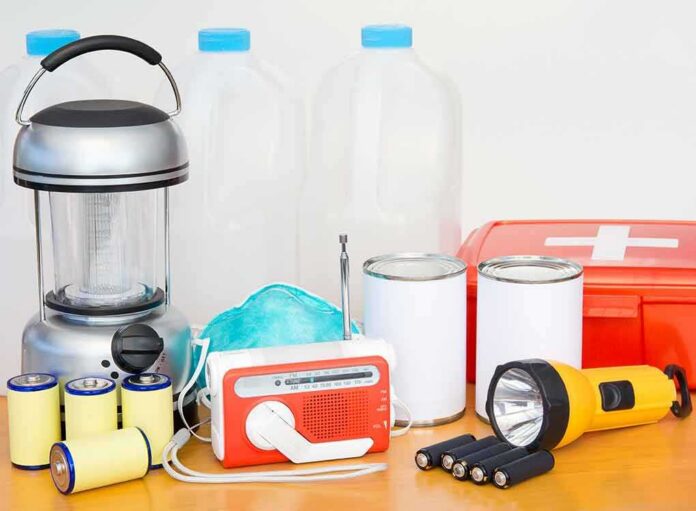
Public guidance and news coverage highlighted core items to hold for three days. Examples include shelf-stable food, bottled water, a battery or hand-crank radio, a flashlight, a power bank for phones, needed medications, and some cash if digital payments fail. The Commission left exact lists to national authorities, who know local risks and norms. That choice keeps the strategy flexible, but it can also lead to different messages across countries.
What the Recommendation Does—and Does Not—Do
The strategy urges, but does not force, people to stock emergency supplies. It sets a shared goal and offers best practices for member states. The Commission also backs awareness efforts through civil protection networks and training. That support is meant to help local teams tailor advice and plan drills. The European Parliament’s record ties the 72-hour target to real service gaps that can follow large incidents and slow official response.
Latest in energy:
1. Big Oil’s 3Q refining windfall was enormous — Exxon, Chevron, BP, Shell and TotalEnergies generated more than $56bn of combined adjusted profit, with record or near-record downstream earnings doing much of the work.
2. Valero is bringing an idled Houston… pic.twitter.com/jQdbmbcSXr
— Salih Yilmaz (@salihenergy) October 30, 2026
This push echoes a broader pattern: governments ask families to cover the first few days so responders can focus on the worst cases. For many readers, this rings familiar after recent shocks. Storms, pandemics, and blackouts showed how even rich systems can bend under stress. For conservatives and liberals alike, the message lands the same: do not wait for a perfect rescue. Keep basics on hand, know who you will check on, and plan how to get news if the grid goes dark.
Why This Matters to Daily Life and Pocketbooks
Families who plan ahead often avoid panic buying when trouble hits. Early steps can also protect budgets. Buying a little extra water or food over time costs less than last‑minute surges. Medicine refills, flashlights with spare batteries, and a charged power bank can keep a home stable when systems stumble. The Commission’s move signals a sober fact: in the first 72 hours, help may be delayed, and households that prepare will ride out the shock with less risk and stress.
Sources:
ec.europa.eu, commission.europa.eu, europarl.europa.eu