The Trump administration just drew a hard line in the sand against state overreach, as federal regulators openly backed a prediction market platform while Nevada scrambles to protect its gambling monopoly through lawsuits that could fundamentally reshape who controls financial markets in America.
Story Highlights
- Nevada filed suit against Kalshi on February 18, 2026, alleging unlicensed sports betting, the same day CFTC Chairman warned challengers “we will see you in court”
- Kalshi’s trading volume exploded 27 times on Super Bowl Sunday compared to the previous year while Nevada’s regulated casinos saw business shrink
- The Trump administration’s CFTC explicitly asserts federal authority over prediction markets, setting up a constitutional showdown over state versus federal regulatory power
- Kalshi faces lawsuits in at least nine states, with conflicting court rulings creating a patchwork that legal observers say will require Supreme Court resolution
Federal Government Backs Innovation Against State Control
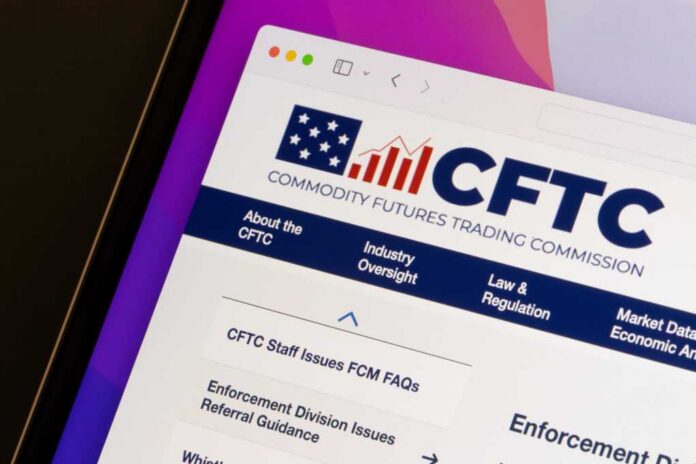
The Trump administration made its position crystal clear on February 18, 2026, when CFTC Chairman Michael Selig released a combative video statement defending prediction markets. Selig declared the agency is taking an important step to ensure these markets have a place in America, warning those who challenge federal authority: “we will see you in court.” The timing was deliberate—Nevada’s Gaming Control Board and attorney general filed their lawsuit against Kalshi in Carson City District Court the same day. This coordination signals the administration views state attempts to regulate prediction markets as direct challenges to federal jurisdiction over commodities and derivatives.
Nevada Protects Casino Revenue Through Questionable Lawsuit
Nevada regulators claim Kalshi operates an unlicensed sports betting business, but the real motivation appears financial. The state explicitly noted that regulated gambling operations saw business shrink while Kalshi’s volume surged. On Super Bowl Sunday alone, Kalshi processed 27 times the trading volume compared to the previous year, with over ninety percent of platform money now staked on sports-related events. Traditional sportsbooks like FanDuel and DraftKings responded by creating their own prediction markets to capitalize on lighter federal regulation and lower taxes. Nevada’s lawsuit looks less like principled enforcement and more like desperate protection of a state-controlled monopoly losing market share to federal competition.
Constitutional Battle Over Federal Preemption
Kalshi operates under CFTC registration as a regulated derivatives platform, characterizing its offerings as event contracts rather than traditional gambling. The company immediately requested federal court intervention after Nevada’s lawsuit, arguing only federal law applies. This represents the core constitutional question: can federal commodities regulation preempt state gambling authority? Previous Nevada litigation shows courts struggling with this distinction. District Judge Andrew Gordon initially granted Kalshi a preliminary injunction in April 2025, finding federal preemption likely, but dissolved it in December 2025, ruling certain sports contracts closely resemble traditional betting. Kalshi’s Ninth Circuit appeal remains pending, demonstrating courts are drawing nuanced lines rather than applying blanket federal or state authority.
Nine-State Legal War Threatens Market Fragmentation
The Nevada case represents just one front in a nationwide regulatory war. Kalshi faces litigation in Massachusetts, New Jersey, Tennessee, Ohio, Connecticut, New York, California, and Wisconsin, with tribal governments also suing over alleged violations of the Indian Gaming Regulatory Act. Court rulings conflict dramatically: some jurisdictions granted Kalshi preliminary injunctions blocking state enforcement, while Massachusetts Superior Court rejected the company’s preemption arguments as overly broad. A nationwide class action lawsuit filed in November 2025 alleges state law violations and consumer fraud. This chaotic patchwork creates exactly the regulatory uncertainty that federal oversight is designed to prevent, yet state regulators persist in fragmenting a national market.
Nevada sues Kalshi as federal regulators say back off https://t.co/0BGeNLEEBd
— Jazz Drummer (@jazzdrummer420) February 18, 2026
Legal observers expect the Supreme Court will ultimately resolve whether prediction markets operate under unified federal rules or fifty different state regimes. The outcome determines not just Kalshi’s fate but establishes precedent for how federal-state regulatory boundaries apply across financial markets. If states prevail, American financial innovation faces balkanization as each jurisdiction imposes different requirements. If federal authority prevails, the Trump administration will have successfully defended a free market approach against state protectionism. For now, the CFTC’s aggressive stance signals this administration won’t let states strangle emerging markets through lawsuits designed to protect entrenched casino interests from legitimate competition.
Sources:
Nevada sues Kalshi as federal regulators say back off – Business Insider
Prediction Markets v. State Gaming Laws: The Kalshi Litigation Gamble – Commercial Litigation Update
Nevada sues Kalshi as federal regulators say back off – AOL
Federal regulator defends prediction markets against state-led lawsuits – Paulick Report