One offhand joke about a “lovely little poodle” revived an uncomfortable question for Washington: how did basic White House safety get treated like a photo-op?
Quick Take
- President Donald Trump, speaking at a recent event, said he avoided getting a White House dog because it felt “staged” for votes.
- Trump mocked former President Joe Biden’s German Shepherds, referencing multiple biting incidents involving Secret Service and staff.
- Coverage cites at least 28 bite-related incidents overall, with Commander linked to 24+ before being removed from the White House.
- Video clips circulated quickly online, turning the remarks into a viral political moment with a real workplace-safety backdrop.
Trump’s “No White House Dog” Line Targets Political Theater
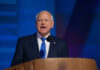
President Trump used a rally-style speech to explain why he never adopted a White House dog, arguing that presidential pets are often “staged” to look relatable to voters. He contrasted that tradition with his own approach, then pivoted to a detailed riff about what the media would say if he were photographed walking a small poodle on the White House grounds while inspecting a ballroom project.
That comedic framing matters because it speaks to a broader voter fatigue with politics-as-performance. For many conservatives, “staged” symbolism recalls years of messaging-heavy governance where optics were prioritized over results—on spending, energy, border enforcement, and public safety. For many liberals, the same skepticism now extends to institutions they once trusted. Trump’s remarks landed because they combined cultural commentary with a very concrete claim: people got hurt.
Biden’s Dogs Became a Workplace-Safety Story, Not Just a Tabloid One
The punchline of Trump’s bit was Biden’s dogs Major and Commander, but the underlying issue was the reported pattern of biting incidents involving personnel. Reporting cited Major being rehomed in 2021 after biting episodes, while Commander was ultimately removed after 24 or more bites, with aggregate bite-related incidents described as at least 28 involving Secret Service and other staff. Those numbers, while reported slightly differently across accounts, point to sustained operational disruption.
In plain terms, the controversy wasn’t about whether dogs belong in the White House; it was about whether the executive mansion handled risk like a serious workplace. When any administration appears slow to correct a repeated safety issue—especially one affecting agents and staff who can’t simply “opt out” of the environment—public trust takes another hit. The sources available do not include detailed internal timelines or disciplinary decisions, limiting what can be concluded about accountability.
Why This Viral Moment Resonates in a Frustrated, Anti-“Elite” Era
Online clips spread rapidly, and coverage emphasized crowd laughter and Trump’s comfort using humor even while referencing a recent “attack” he mentioned in passing. That contrast—jokes alongside real threats—has become part of Trump’s political brand and part of why supporters view him as unfiltered. Opponents often interpret the same style as inappropriate. Either way, the viral reach shows how quickly modern politics turns governance-adjacent controversies into shareable entertainment.
The bigger theme is institutional credibility. In 2026, with Republicans controlling Congress and Trump back in the Oval Office, Democrats still have incentives to obstruct and to amplify any misstep. But the public’s deeper frustration cuts across party lines: people increasingly believe the system protects insiders while ordinary workers deal with the consequences. Secret Service personnel and White House staff are not “elites” in the way voters mean; they are employees tasked with protecting leaders and keeping operations running.
What’s Known, What’s Not, and What to Watch Next
What is firmly supported in the provided reporting is that Trump made the remarks, the “poodle” hypothetical became a defining clip, and the Biden-era dog incidents were serious enough that Major was rehomed and Commander was removed. What is not established in the available material is the precise date of Trump’s speech, any formal response from Biden, or any new official review tied to the viral moment. The sources also do not include outside expert analysis.
Trump Hilariously Roasts Biden’s Bite-Happy Dog—Then Imagines Himself Walking a ‘Lovely Little Poodle’https://t.co/Qxo9wFq1kk
— RedState (@RedState) May 3, 2026
Going forward, the political value of this episode will depend on whether it stays a meme or prompts questions about how the federal government manages basic standards inside its most iconic workplace. Conservatives will likely keep stressing competence and security, while liberals may focus on Trump’s tone and rhetoric. For a country tired of “staged” leadership, the enduring takeaway is simpler: when image-making overrides routine responsibility, trust erodes—one avoidable incident at a time.
Sources:
Trump reveals why he never got a dog in White House as he mocks Biden’s ‘vicious’ pooch