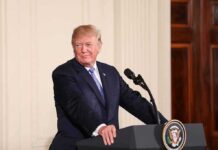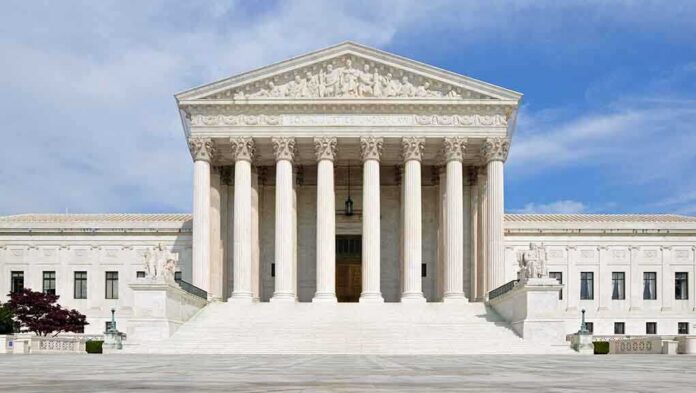
The Trump administration asked the Supreme Court to let it restart a federal citizenship check that two courts have already blocked, setting up a high-stakes clash over who protects elections and who protects voters.
Story Snapshot
- The administration asked the Supreme Court to allow use of a federal citizenship database for voter-roll checks.
- A June ruling found the revamped system unlawful and said it led to wrongful removals of citizens.
- An appeals court kept the block in place; the tool remains offline nationwide.
- The program’s own description shows it was built to verify immigration status and some citizenship data for government services, not voter rolls.
What The Administration Is Asking The Supreme Court To Do
On Tuesday, Solicitor General D. John Sauer asked the Supreme Court to lift a lower court order that blocked the Department of Homeland Security from using its Systematic Alien Verification for Entitlements system to check state voter lists. Sauer called the block “indefensible” and said it “threatens the integrity of upcoming elections,” arguing the judge overstepped and that the suing groups lack standing to bring the case. The request follows a series of losses in lower courts.
In early September, a divided panel of the United States Court of Appeals for the District of Columbia Circuit refused to revive the system. The court said the government had not met its burden to justify renewed use while the case continues. That decision kept a nationwide halt on the modified tool. As of now, federal officials cannot run state voter-roll checks through the overhauled system. The Supreme Court filing is the administration’s next move.
What The Lower Courts Already Found
In June, United States District Judge Sparkle Sooknanan ruled that the administration’s 2025 overhaul of the database was unlawful and could not be used in its current form. She wrote that agencies “haphazardly combined and repurposed” private information, including citizenship data they knew could be unreliable. She also credited evidence that states using the tool “are actively removing United States citizens from voter registries based on erroneous information”. That order disabled the modified system nationwide.
Those findings go to two core risks. First, the database was not designed as a complete list of citizens. That design gap can produce false matches, especially for naturalized citizens. Second, the scale of batch checks across entire voter rolls can magnify small errors into large harms. Plaintiffs and experts say this led to some lawful voters being flagged and even removed in certain states, prompting lawsuits and public concern. The appeals court left this block in place.
What The SAVE System Is — And What It Is Not
The United States Citizenship and Immigration Services describes the Systematic Alien Verification for Entitlements program as an online service for government agencies to verify immigration status and naturalized or acquired United States citizenship of people seeking benefits or licenses. That definition shows its roots in benefits and licensing, not elections. The administration’s 2025 changes aimed to repurpose it for broad voter-roll checks, linking to Social Security records and enabling batch queries. Election officials later reported errors with the modified tool.
The SAVE Act is NOT Voter ID.
Let me repeat… the SAVE Act is NOT Voter ID.
Trump is asking the Supreme Court — 8 WEEKS BEFORE AN ELECTION — to let him mass-check voter rolls using a citizenship database that lower courts blocked amid concerns about inaccurate information.… pic.twitter.com/OrIzOomFGm
— Morgan J. Freeman (@mjfree) September 8, 2026
This design gap sits at the heart of today’s fight. State officials who want stronger list checks see a federal tool that can confirm status fast. Voting rights groups see a repurposed database that misses citizens and risks wrongful purges. Both can be true at once: a system can help confirm some records while still being unfit as a sole gatekeeper for voter eligibility. That tension is what the courts are now sorting out, and why Supreme Court review matters.
Why This Matters Beyond One Case
This battle touches a shared worry on the left and right. Americans want clean voter rolls and fair elections. They also fear that giant federal databases, run by distant agencies, can mislabel people and strip rights without notice. When Washington knits together millions of records for a new purpose, errors and mismatches can ripple wide. Courts have flagged those risks here. The Supreme Court will now weigh election integrity claims against proven risks of wrongful removal.
What To Watch Next
Watch for the Supreme Court’s response to the emergency request and any order on the nationwide block. Look for whether the government offers guardrails, like limits on batch queries, better matching rules, or clear notice and cure steps for flagged voters. Also watch states’ next moves. Some may pause list maintenance tied to federal data. Others may pursue state-level checks. Each path will test a basic promise: protect both election integrity and every lawful citizen’s right to vote.
Sources:
cbsnews.com, reuters.com, notus.org, route-fifty.com, protectdemocracy.org