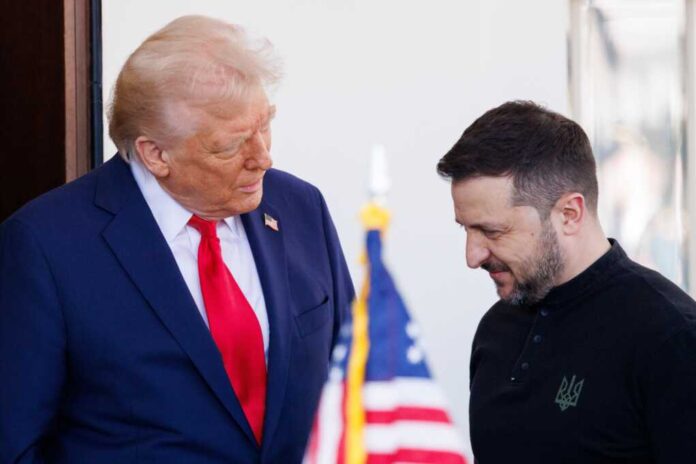
A new arms deal between the U.S. and Ukraine sparks concerns over escalating tensions with Russia.
Story Overview
- Zelensky meets Trump to discuss acquiring Tomahawk missiles.
- Russia warns against U.S. arms transfer, citing escalation risks.
- Tomahawk missiles could significantly boost Ukraine’s military capabilities.
- Trump’s decision may redefine U.S. foreign policy and NATO alliances.
- European allies watch closely as tensions mount.
Zelensky’s Strategic Move for Advanced Weaponry
On October 14, 2025, Ukrainian President Volodymyr Zelensky arrived in Washington, D.C., to meet with President Donald Trump. The focal point of their discussion was Ukraine’s urgent request for U.S.-made Tomahawk cruise missiles. These missiles are known for their long-range precision strike capability, which could significantly enhance Ukraine’s military effectiveness in its ongoing conflict with Russia. This meeting marks a critical point in Ukraine’s diplomatic efforts to secure advanced weaponry.
Russia has issued stern warnings against the transfer of Tomahawk missiles to Ukraine, emphasizing the potential for increased escalation. The Kremlin views this as a direct threat to its security, fearing that these advanced weapons could shift the balance of power. Despite these warnings, Ukraine remains steadfast in its pursuit, seeing these missiles as vital to gaining strategic advantages over Russian forces.
Watch: Trump Considers Sending Tomahawk Missiles to Ukraine? | Moscow Warns of Escalation | WION
Implications for U.S. Foreign Policy
President Trump’s decision on whether to supply Tomahawk missiles to Ukraine will have far-reaching implications for U.S. foreign policy. Approving the transfer might signal a firm commitment to supporting Ukraine’s defense against Russian aggression. Conversely, declining the request could indicate a shift towards accommodating Russian concerns. This decision will not only affect U.S.-Russia relations but also test the unity of NATO allies, who are keenly observing the outcome.
With Trump’s transactional approach to foreign policy, the outcome of these negotiations could redefine U.S. engagement in Eastern Europe. The decision will also serve as a precedent for future arms transfers, influencing Western allies’ willingness to provide advanced military support to Ukraine.
European Allies and Global Security
European nations, particularly those in proximity to Ukraine, are closely monitoring the developments. The potential provision of Tomahawk missiles could bolster Ukraine’s defense, thereby affecting the broader European security landscape. However, the risk of escalation with a nuclear-armed Russia remains a concern shared by many European leaders. This situation underscores the delicate balance between supporting Ukraine and avoiding further military confrontation with Russia.
Professor Scott Lucas, an expert in international politics, highlights the complexity of this decision. He notes that it encapsulates the challenges of managing military support, diplomatic positioning, and maintaining strategic balance in a volatile geopolitical environment. The world watches as the outcome of this meeting could either pave the way for peace or lead to heightened tensions in the region.
Sources:
https://www.bbc.com/news/articles/c93xpqgzkv0o
https://www.axios.com/2025/10/13/trump-zelensky-tomahawks-ukraine-white-house