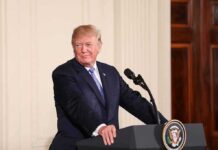
The “Donroe Doctrine” reasserts American dominance, sparking debate over its implications for international relations and U.S. foreign policy.
Story Highlights
- Trump’s “Donroe Doctrine” revives the Monroe Doctrine with a modern twist.
- Focuses on excluding China, Russia, and Iran from the Western Hemisphere.
- Trump’s policy draws support from conservative voters and veterans.
- The doctrine faces criticism for increasing regional tensions.
Trump’s “Donroe Doctrine” Explained
In 2025, President Trump introduced the “Donroe Doctrine,” a modern expansion of the 19th-century Monroe Doctrine. This policy reasserts U.S. influence over the Western Hemisphere, targeting non-hemispheric powers like China, Russia, and Iran. The doctrine aims to prevent these nations from establishing a strategic foothold in Latin America, a move aligning with Trump’s “America First” strategy. Critics argue this approach increases regional tensions, but supporters view it as necessary for safeguarding American interests.
The doctrine’s emphasis on excluding foreign powers is widely seen as a response to China’s growing economic presence in Latin America. China has become a major trading partner for many countries in the region, raising concerns about its influence. Trump’s administration actively counters this by strengthening U.S. diplomatic relations and economic ties within the Americas. While some Latin American governments welcome U.S. attention, others criticize the doctrine as a return to imperialistic policies.
Historical Context of the Monroe Doctrine
The original Monroe Doctrine, articulated in 1823, was designed to deter European colonization in the Americas. Over time, it evolved into a justification for U.S. interventions across Latin America during the Cold War. The doctrine’s revival under Trump represents a significant shift from post-Cold War policies that favored multilateral partnerships. Instead, Trump’s “Donroe Doctrine” underscores a return to unilateralism and a focus on great-power rivalry, particularly with China and Russia.
The Trump administration’s National Security Strategy explicitly outlines the “Trump Corollary,” emphasizing the exclusion of non-hemispheric powers from the region. This policy tool includes economic sanctions, diplomatic efforts, and military posturing to deter foreign influence. While this approach garners support from conservative circles, it also risks alienating Latin American nations wary of U.S. dominance.
Implications and Criticisms
The “Donroe Doctrine” has profound implications for U.S. foreign policy and regional dynamics. By prioritizing American dominance in the Western Hemisphere, the doctrine challenges the globalist agendas and multilateralism of previous administrations. However, it also raises the potential for military confrontations and economic backlash from countries aligned with China or Russia. Critics argue that such a policy could lead to long-term regional instability and diminished U.S. influence.
In conclusion, Trump’s “Donroe Doctrine” signifies a bold reassertion of U.S. power in Latin America, resonating with conservative values of national sovereignty and security. However, its aggressive stance against foreign powers prompts concerns over escalating tensions and the future of American diplomacy in the region.
Sources:
Trump’s “Donroe Doctrine” Seeks Influence in Western Hemisphere
Trump’s Latin America Policy: A Return to the Monroe Doctrine
Trump and the Monroe Doctrine: Historical Context and Implications
Out-scooped by Trump: The Revival of the Monroe Doctrine