
Utah just put real teeth behind its online age checks, with fines and investigations set to hit explicit websites that do not keep kids out.
Story Snapshot
- Utah begins enforcing online age verification for explicit websites on November 2, 2026.
- State regulators can investigate and fine noncompliant sites up to $2,500 per violation, per reports.
- A federal appeal kept the law in place on sovereign-immunity grounds; core constitutional issues remain open.
- Coverage thresholds target sites where over one third of material is harmful to minors, according to reports.
What Utah Will Enforce, and When
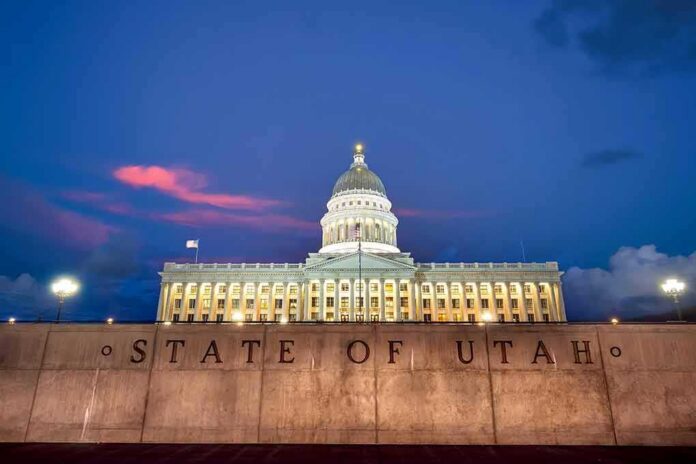
Utah’s Department of Commerce and its Division of Consumer Protection announced that enforcement of the state’s online age verification mandate begins November 2, 2026. The policy requires covered commercial websites with explicit content to verify that users are at least 18 before access. The agencies framed the move as a statewide start to an existing statutory regime. The announcement confirms that the requirement is active and that the state intends to monitor compliance going forward.
Utah’s approach rests on an enacted framework that identifies several verification methods. These include a digital identification card, an independent third-party verification service, or a commercially reasonable method using public or private transactional data. The law targets entities that publish or distribute material harmful to minors. The state’s message is simple: keep adult content behind a verified gate or face consequences. The announcement did not include outcome data about effectiveness.
Who Can Penalize, and How Much
Reporting on Utah’s 2026 amendments states that the Division of Consumer Protection can investigate sites, impose administrative fines up to $2,500 per violation, and seek civil penalties of the same amount in court. Those are concrete tools that move the regime beyond warnings into enforceable rules. The coverage threshold reportedly applies to websites where more than one third of material is harmful to minors, focusing the law on sites with substantial explicit content rather than the whole internet.
The Division’s public page confirms its role as Utah’s consumer regulator, signaling where businesses and residents will turn with complaints or guidance requests. That provides a clear front door for enforcement questions, even as the market learns how the state will measure coverage thresholds and handle mixed-content platforms. Practical details on audits, verification vendors, and data handling are not provided in the announcement and remain to be seen in practice.
What Courts Have Said So Far
The United States Court of Appeals for the Tenth Circuit affirmed dismissal of a key industry lawsuit in 2024. The panel held that Utah’s Attorney General and a commissioner were not proper defendants because the law’s earlier design placed enforcement elsewhere. That sovereign-immunity ruling left the requirement in place, but it did not decide whether the mandate passes First Amendment or privacy tests. The core constitutional questions therefore remain unresolved on the merits.
A related appellate record lays out the challengers’ arguments. The Free Speech Coalition alleged that Utah’s law restricts protected speech, chills lawful access, is vague, and intrudes on privacy. Those claims underscore why civil-liberties groups and some industry actors continue to resist age checks. The court’s decision, however, turned on who can be sued, not on whether the policy is constitutional. That gap sets the stage for future, merits-focused cases.
Open Questions That Affect Everyone
Parents and businesses want clear results, not slogans. The state has not released data showing whether age checks reduce minors’ access or whether teens simply switch to workarounds. The announcement also does not detail how approved verifiers handle user data, how long they retain it, or how they guard against breaches. Those are real concerns for adults who do not want a browsing trail tied to identity, especially on sensitive content.
Utah will begin enforcing its age verification law for adult websites this Monday, November 2, and state officials say they have new technology to find sites that aren’t complying.
The Utah Department of Commerce told FOX 13 it will crawl the web for commercial sites covered by… pic.twitter.com/Gg6NpsGITd
— SΞX WOЯK CΞO (@sexworkceo) October 31, 2026
People across the political spectrum share a basic test: protect kids without building a new data-harvest system or punishing lawful adult use. Utah now has formal enforcement authority and a start date. What comes next is proof. Clear guidance on which sites are covered, transparent methods for counting content, privacy rules for verifiers, and public reporting on results would help rebuild trust. Without that, many will see another rule that expands power but fails practical tests.
Sources:
reclaimthenet.org, commerce.utah.gov, law.justia.com, idtechwire.com