
A parish priest says he gave collective absolution to people in danger of death after Spain’s deadly train crash that killed 69.
Story Snapshot
- A local priest reports giving collective absolution to crash victims in danger of death.
- The priest says he arrived early at the scene near Urda and helped the injured.
- Catholic rules allow general absolution in imminent danger of death or grave necessity.
- Spain continues to probe the collision while mourning 69 dead and many injured.
Priest Describes Collective Absolution at Crash Site
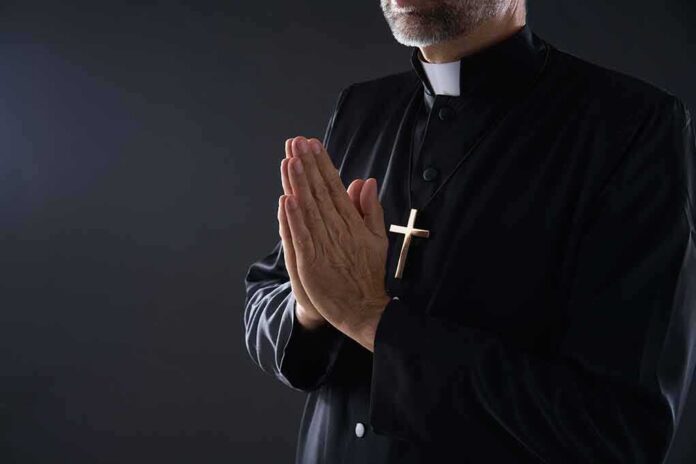
Father Fernando Fernández de Bobadilla said he gave collective absolution to people in danger of death after the train collision near Urda, in central Spain. He explained that he spoke aloud because he could not reach each person one by one among the wreckage. He said his aim was to forgive sins and prepare the wounded if they were dying. His account appeared in interviews with faith outlets after the crash on October 29, 2026.
Reports identified Father Fernández de Bobadilla as one of the first on scene. He said he offered spiritual care while rescue work unfolded. He also described helping hold intravenous bags for the injured as bodies were removed, according to summaries of his comments broadcast from the site. These reports came through Catholic and Christian outlets that spoke with him as events developed that day.
What Catholic Law Says About General Absolution
General absolution is rare but allowed by Catholic canon law during grave emergencies. The Code of Canon Law states that a priest may give absolution to many at once when death is imminent and there is not enough time to hear individual confessions. It can also be given in grave necessity when there are too many penitents and too few confessors, with normal confession to follow when possible.
Vatican guidance and pastoral notes echo this limit. They teach that individual confession is the norm, but collective absolution can be used in extraordinary moments like mass-casualty events or when people face imminent death. During the coronavirus pandemic, Vatican authorities reminded bishops and priests of these rules and how to apply them in crisis settings, underscoring the exception’s purpose: mercy under extreme time pressure.
Crash Toll and Ongoing Investigation in Spain
The crash killed 69 people and injured many others, triggering days of mourning and protests as investigators worked to learn what went wrong. News coverage focused on how two trains collided, which agencies were involved, and what signals or orders may have preceded the impact. National leaders visited the site, and the transport ministry fielded heavy public pressure for answers as grief turned to calls for accountability.
Protests erupt in Spain after deadly train crash: Demonstrators clashed with police outside the country’s Transportation Ministry, where they had gathered to call for the prime minister’s resignation.
— Pham Quang Vinh (@vinhlhq2015) October 30, 2026
Church leaders in Spain urged prayer and support for victims and families. Statements and reports called for hope and solidarity while emergency crews and hospitals managed the surge of needs. Faith groups often play a role in disaster response. Chaplains and clergy offer comfort and help connect survivors with care, while following the lead of rescue commanders on safety and access at a scene like this one.
Why This Moment Resonates Across the Divide
A simple act at a chaotic scene can cut through public anger that often follows deadly failures. The priest’s reported words of absolution fit within church law and speak to a human need that surfaces in crisis: people want care that meets body and soul. As Spain weighs system errors, this part of the story shows how local responders, from medics to ministers, can bring order, comfort, and dignity when institutions feel distant or slow.
Sources:
lifesitenews.com, es.aleteia.org, premierchristian.news, infovaticana.com, wng.org, cathnews.com, en.wikipedia.org, bbc.com, vatican.va, web.colby.edu