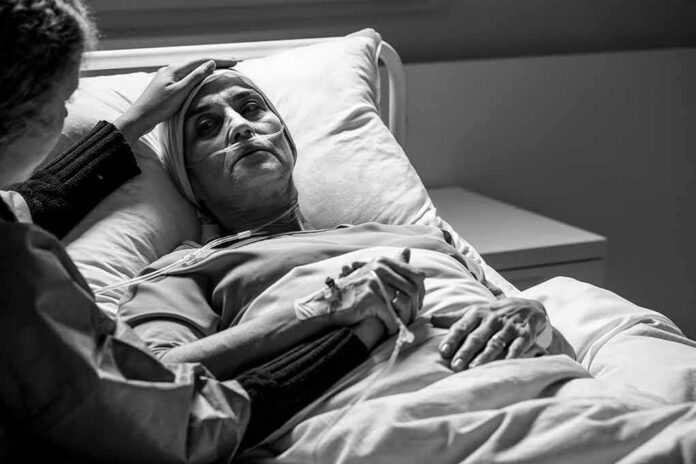
Police in Belleville, Ontario, have opened a criminal investigation into an alleged non-consensual euthanasia of an 83-year-old woman at a local care home, sharpening questions about how Canada checks consent at the bedside.
Story Snapshot
- Belleville Police confirmed an active criminal investigation into the July 10 death at a Cannifton care home.
- The family filed a complaint to Ontario’s Chief Coroner alleging no final consent, bypassed power of attorney, and lack of capacity.
- Reports say providers maintain the woman legally consented, creating a direct conflict that remains unresolved.
- Ontario guidance requires patients to confirm consent right before drugs are given, unless a valid written waiver applies.
What Police And The Family Say Happened
Belleville Police stated the case is open with the Criminal Investigations Division and declined further details while the probe continues. The woman’s family says she died on July 10 at The Pearl care home in Cannifton. They allege she did not give clear consent on the morning of the procedure. The granddaughter’s account, quoted across outlets, claims the lethal injection was given without explicit, final approval at the bedside. No charges have been announced to date.
The family says they took their concerns to several oversight bodies. Reports describe a formal complaint to Ontario’s Chief Coroner that asked for a Medical Assistance in Dying Death Review Team inquiry. The filing cited three grounds: that the grandmother lacked capacity, that the appointed power of attorney was bypassed, and that there was no final express consent. They also contacted the Patient Ombudsman and Belleville Police, creating multiple paper trails.
The Key Point Of Dispute: Final Consent At The Bedside
Ontario’s public guidance says a patient must confirm consent immediately before the provider administers Medical Assistance in Dying drugs. The same guidance explains a narrow exception that allows a written waiver of final consent when strict steps are met in advance, including a set date and the provider’s agreement. The family’s claim targets that moment of final confirmation. Provider-side summaries reported in media say legal consent existed, but details have not been released publicly.
The record in public reports is thin on primary documents. No consent forms, capacity assessments, clinician notes, or coroner findings have been published in the sources reviewed. That leaves the public debate to hinge on secondhand descriptions of the July 10 conversation and process. Police and the care home have not provided further details while the investigation is active, and the practitioners have not given a detailed public rebuttal in these reports.
Why This Resonates Beyond One Case
This dispute reflects a wider tension around consent in Canada’s Medical Assistance in Dying system. The rules require clear, current consent and sound capacity checks, yet they rely on what clinicians document and confirm in real time. When families later raise concerns, the fight often shifts to paperwork quality, bedside dialogue, and who had authority to speak for the patient. That dynamic fuels mistrust when institutions stay quiet during active reviews.
Yes, there are confirmed cases of abuse, as documented by sources like the Ontario Office of the Chief Coroner's MAiD Death Review Committee.
The call isn't to assume that the granddaughter's telling is completely true, it's to have an investigation launched – you know, the…
— Michael Hettrick (@HettrickMichael) September 22, 2026
Readers across the spectrum see a familiar pattern: high-stakes decisions behind closed doors, few public records, and officials saying little. For conservatives, this suggests life-and-death power drifting from families to systems they do not trust. For liberals, it raises equity and dignity questions for vulnerable seniors. For many, it adds to a larger worry that powerful institutions close ranks when something goes wrong, and ordinary people carry the cost.
What To Watch Next
First, look for the coroner’s intake or any review outcomes that confirm whether final consent was checked according to policy. Second, watch for police updates on interviews, timelines, or potential charges. Third, see if facility logs, clinician notes, or witness accounts emerge to clarify who asked what, and how the grandmother responded at the bedside. Clarity on those points will decide whether this was a legal Medical Assistance in Dying death or a serious breach of Canada’s own safeguards.
Sources:
lifesitenews.com, x.com, lifenews.com, us.headtopics.com, thegatewaypundit.com